
Tim Frodsham, 14 July 2021
Our Eternal Father and Mother have given us a brief moment in our eternal advancement to experience their greatest work and glory—the ability to create and nurture new life. As a new father in that most precious of earthly relationships, I was overwhelmed at the task He set before me: to guide six children through the pitfalls of this mortal existence. They whom we call Father and Mother are the experts, and their guidelines for family are contained in scripture and the words of past and current church leaders.
I am in awe of the eternal bonds we forge here and the familial ties that will endure through eternity. Based on my understanding of the Gospel of Jesus Christ, I have been guided by four general principles on which my wife and I based most of our approach to parenting.
The Default Answer is Yes
Time after time, I have heard children approach their parents with a request and receive the same knee jerk, default answer: No. At this point, the negotiations start with parent and child struggling to come to a decision. The child is on the offensive, the parents try to hold their ground, but eventually cave to the child’s request.
I thought about this carefully during my early years of parenting and decided that my default answer should be yes. If I was going to say no, I had to have a reason, one that I could explain to my child. My children learned very quickly to frame their questions and requests honestly. We would then discuss, and they knew that I was considering their request with a yes answer in mind. Once I said no, that was the end of an attentive discussion, not the beginning.
Because my default answer was yes, when I said no it was for carefully thought-out reasons, and my children learn to trust my decisions. Was all rosy? Of course not. We were not perfect. There were times when they would argue and times when my decision making was not at its best, but it worked often, and it worked well. I still remember the time I stuck to our rule of no dating until the children were sixteen. Prom was two weeks before my third daughter’s birthday, and I held firm. Yeah, you can probably imagine how that went. She now has twin daughters fast approaching the same situation and has a very different perspective on my decision.
I also had a wild card; I did not use it often, but I used it when appropriate. There were times my answer was no, and I did not know why. I would tell them so. “I feel uncomfortable with the situation,” “There is something wrong,” “I just have a feeling that I should say no.” My children learned to respect those decisions because they knew and trusted that I did not give a no answer lightly.
My children also knew that they could request a no answer. “Dad, my friends have asked me to go to ______ with them, and I would like you to say no.” I was more than fine being the bad guy. We would come up with honest, reasonable responses for the “No” decision, and they could then save face with their friends. I was surprised at how rarely I was asked for a “no” answer; my children learned quickly to be upfront and honest with their friends, but at times they took advantage.

For us as parents, we cannot start with a knee jerk “no,” and then expect spirit led communion to begin. A default answer of “yes” takes thought and consideration each and every time. Starting with “yes” in mind means that I considered requests from my children just like requests from other adults. It was an effective way for me to prepare my children to become adults.
Our Heavenly Father may not use the same strategy when dealing with us, His children, but He responds with a “yes” to our prayers more often than we realize. Throughout my wife’s fight with cancer, my family prayed continually for her healing. It all seemed for naught, at least on the surface, and she passed away. Looking back, she survived her cancer and remained with us far longer than any doctor projected. Throughout that ordeal, He sustained us constantly—bolstering our faith, calming our hearts and whispering peace to our troubled minds. My family was transformed. Whatever His parenting strategy, He formulates His answers carefully based on His infinite assessment of our physical needs and spiritual growth.
Admit My Failings
There were times when my children would question a previous decision, and in hindsight, I would concede that I was wrong. No excuses, no cover up. I freely admitted that I was not a perfect parent; I came to wrong decisions with sometimes imperfect information, and I was sorry for the distress this caused. Again, this garnered respect, not derision. If I was honest with myself, and with my children, they did not demand or even expect perfection. They felt my love and honesty with them and were accepting of my flaws. We learned quickly to cut each other some slack and to forgive each other faulty communication and imperfections. We were in this family thing together. As a testament to our fallible family, most of our clan humor developed during these less than perfect experiences.
Make Memories and Teaching Opportunities Will Arise
Families take effort. Church, work, and community responsibilities contend with family time. Repeatedly, my job would consume up to 90 hours a week. It was important to me, though, to prioritize family events whenever possible, and on occasion that meant carving time from a schedule that was impossible. My children could tell that I was truly making an effort to tame our cacophonic schedule, and we managed to make meaningful memories.
I made sure to plan trips, vacations, family visits, church activities, and volunteer work with as many of my children as possible. If a volunteer event allowed only children 16-years or older, I went out of my way to find a different event that allowed children. This was not always possible, so I made it one-on-one time with the older child or children whom I thought would benefit most. Most events did not come off as planned, some were disasters. I am constantly amazed that through it all, somehow, the Master Architect found a way to teach some of life’s most profound lessons.
Use Ordinary Events to Know and Understand My Children
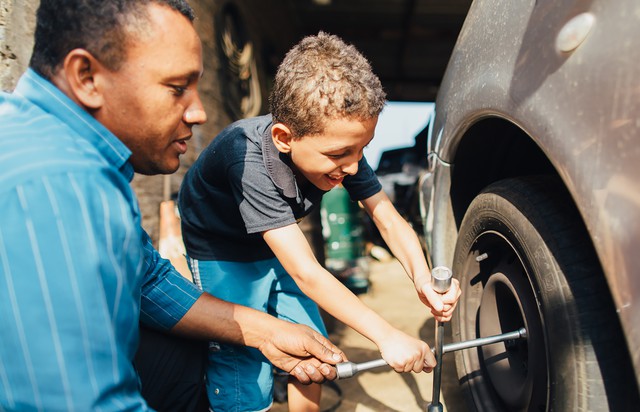
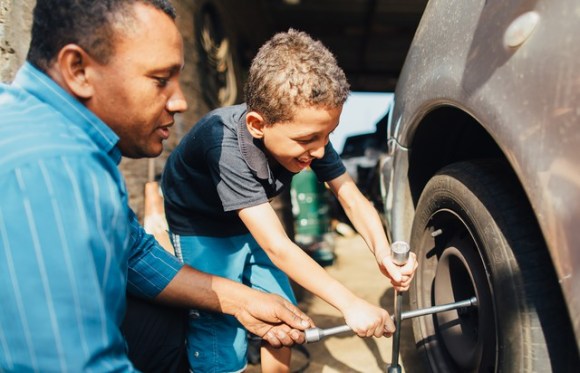
Parents talk frequently about spending “quality time” with their children. This is all dandy, but on occasion it is important we just spend time with our children, and allow the Lord to make that time meaningful. I covered this topic in a previous essay, “The Lord’s Way of Teaching.” I made it a point, for example, to allow my young children to help me with tasks around the house. When we were done, I would gaze into their eyes and with the utmost sincerity, compliment them. “I am so glad you helped me. With your help, it only took twice as long.” There was a bit of irony in that comment, but also a modicum of honesty. Yes, the task took twice as long, but it was time with my child. I loved those Littles intensely, and they loved me back because Tiny Ones are so good at detecting sincerity. Sincerity I developed by making time with them, and allowing the Lord to make that time meaningful.
I loved taking walks at the pace of one of my Tiny Ones. A walk of 10 minutes can take an hour, but we have explored every bug, flower, pebble, and blade of grass along the way. They have unbounded interest, incredible focus, and a minuscule attention span. They are smart and in tune with the Spirit. If, as parents, we do not spend time with them at their level, we will not be able to council with them, know their strengths and limitations and effectively negotiate a “yes or no.” I did more than “make time” for my children and grandchildren. I took advantage of the simple times we were together. I was walking with my grandson Collin from the grocery store when I saw a bright, shiny fire engine in the parking lot not far from our car. Several firemen were milling about. Collin loves fire trucks, and I knew he would get a kick out of a real one. On the way to the truck, he stopped to carefully examine the rusty hinge on one of the cart return enclosures. I swooped him up, twisting and struggling, to greet the firemen as it was apparent they were ready to leave. His pout immediately ended as he got to sit in the truck, talk to the firemen, and look at all of the equipment.
In negotiating with our children on a request they have or something they want to do, we as parents have a larger perspective. We can and should point out to them possibilities they do not have the wisdom and experience to consider. We should also recognize their unique perspective, and how they may benefit from an event or experience we would not normally consider worthwhile. Time with Collin examining that rusty hinge would have been time well spent. I saw a larger perspective, one he was not capable of taking, and sported him away. We understand that larger perspective, however, only if we have spent meaningful, simple times with our children. Spending time with our Tiny Ones develops a trusting relationship that continues through their more difficult adolescent years. It we continually push these Tiny Ones away from our daily tasks, the get a message that endures through their older years.
As parents, we must be in tune with the capabilities of our posterity and learn to guide them to the best experiences for their spiritual and temporal growth. Surrounded by children and grandchildren, it was and is pressed home to me again and again how incredibly close these Tiny Ones are to our Heavenly Parents. They created children as vessels of learning and are blessed with an inherent trust and an unconditional love. It is up to us as parents to nurture that trust. How frustrated our Heavenly Parents must be as we, in our own “adult” way, ignore the fire truck in favor of that rusty hinge. We should trust that our Heavenly Parents know us intimately, have insight into our lives and are guiding us, sometimes kicking and screaming, to those experiences which will engender the most growth. How deeply and sincerely They love us.
The Infinite Rewards of Parenting
The tables are turned now and the trust and companionship I painstakingly built during my children’s childhood and youth has returned to me a hundred-fold. As a single grandparent, my children are my best friends and confidants. The focus of my children is on the grandchildren I love so much, correctly so, but they are also focused on their dad, and return my love in countless, astounding ways. After experiencing the death of their mother together, for example, it is my turn to take dating advice from my daughters and consult with my children on the best ways to move our family forward.
Raising children has given me, however brief and myopic, insight into the intense love and dedication afforded to us by our Heavenly Parents. For those denied the experience of raising a family, the compensation They have in store must be phenomenal. With the tiniest glimmer into how much our Heavenly Parents love and cherish me, it could be nothing less.
There are few accolades for parents and those that really matter come from our children. I had a daughter pay me the highest compliment a few years back. She told me that when she was young, she framed many of her choices by whether or not they would disappoint her dad. As she grew older, she shifted that framework from dad to Heavenly Father, but I was humbled to be a stand in, if just for a few brief years, for Him whom I give all respect and admiration.
Raising children is the greatest crucible of learning bestowed by our Heavenly Parents. Initially, a default answer of “Yes” is time consuming and requires far more attention, concentration and consultation with the spirit than a knee jerk “No.” As we develop a conduit of prompting and inspiration from our Heavenly Father and a trusting relationship with our children based on countless hours involved in their lives, emotional drama and fatigue is replaced by trust and companionship that endures through and beyond this mortal life. Whatever strategy you choose, develop a firm relationship with your children, grandchildren and all others you deal with in your daily life. I chose to start with a default answer of “Yes” and then consult with the Lord while listening to and growing with my children.
 Latter-Day Saints
One reply on “Tips From a Once Novice Father”
I agree with you about saying “yes”. Have you ever read the book about Sis. Hinckley’s life? She also said she would always try and say “yes” to her children unless she felt strongly that the answer should be “no”. I enjoyed your essay. You have good insight on parenting and grandparenting.
LikeLike