
Tim Frodsham
For my family, the celebration of Easter has always been an Easter egg hunt on Saturday, Easter baskets Sunday morning and a special Easter program at church. The real celebration in the west is Christmas. Weeks, or even months before December 25, we begin our selection of Christmas presents, choose a tree and decorate it as a family. Christmas letters, Christmas cards, gifts, baked goods and other treats to neighbors and fellow saints at their doorstep. Christmas hymns and talks at church throughout the month and the preparation and delight of Christmas morning.
Christmas in Greece
Eastern or Greek Orthodox Christians do it differently. Christmas is a subdued affair compared to the western commercialized extravaganza from October through December, although there are strong traditions. Christmas celebrations in Greece run from 6 December, the name day of St Nicholas, to 6 January, the Epiphany or baptism of Jesus.
The Karavaki involves decorating a wooden boat instead of a Christmas tree. Greece is a maritime nation, and the boat symbolizes the prayer for the sailors to return safely home.
Kallikantzaroi are evil spirits that appear during the 12 days of Christmas, from 25 December to 6 January. They climb down the chimneys to instigate their own kind of mischief. To foil them, a yule fire is kept burning the entire 12 days.
Agios Vassilis or Saint Basil is the Greek version of Santa Claus and is tasked with bringing presents to the children. His birthday is 1 January, which makes for an interesting New Year, Christmas mix.
Kalanta are Greek Christmas carols which are sung Christmas Eve by the youth, in the streets and door to door. The expectation is to give them a little cash for their performance. We did not know this our Christmas in Greece, and I am sure there are a few youth disappointed in those stingy foreigners.
Smashing the Pomegranate. When leaving for church services on New Years, the husband puts a pomegranate in his pocket. He re-enters the house, right foot first, then turns around and smashes the pomegranate in front of the house. The bigger the splash and the better the seeds spread, the better the new year will be.
Some of the traditional breads and treats prepared during the Christmas season are Christopsomo or Christ’s bread, Vasilopita or St Basil’s cake. Cookies such as Melomakarona, Kourampiedes, Melomakarona and Kourampiedes.
The Epiphany is the final celebration of the Christmas season which commemorates the baptism of Jesus.
In General, Christmas celebrations are powerful, but subdued. Other than the Christmas singing on Christmas Eve, we did not see a large outward expression of Christmas. The big celebration is Easter
Easter
Much of the Easter description and some of the pictures below are borrowed from a presentation by our Mission President, David Nelson. The Easter celebration begins well before Easter Sunday.
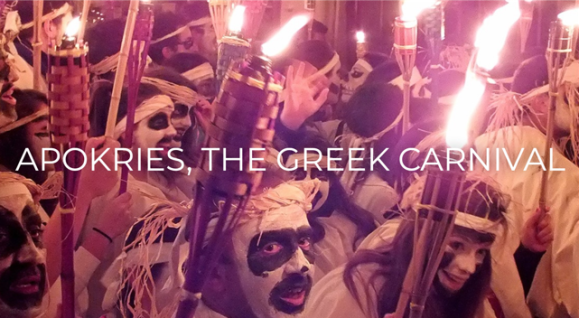
First is Apokries, which essentially means, “No More Meat.” It is a 3-week prelude to the 40-day Great Lent prior to Easter. Lent is a time of solemnity and fasting, so the Apokries is a time of indulgence: Eat, Drink, & Be Merry! Costumes and masks offer anonymity and freedom of expression. These festivities date back to Ancient Greek feasts organized to honor Dionysus, god of wine, fun and fertility, as a celebration of spring and nature’s rebirth. Red and white Easter bracelets are worn through March, then put on a tree on April 1st and hang on a tree branch for birds to use to make their nests.
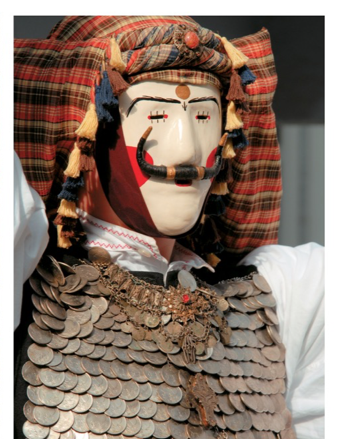
Τσικνοπέμπτη or “Thursday of the Smoke of Grilled Meat” is a BBQ feast where the Greeks roast a pig. This occurs the Thursday of the second week of Apokries. Lent is considered meat-free (but not dairy-free), Wednesday and Friday are days of fasting in the Greek- Orthodox Christian tradition, this makes Tsiknopempti one of the last opportunities for people to eat meat. The last two Saturdays of Apokries and the first Saturday of Lent are also times to remember the dead.
Clean Monday: 40 days before Easter, begins the days of Lent. It is a traditional day of house cleaning, began when women would clean their pots of grease from cooked meat, in preparation for the Lent fast. This is also a day for flying kites. We saw stores filled with colorful kites, though not many were flown while we were in Greece because of the weather.
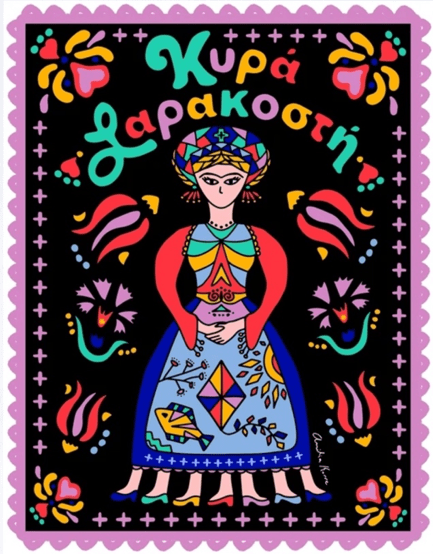
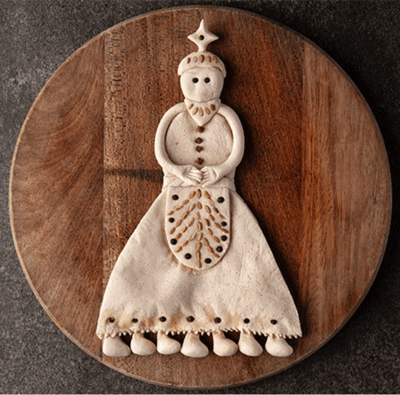
Children bake or paint the figure of a seven legged women, then break of a leg each of the seven weeks till Easter. The last leg is cut on Holy Saturday and hidden in a dried fig or walnut. The one receiving it is lucky.
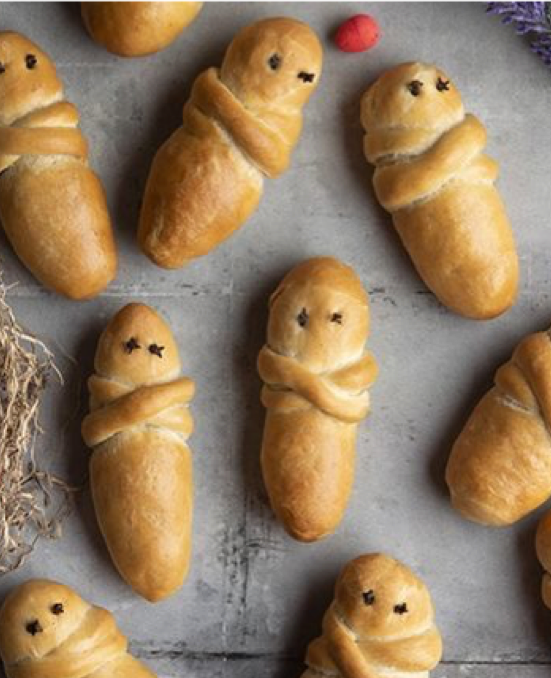
Eight days before Easter, is Lazarus Saturday, celebrating the raising of Lazarus from the dead. Tradition holds that in order to escape Jewish persecution, he fled to Larnica on Cypress. His traditional burial sight is the Church of St Lazarus and there are unique celebrations on Cypress for this day.
Holy Week
Palm Sunday, celebrates the Christ’s entrance into Jerusalem. Greeks are allowed to eat fish on this day, commemorating the miracle of the loaves and fishes.
Tuesday of Holy Week, Athenians gather to hear the Hymn of Kassiani, or Hymn of the Fallen Woman. It is heard only once a year.
On Holy Wednesday, children go out to gather grape leaves from the freshly budded vines.
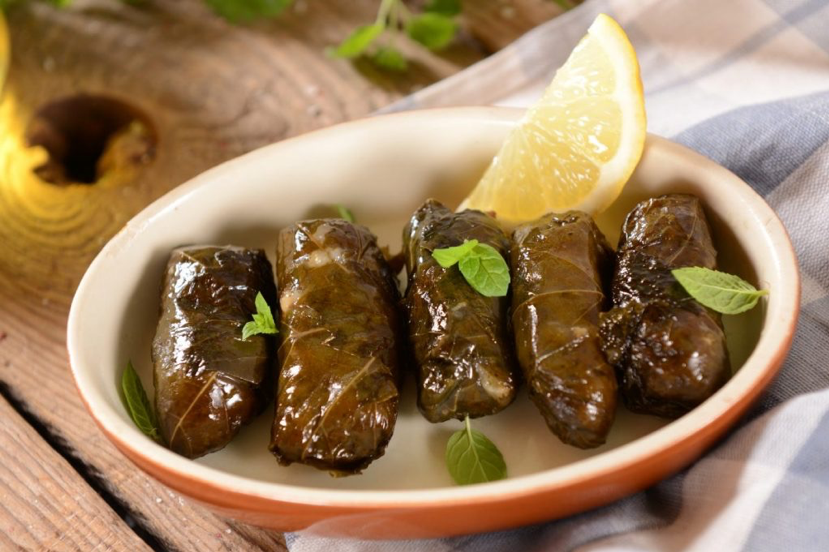
On Holy Thursday, these grape leaves are used to make dolmadakia, which is rice wrapped in the leaves. Greeks may also visit a church for a small bottle of olive oil which has been blessed. They then apply this oil to their children’s hands, feed, forehead, etc.
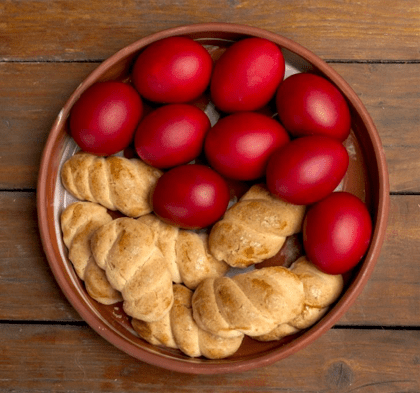
Children dye hard boiled eggs red. The egg symbolizes the sealed tomb, and the red signifies the blood of Christ. One egg is saved until the next Easter season. On Saturday, last year’s is taken to the church and cracked. The prosperity you will see the next year depends on how well the egg was preserved. Also on Thursday, They make butter cookies called Koulourakia and breads called Tsourekia and Tsourekakia. These are not to be eaten before the end of Saturday.
Holy Thursday evening is the longest service of the year, depicting one of the darkest times in the world. It consists of a reading of 12 lessons depicting the crucifixion and burial of Christ.
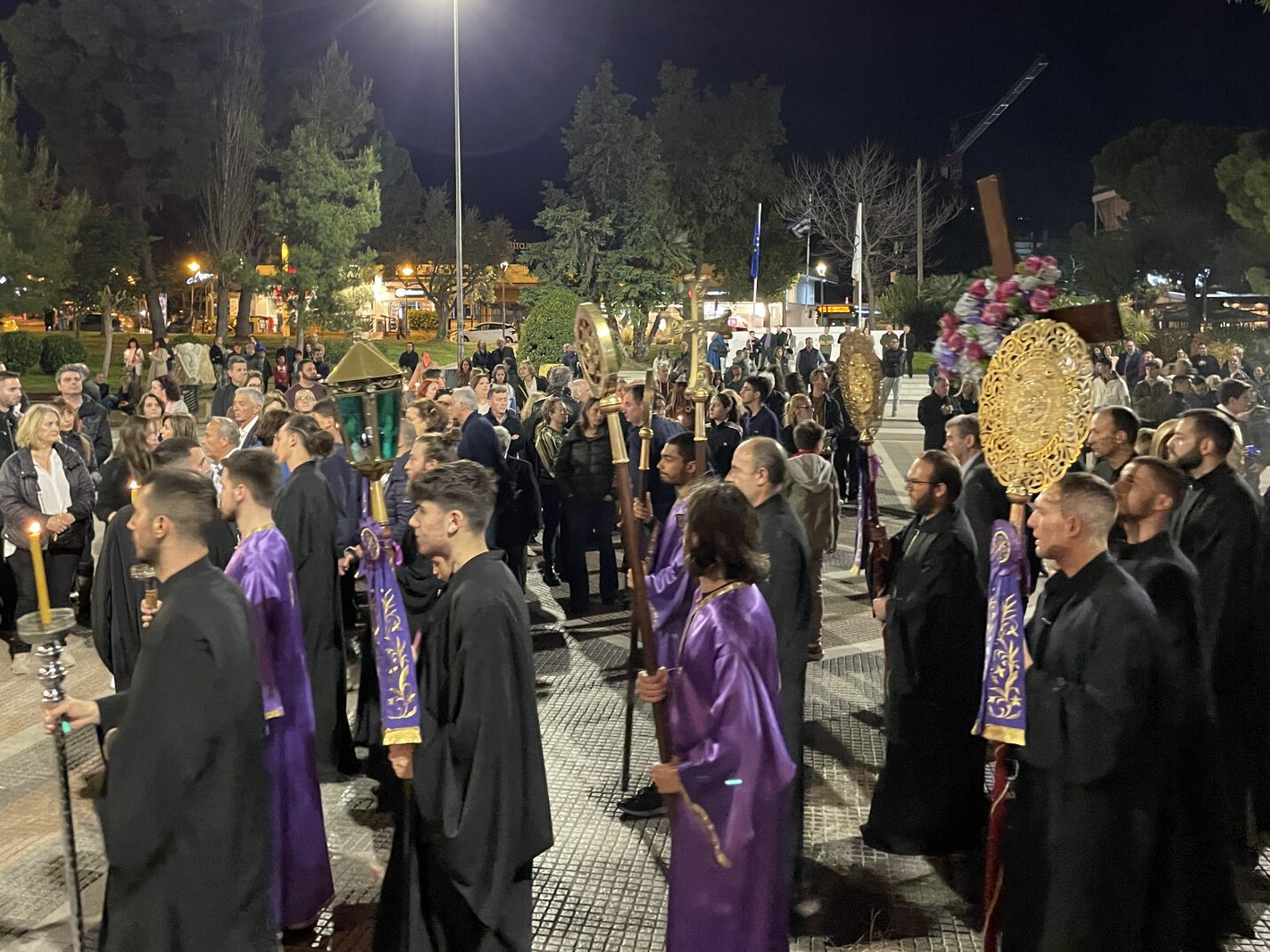
On Good Friday is a candle lit procession through the streets, following the “Κουβούκλειο” (Kouvoukleio) depicting the coffin of Christ.
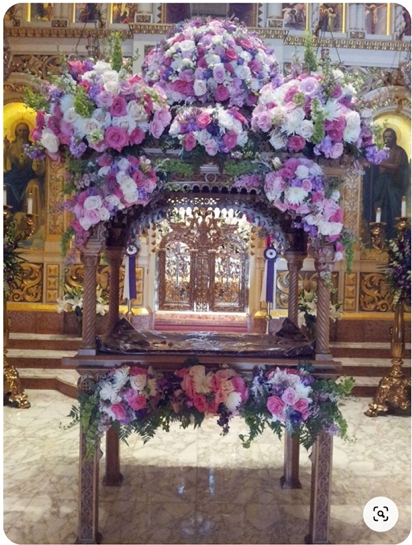
It starts inside the church where a picture or statue of the crucified Christ is lowered into the coffin. It is then taken outside the church for a procession through the streets, with men, women and children following with candles.
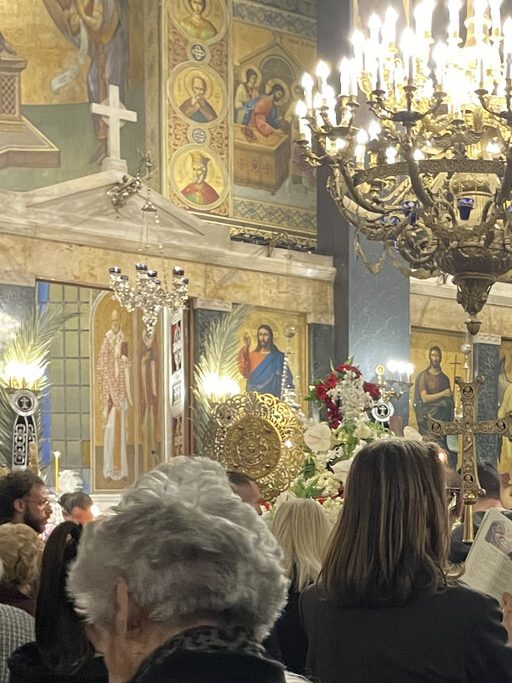
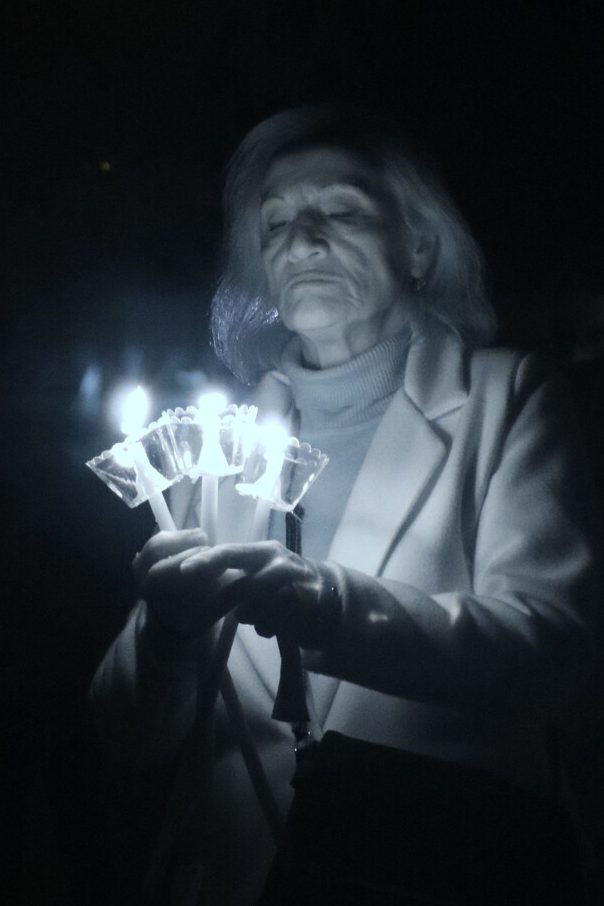
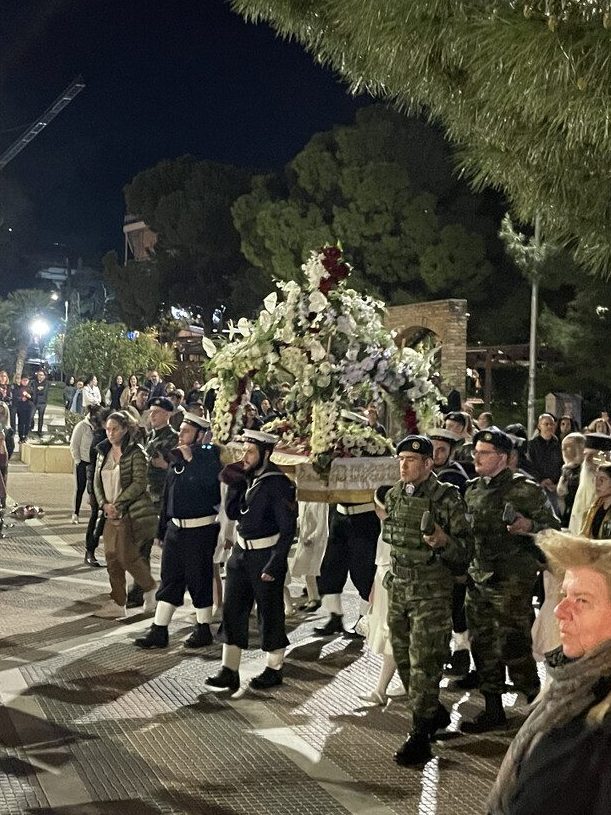
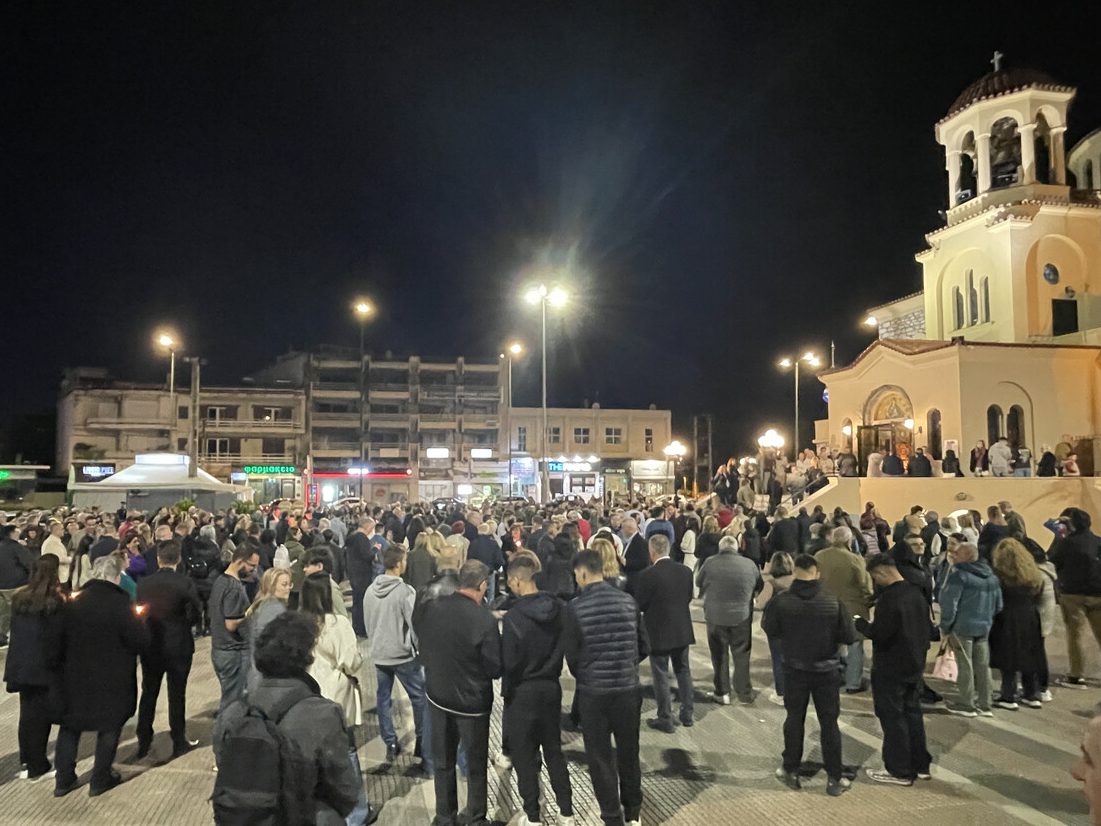
Great Saturday is the day between the crucifixion and resurrection and is the day for the tradition of the “Holy Fire” in Jerusalem. for 1200 years, tradition has that divine light descends into the Church of the Holy Sepulchre.
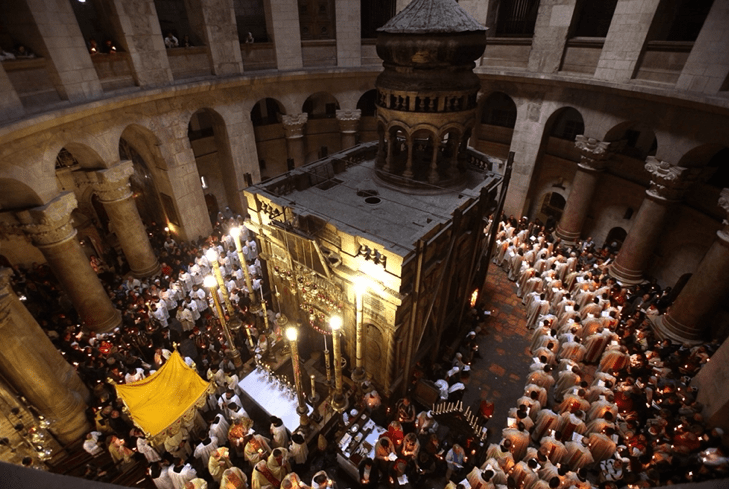
Today, the “Holy Fire” is distributed by air to all Eastern Orthodox nations from the Church of the Holy Sepulchre, and is then brought to each parish before the day is over. People gather before midnight at their church, most waiting outside. The flame is brought out, usually into a darkened cathedral, and the fire is spread from candle to candle. People then pour out of the cathedral to light the candles of those waiting outside, so all are lit before midnight. At the stroke of midnight, the day of the resurrection, fireworks and music celebrate the coming day.
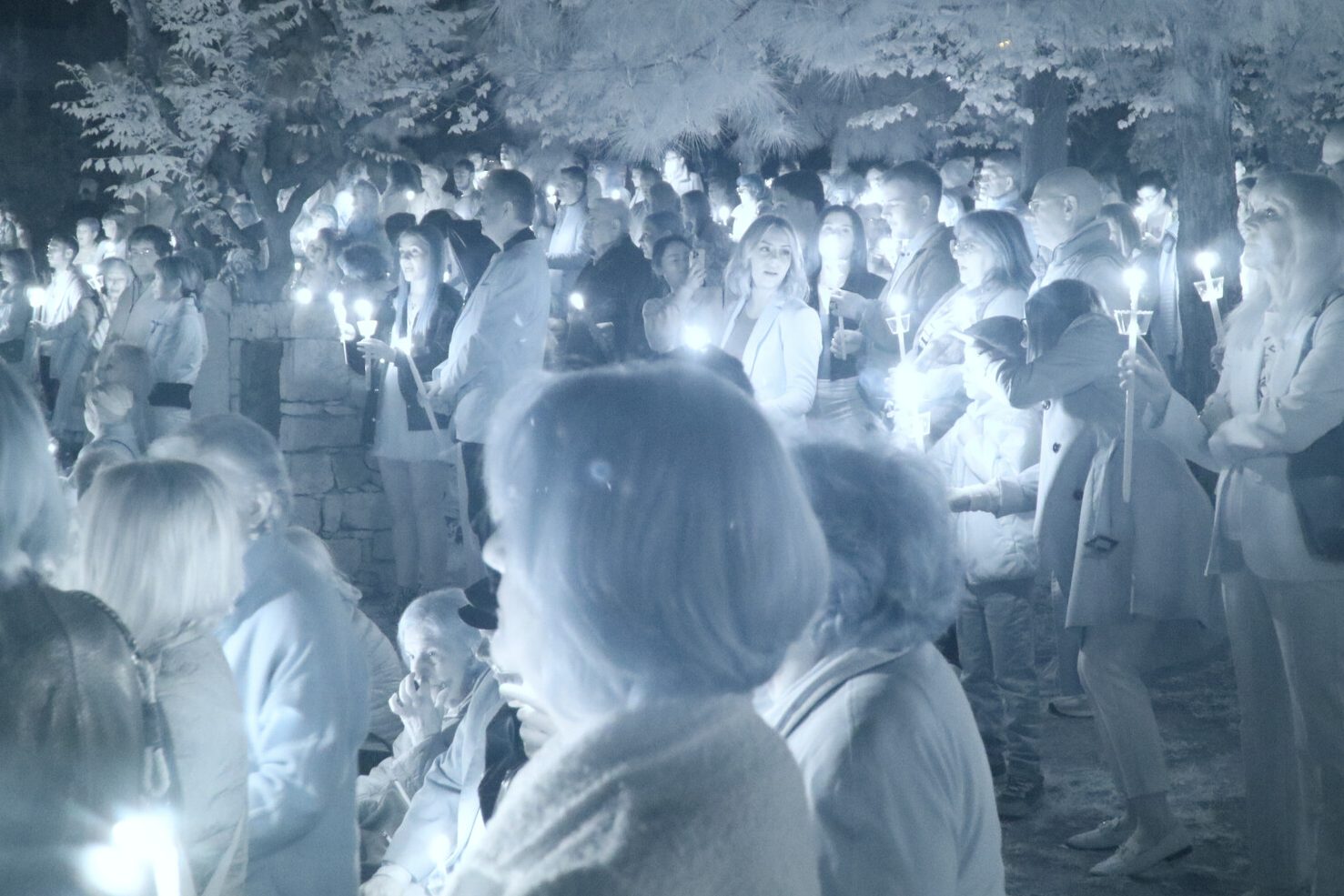
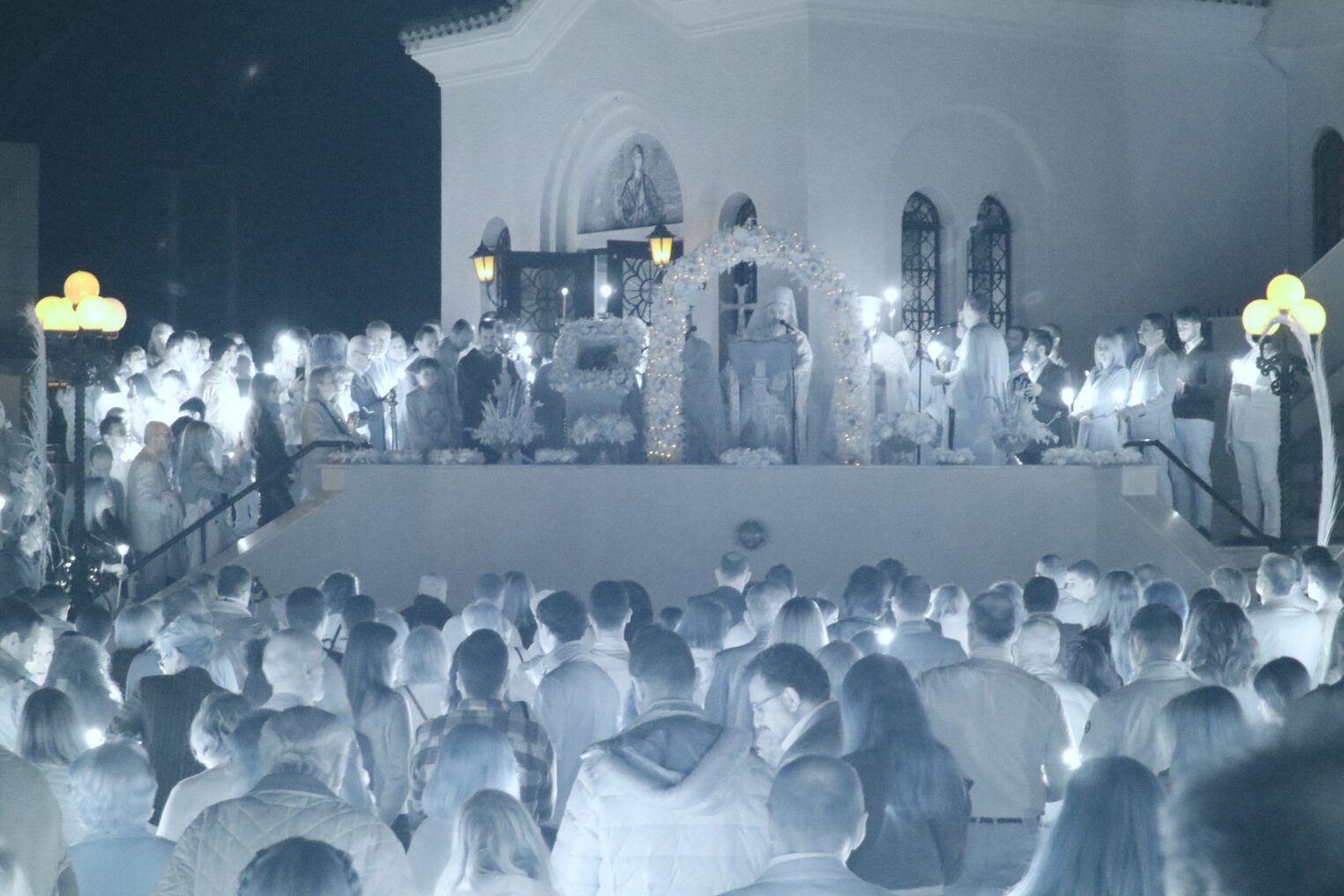
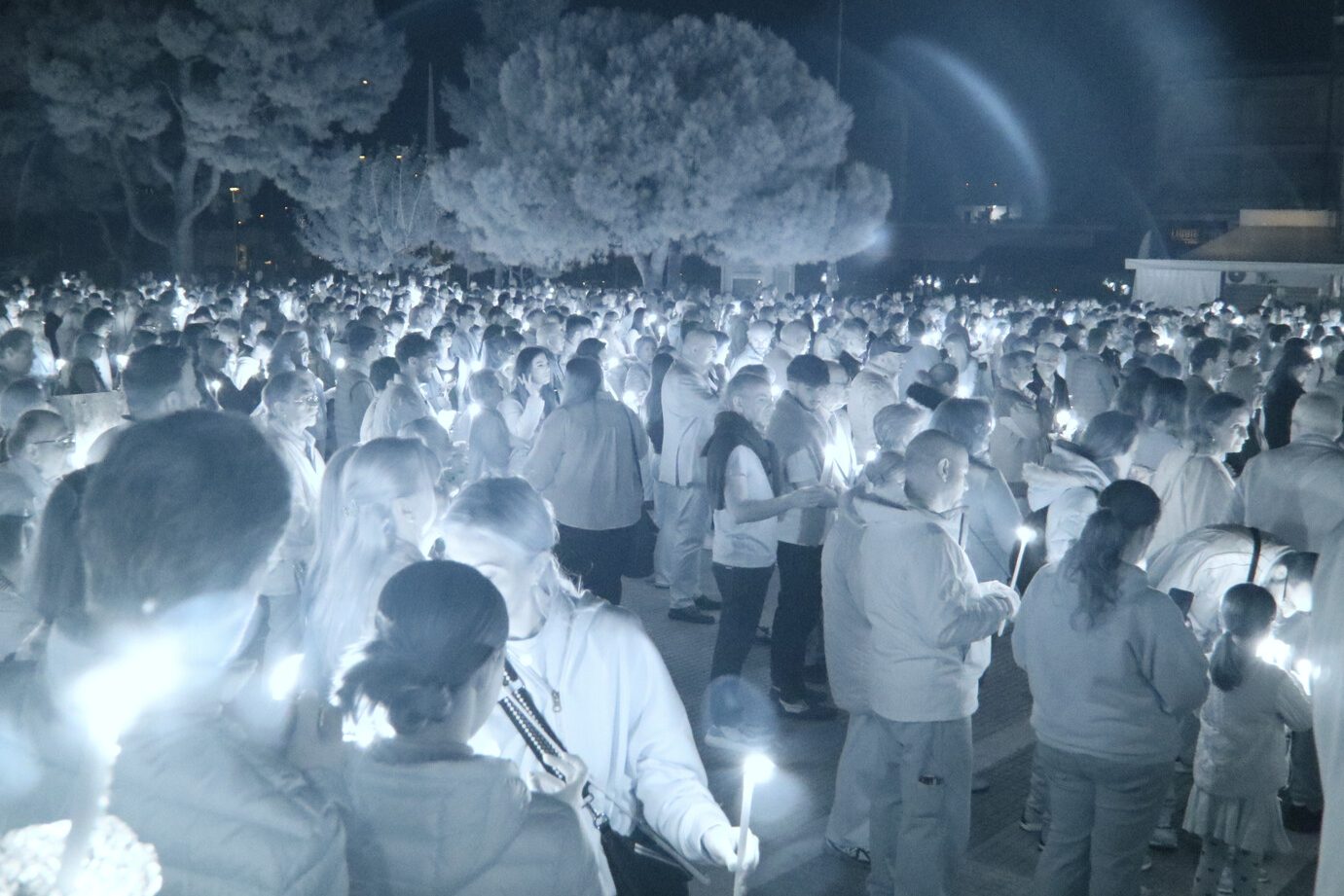
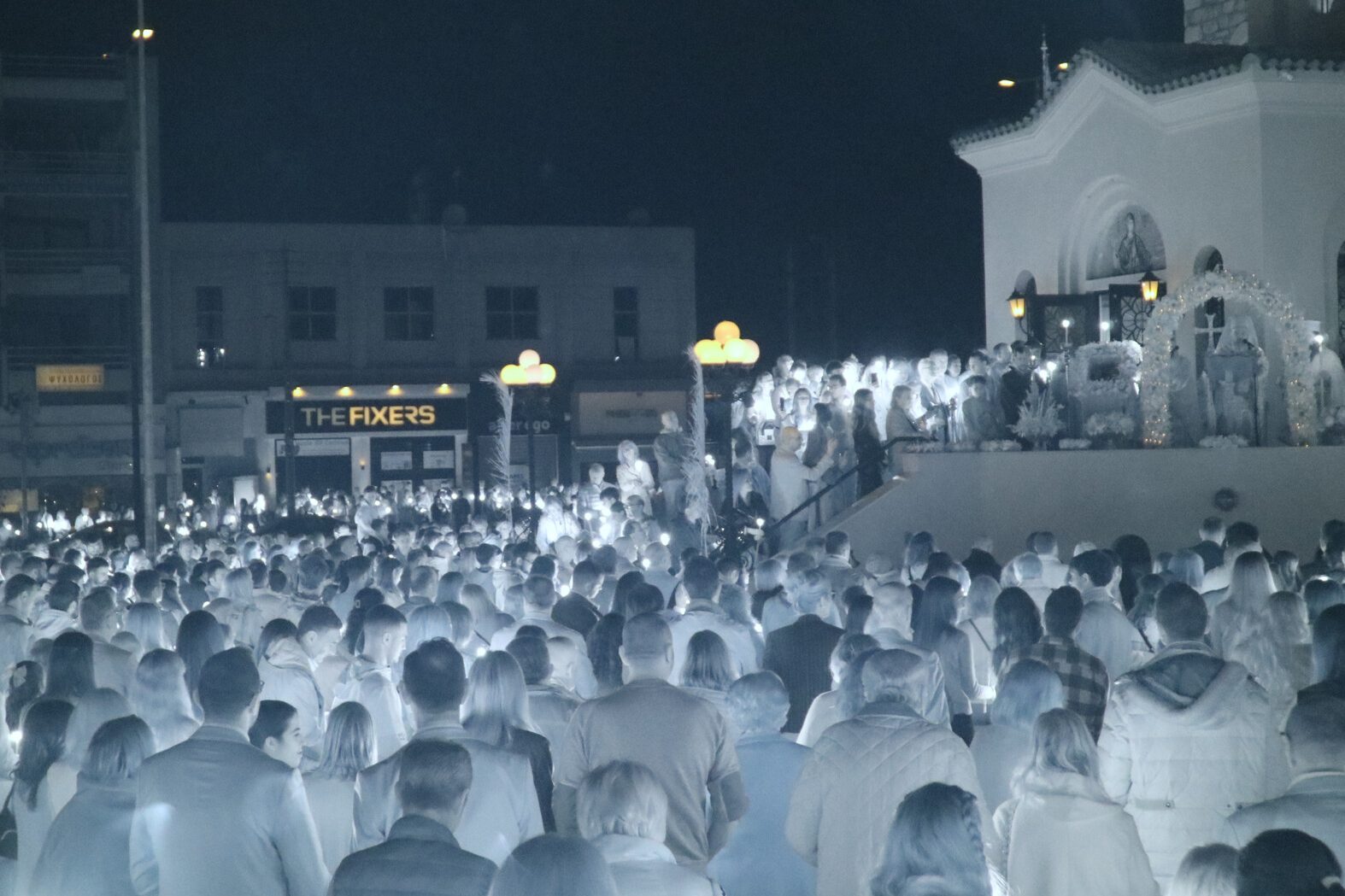
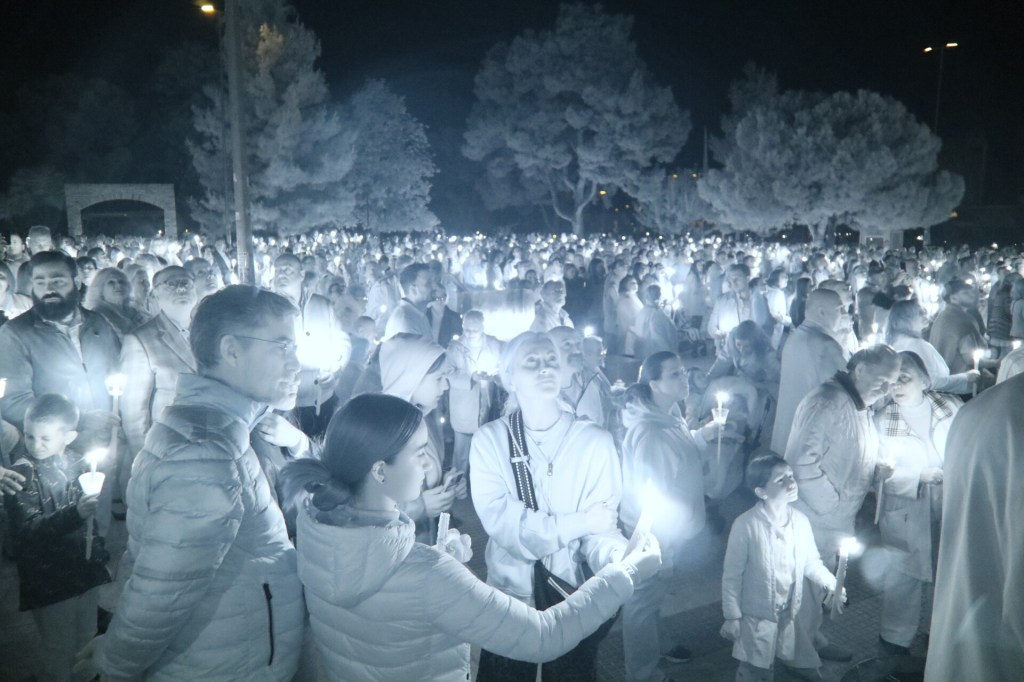
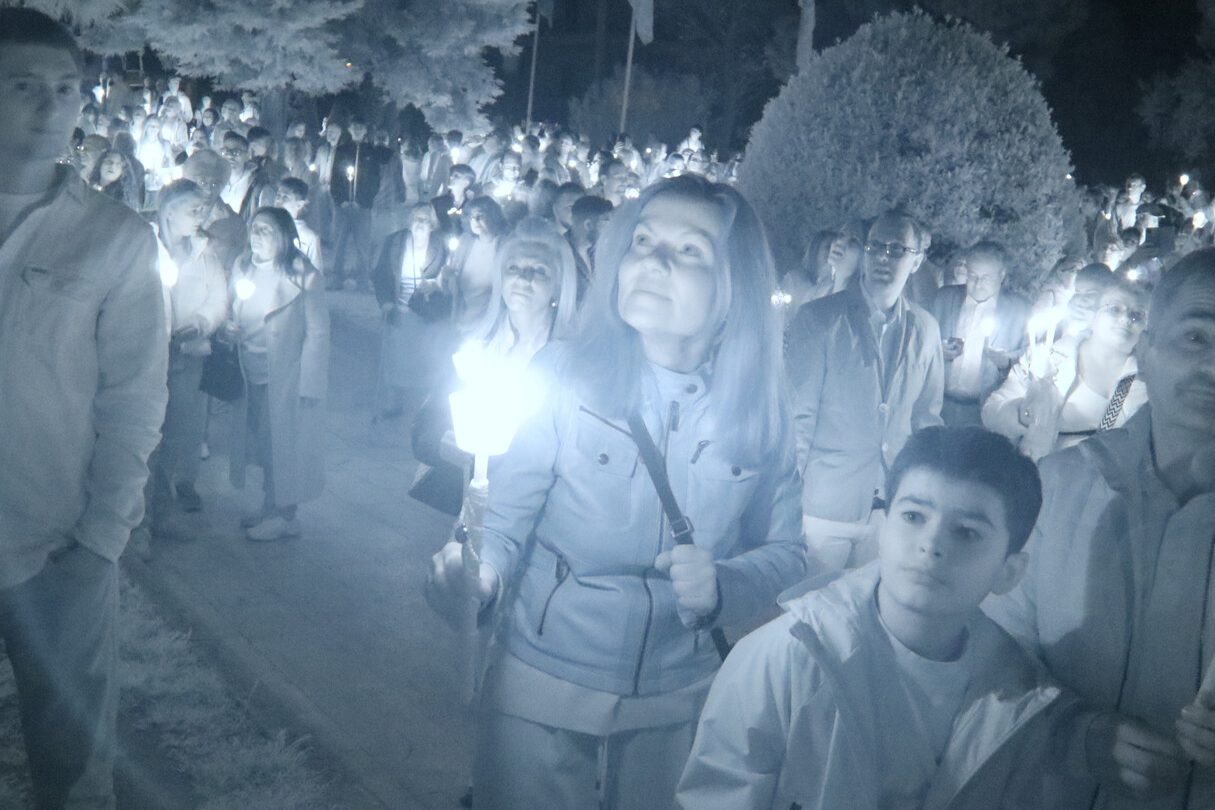
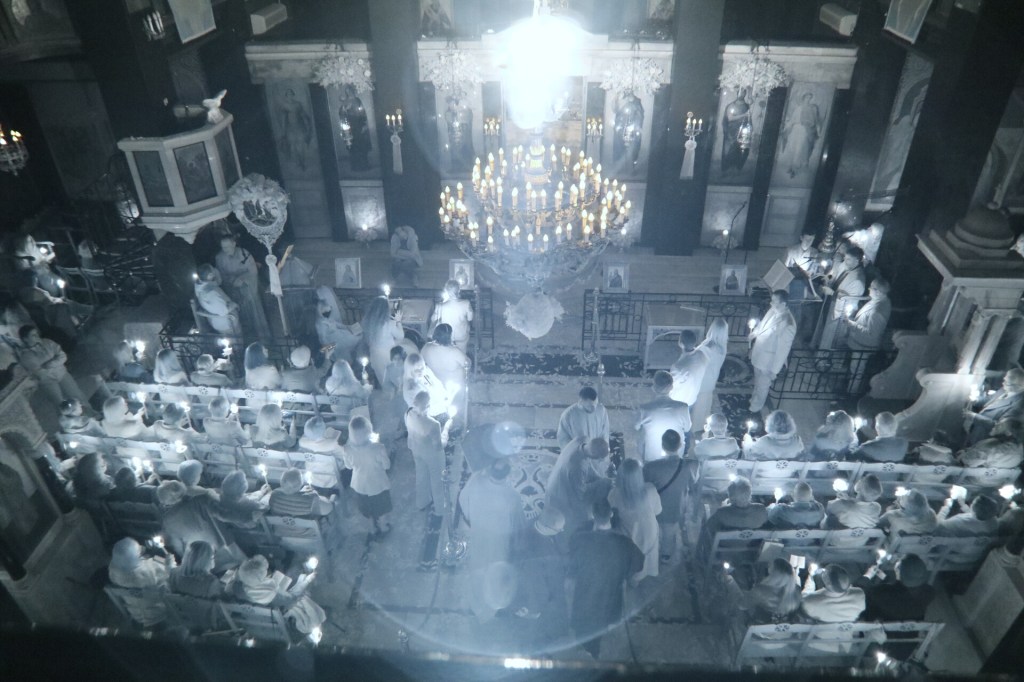
Almost as impressive is the stream of people, walking to their homes carefully preserving their lit candles. The flame from the candle will be kept burning for days, weeks and even months to remember what happened in the tomb Easter morning.
Easter day is for celebration. Families gather for traditional meals, games and family time. After our church services, I enjoyed a traditional Greek Easter meal with family in our building.
Young Lamb or Goat is roasted along with kokoretsi (lamb offal, or parts of the liver, heart, kidneys and tongue, wrapped in the intestines). As I walked home from the metro station, I saw families, out in their yards, turning the lamb or goat and the kokoretsi. It is definitely an acquired taste.
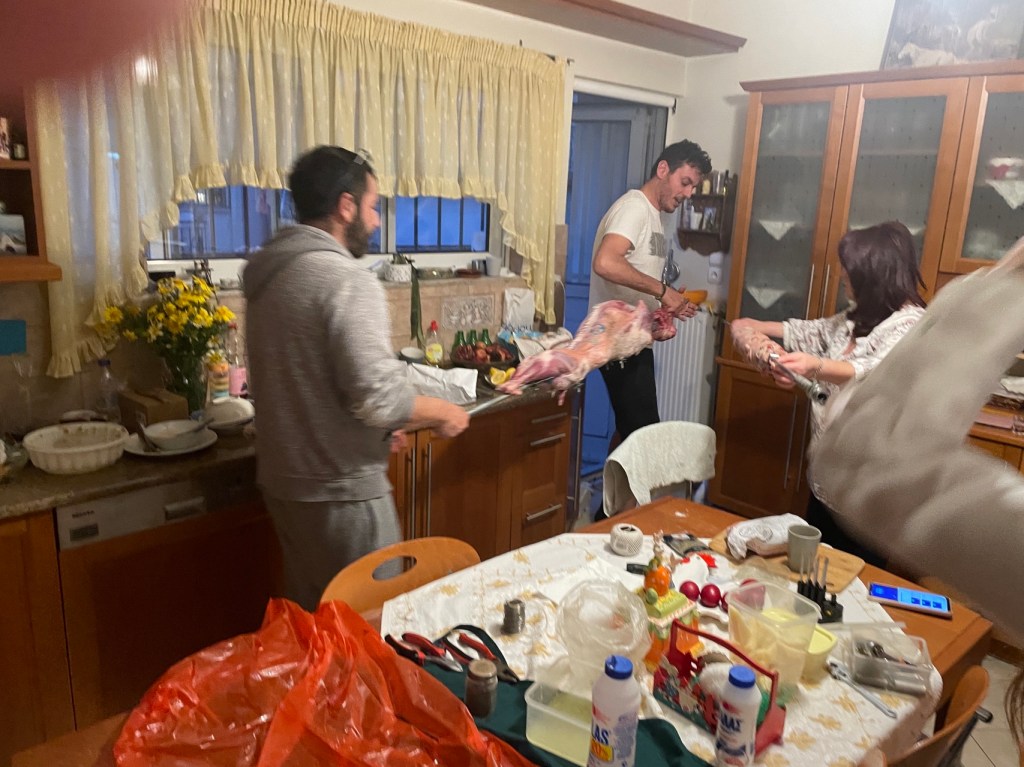
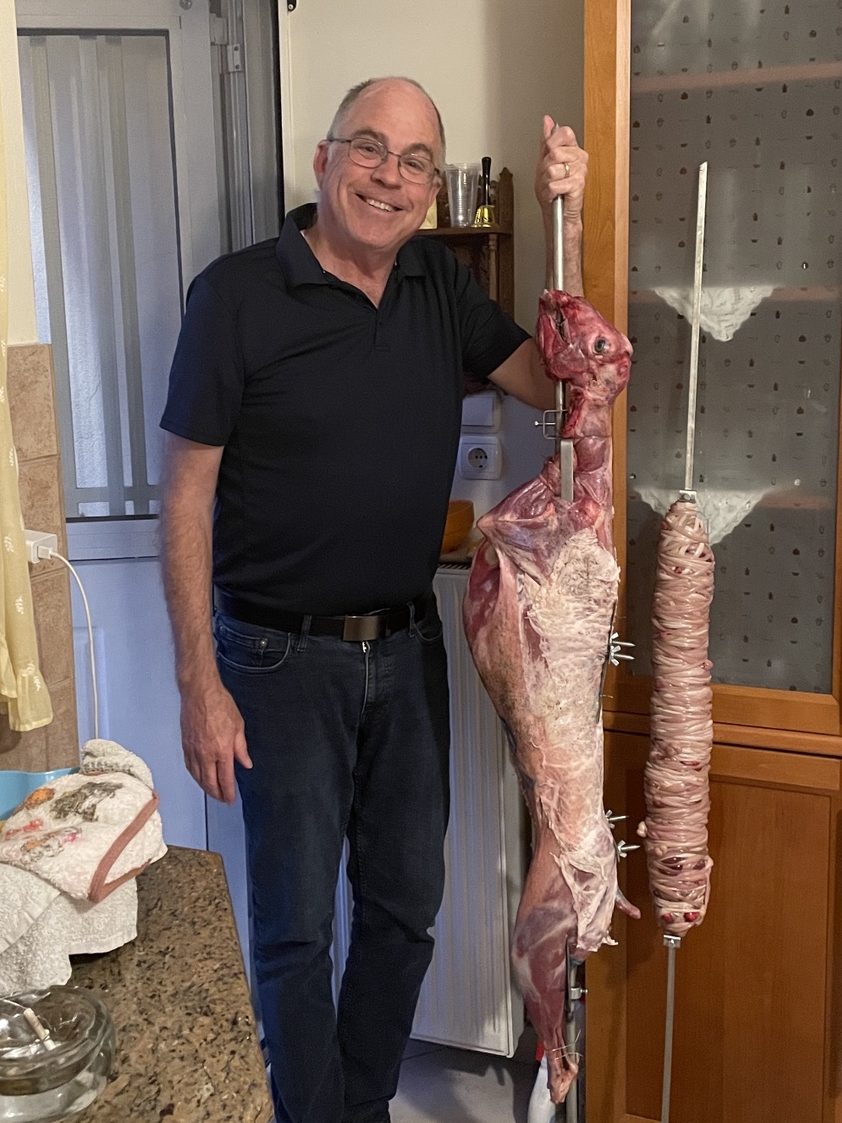
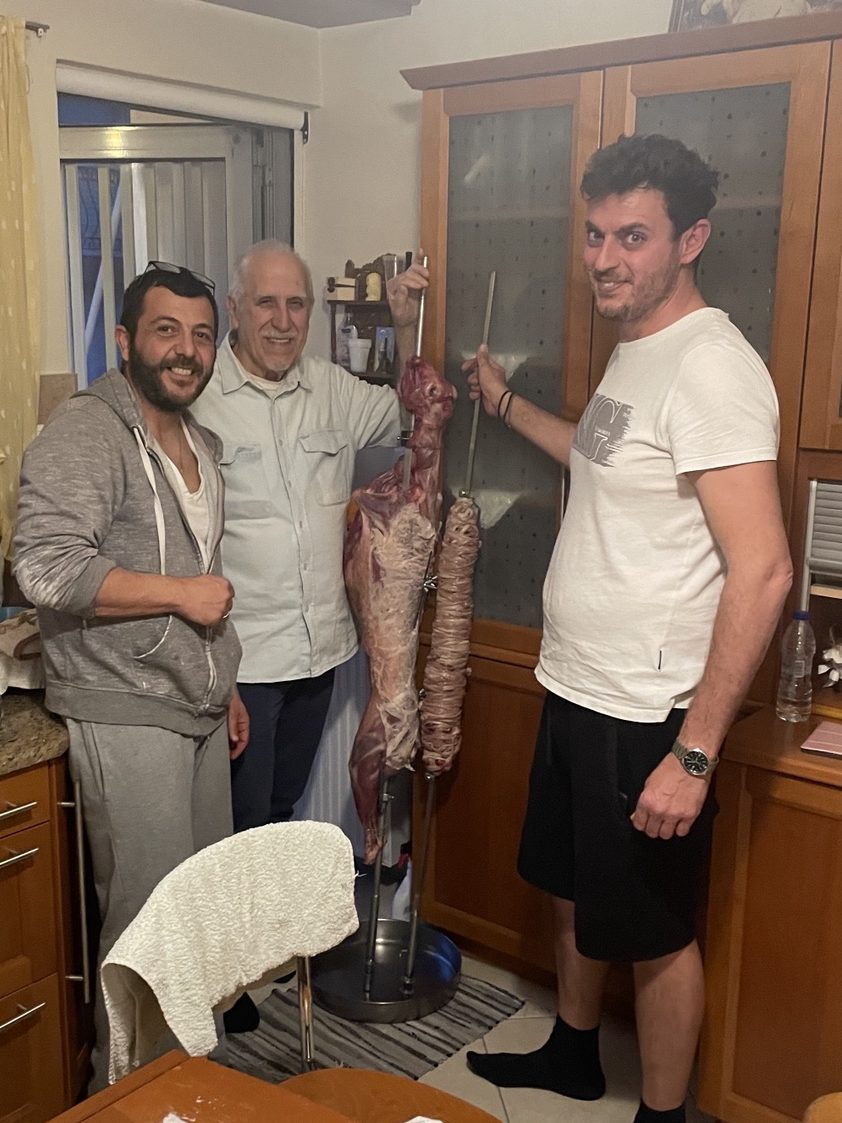
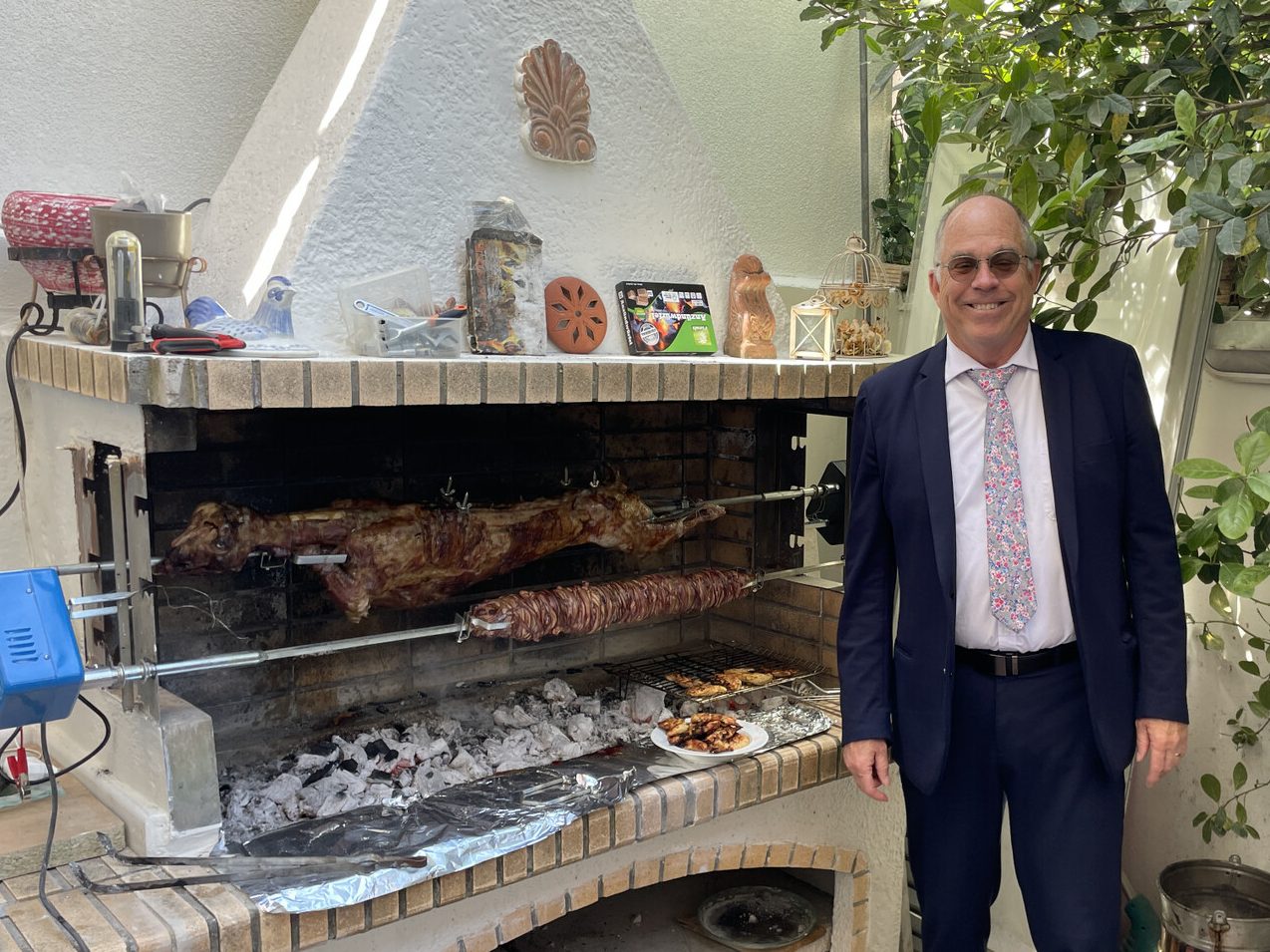
For many Greeks, these traditions are their only link to knowledge and faith in their Savior. Their faith requires little other veneration and works other than these Christmas and Easter traditions. There is much more to say about Greek Christmas and Easter traditions, but our focus here is to show the power of these traditions in the lives of the Greek people, and how tradition can strengthen and maintain our own faith.
Family Traditions
As a family, we built traditions through the years. We held a simple shepherd’s meal Christmas Eve. Placing a sheet on the living room floor, we brought out simple foods, crackers, cheese, figs and other dried fruit. My children looked forward to that as a highlight of the Christmas season and brought the tradition into their own families. We focused on giving, baking gifts for friends and neighbors, serving and being mindful of others. My eldest daughter’s most powerful memories are from just such an experience.
For Easter, we followed the normal traditions of Easter, egg hunts, the Easter bunny and of course, church services, but as I have watched the Greek people celebrate the resurrection, I wish we had done more.
Traditions are powerful. One of the reasons the church is making little headway in the eastern orthodox countries is the plethora of tradition. Traditions bind individuals, families and generations together, and to their faith.
We need to harness the power of traditions, not only as families, but as a church. The brethren are emphasizing the celebration of Easter, and for good reasons. Traditions are most powerful in binding people to true faith in the Lord Jesus Christ.
 Latter-Day Saints