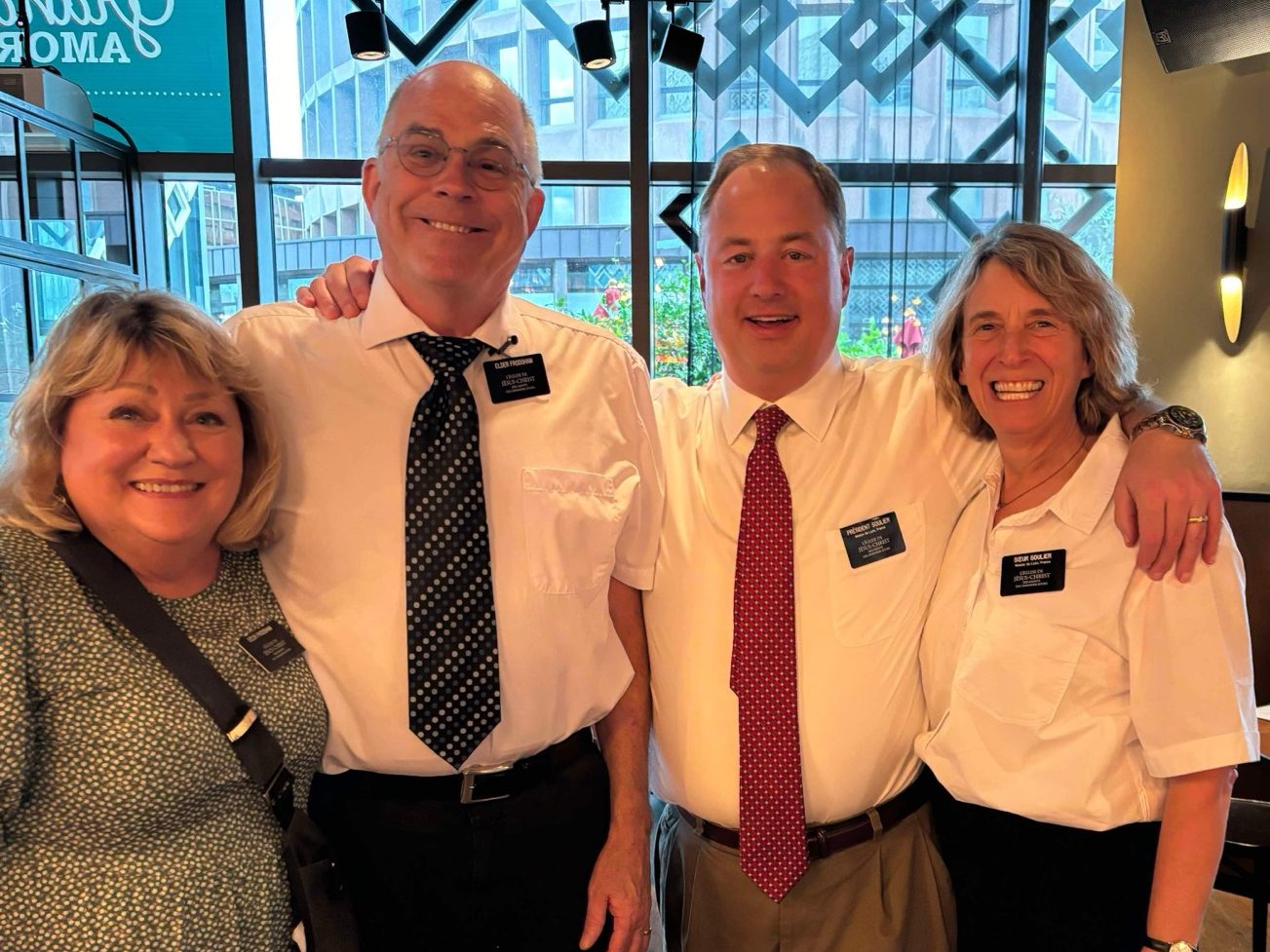
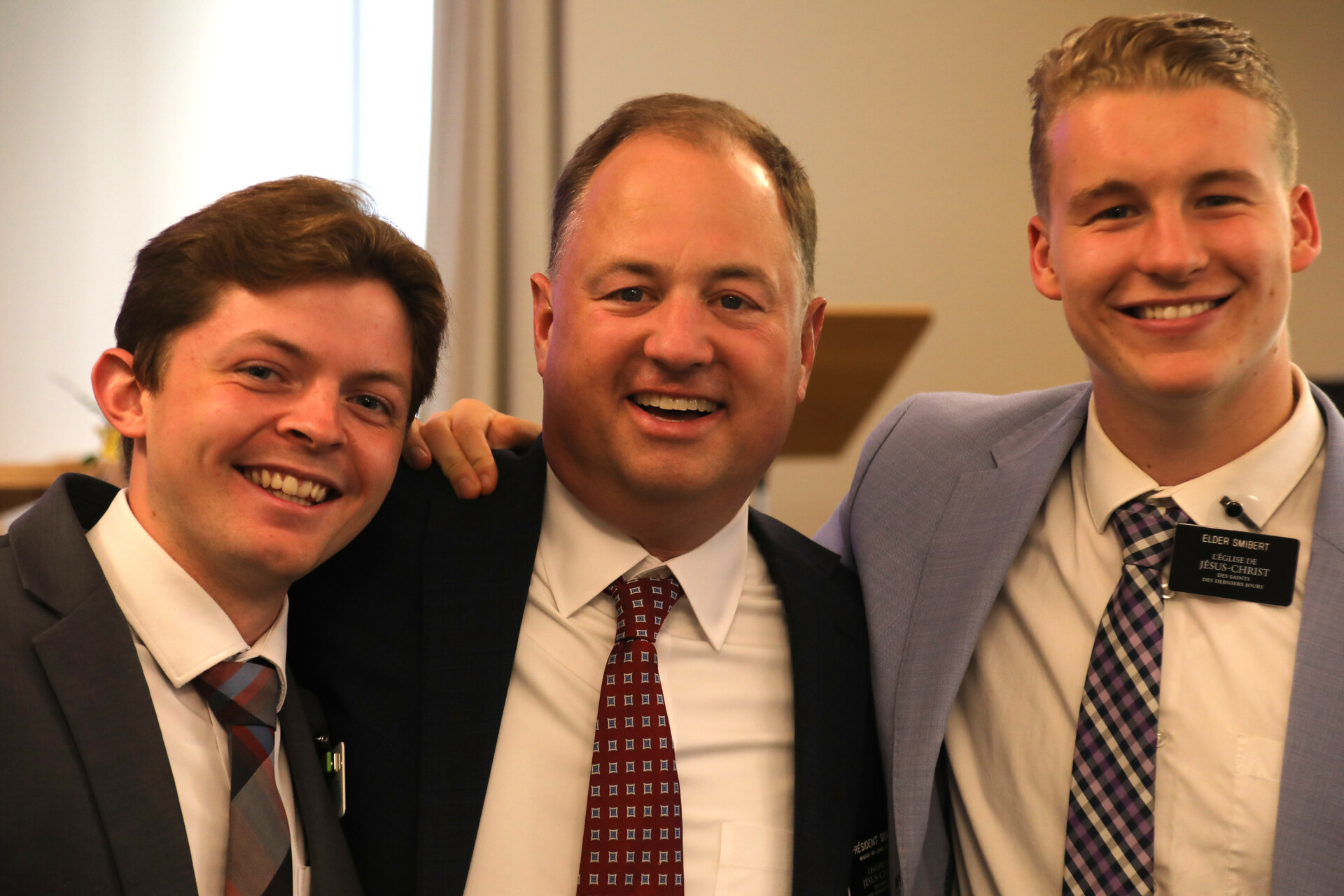
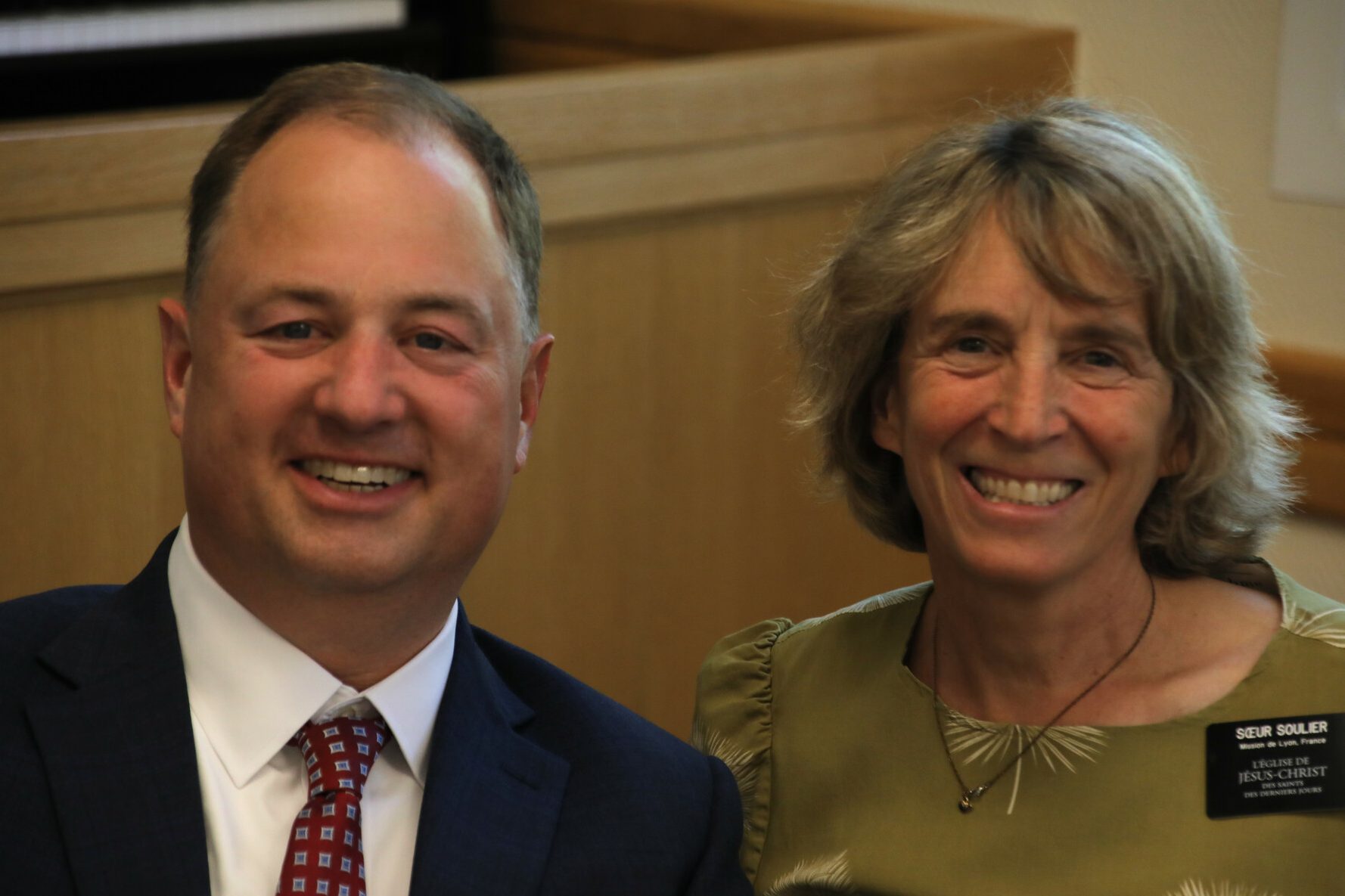
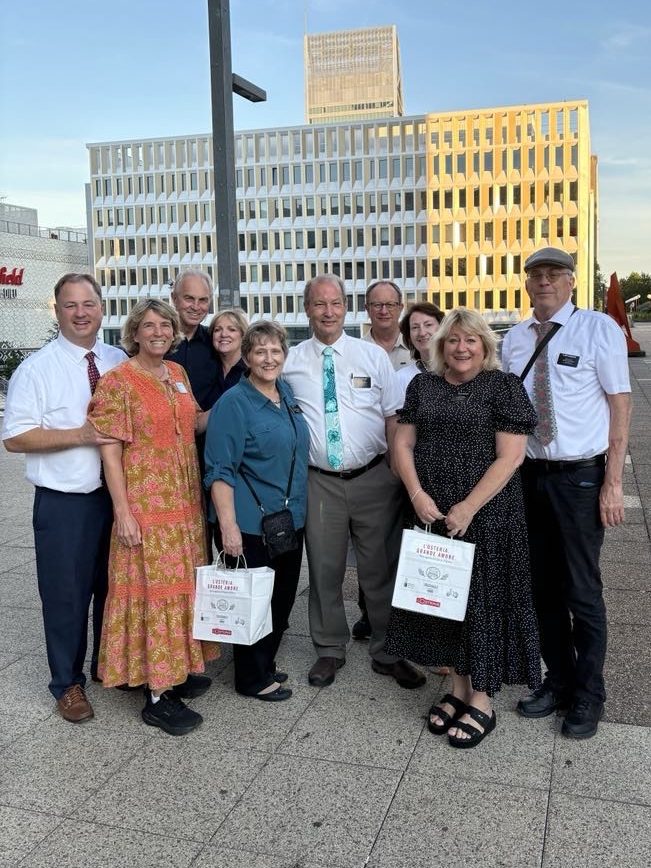
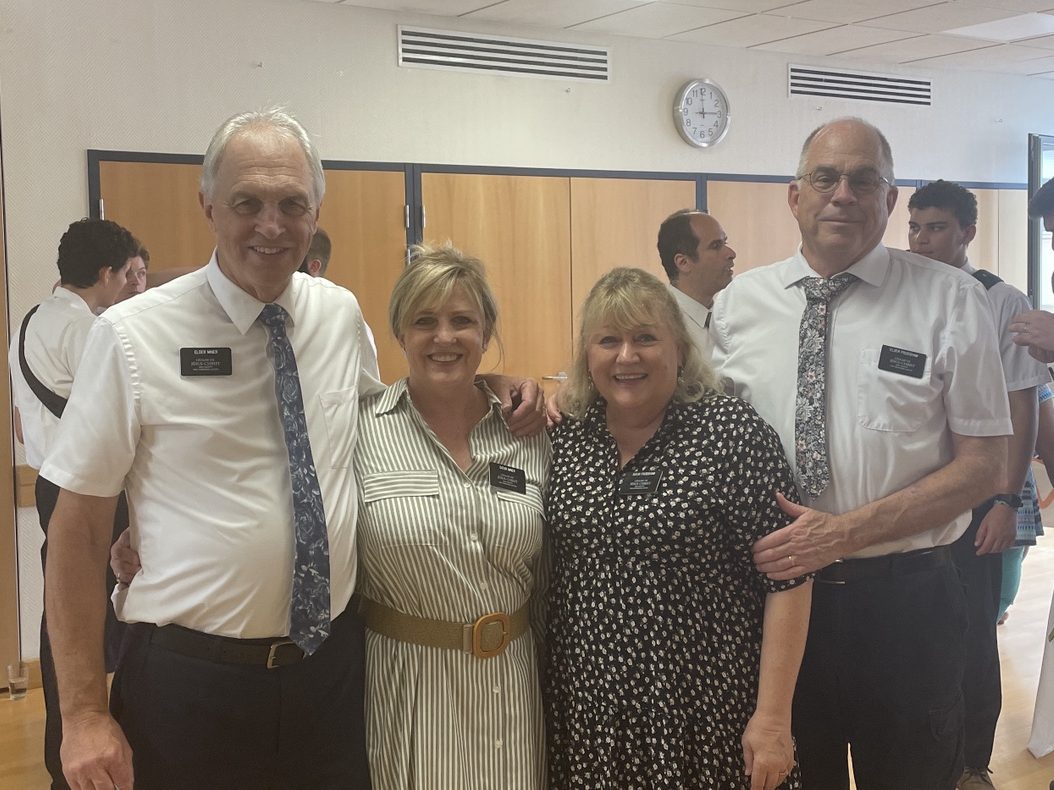
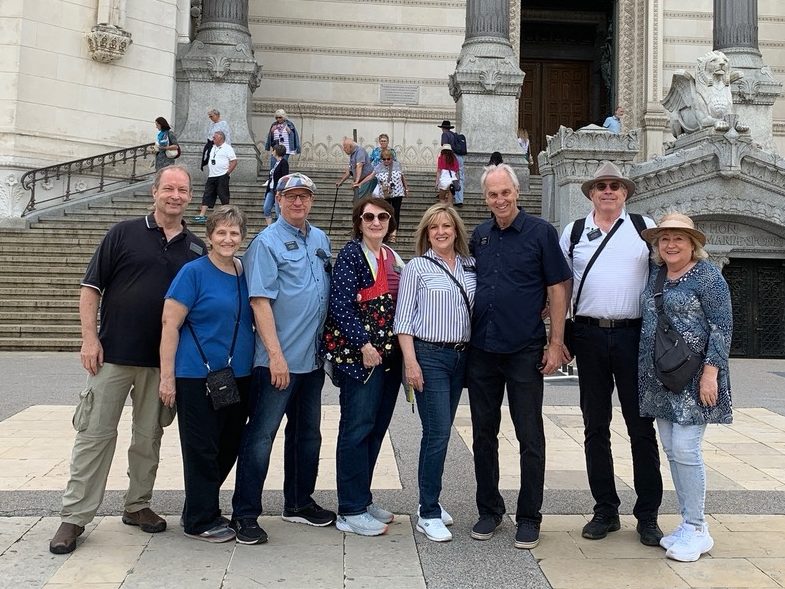
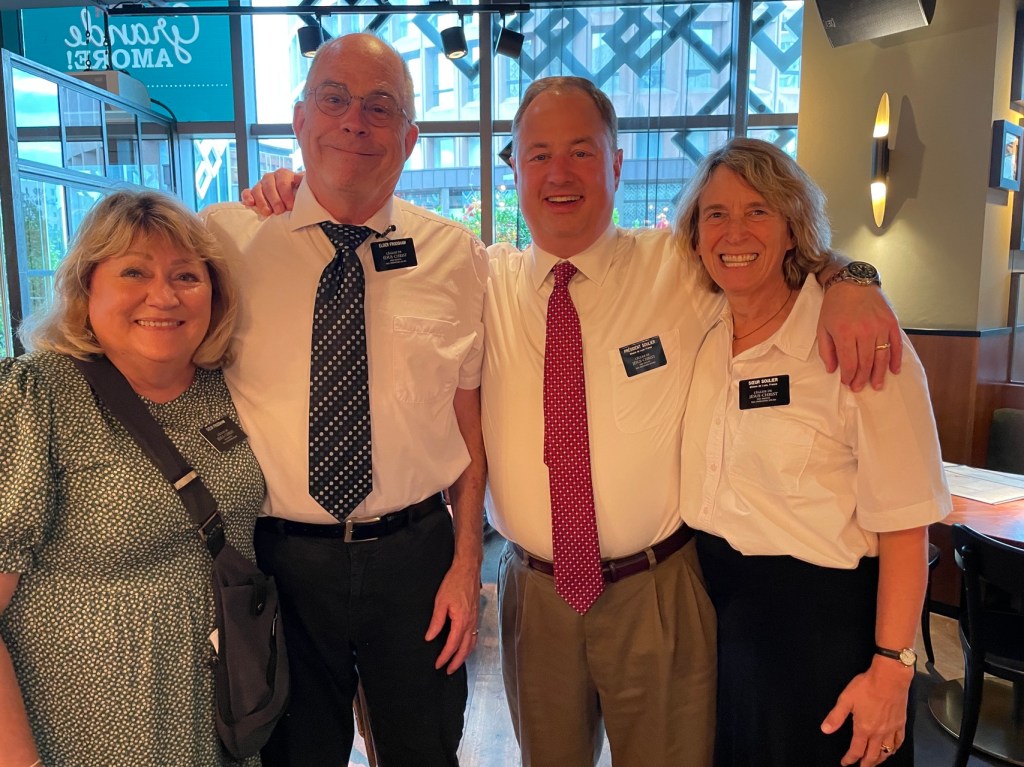
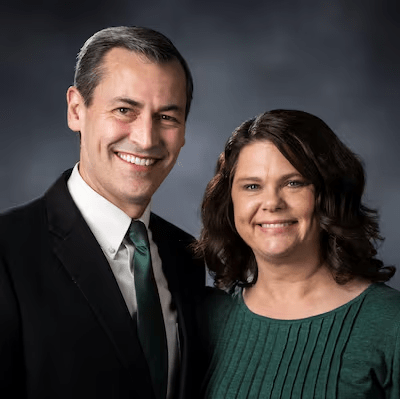
Late last night, Catherine was scanning Facebook, something she rarely does, and found that President Jason Soulier, Mission President for the France Lyon mission, had passed away in his sleep early that morning. We were shocked.
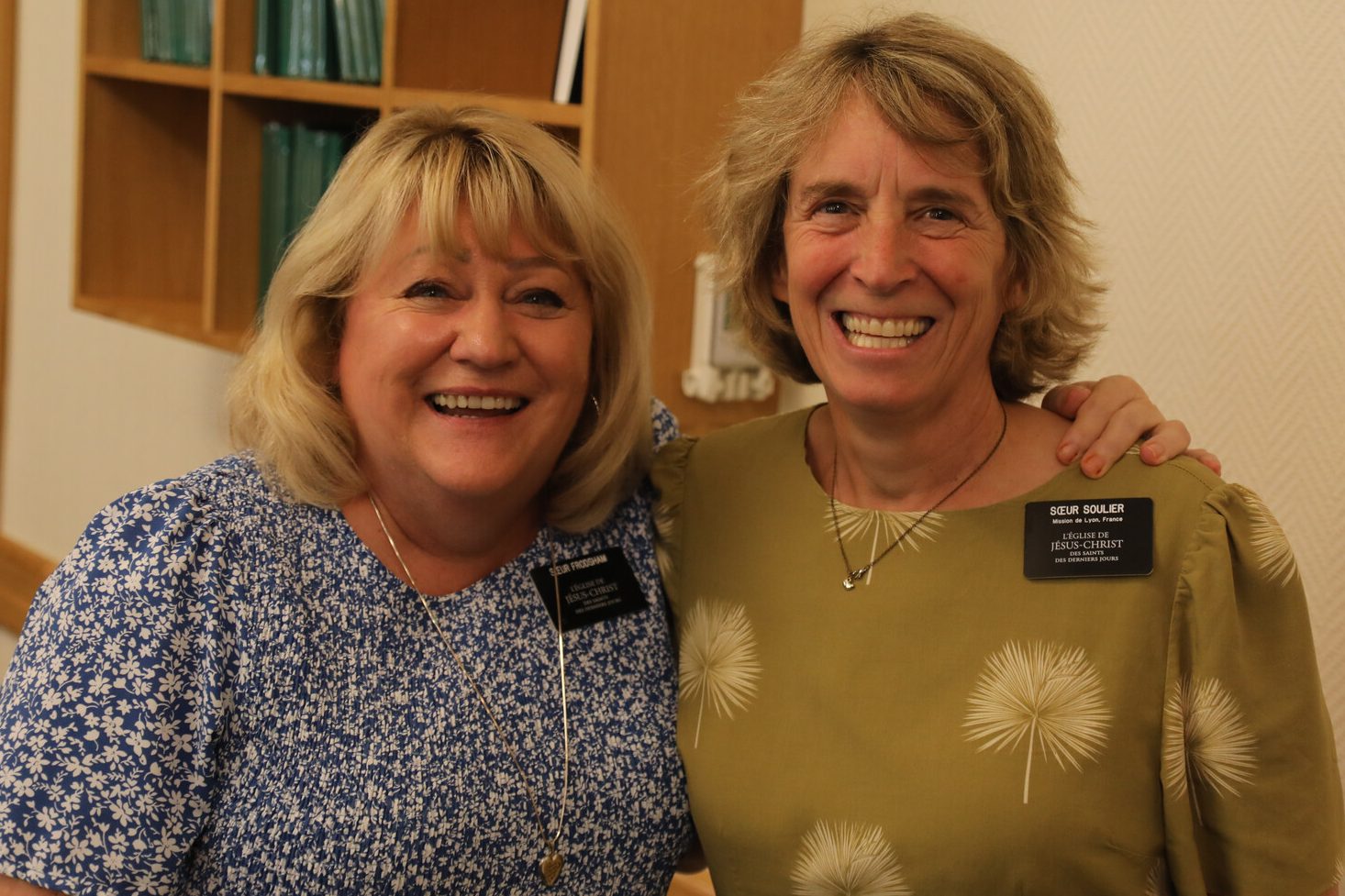
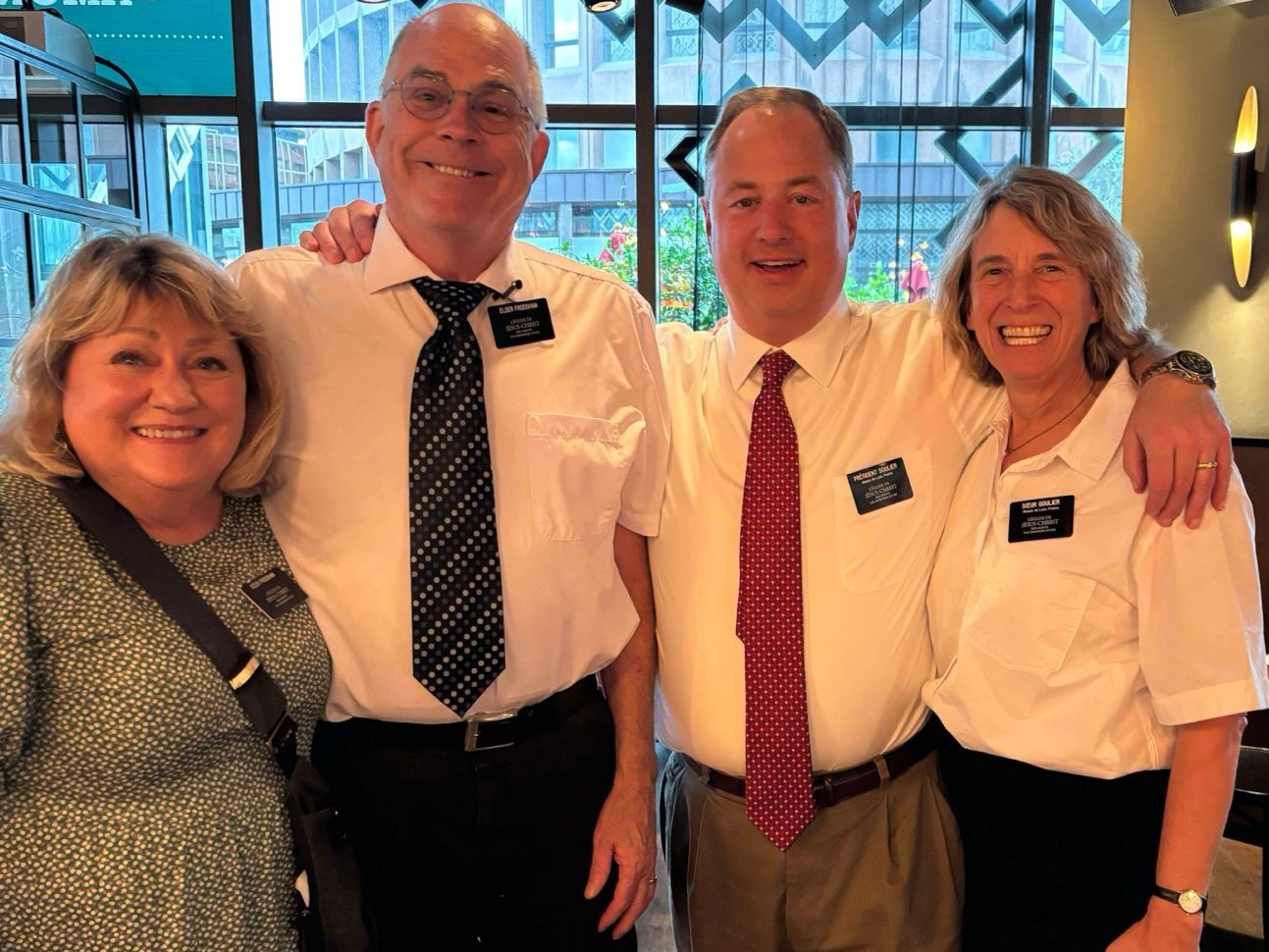
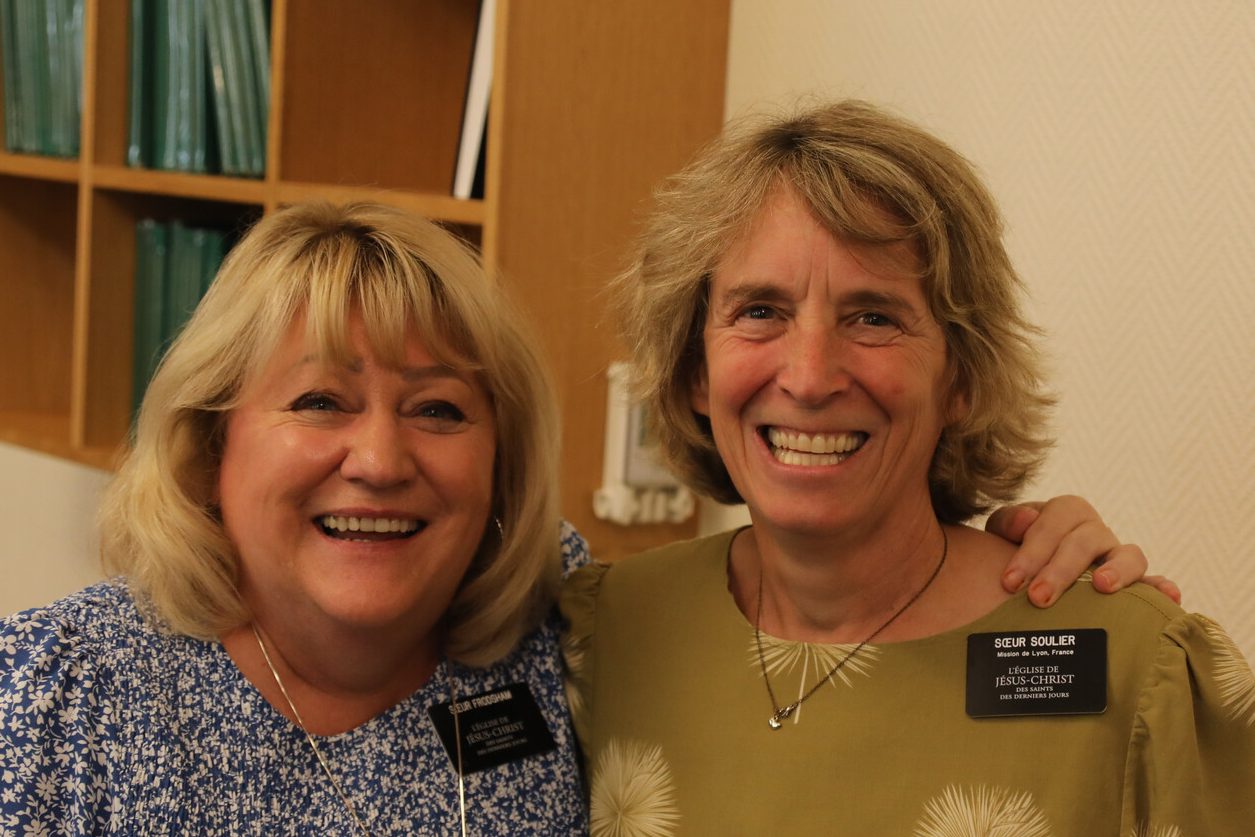
The Souliers started their mission service in June, and we served under them for several months before our urgent transfer to Greece. In that short time, we became fast friends. Catherine, in particular, formed an instant bond with Jennifer Soulier. The couples in the mission office were new, and although we were WSR (Welfare and Self-Reliance) missionaries, we were the most experienced senior couple in Lyon and developed a warm relationship with the Souliers as they began their mission.
In an earlier post, I compared the three mission presidents under which we have served. I love and admire all three of these couples, capable and humble servants of the Lord Jesus Christ. We pray for Sister Soulier, far from home, with so many missionaries under her care. Abruptly losing a spouse is scary, heart wrenching and extremely painful. It leaves one numb and in a fog for a time. Tim and I pray for Sis. Soulier as we know how that feels. We wish there was something we could do to help or relieve some of the pain. Tim and I both know there are no words that help but we want Sis. Soulier to know we care for and love her and are praying for her and her family. We pray for their family, children and grandchildren who have lost such a powerful and worthy father and grandfather. We are also praying for our sweet senior missionary friends and our young missionaries serving in the Lyon Mission. They are in our hearts. We love them and are asking angels to attend to all of them. This news has ripped the rug out from beneath all of us and they need our prayers.
Thank you President Soulier for your example. Thank you for you dedication, love, compassion and passion for the work. Thank you for your devotion to, and focus on each and every missionary in your care. Thank you for genuine friendship and Christ-like Example. Till we meet again, till we meet at Jesus’ feet. We love you President and Sister Soulier!
Back in the days of wood burning cell phones, I took a first aid class from the Red Cross. One of the subjects we covered was approaching emergency situations such as a car wreck or earthquake. The first step arriving on scene is assessment. Whose needs are the most critical? The answer is not the ones who are screaming. Their hearts are pumping and obviously, their lungs work just fine. Their situation may be serious, but they are alive, and at least for a time, they can wait. The ones whose needs are the most serious are the quiet ones, the ones who are silent and still. Their heart may have stopped or they may not be breathing. These are the ones for whom seconds may count, the ones whose needs are most dire.
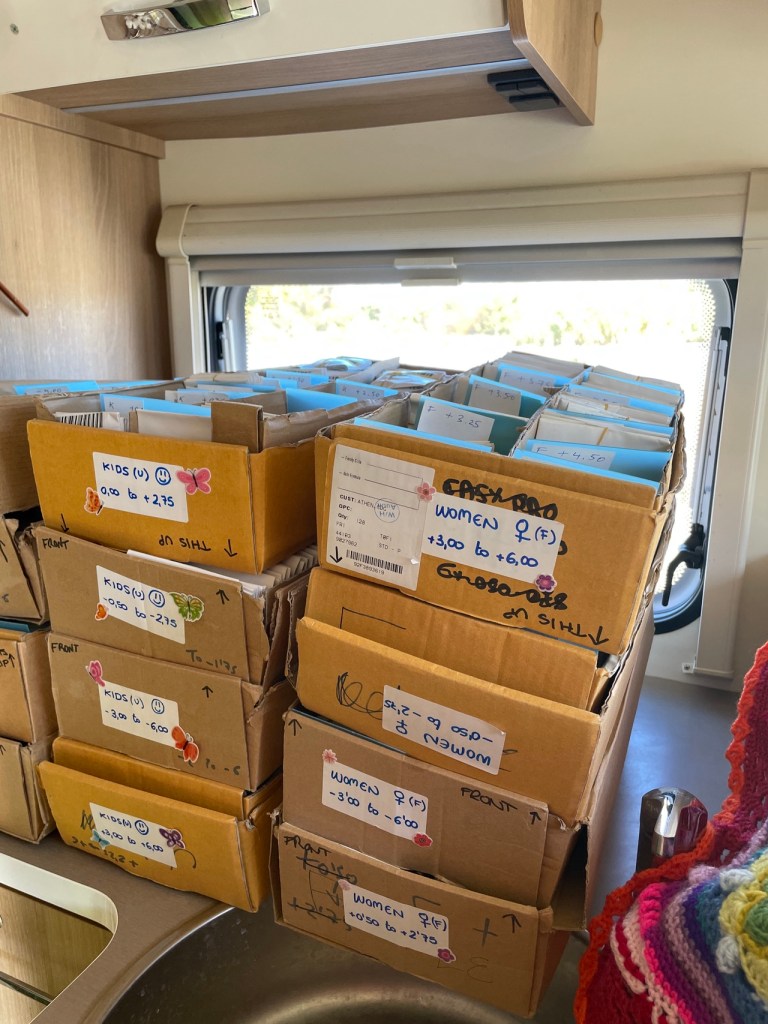
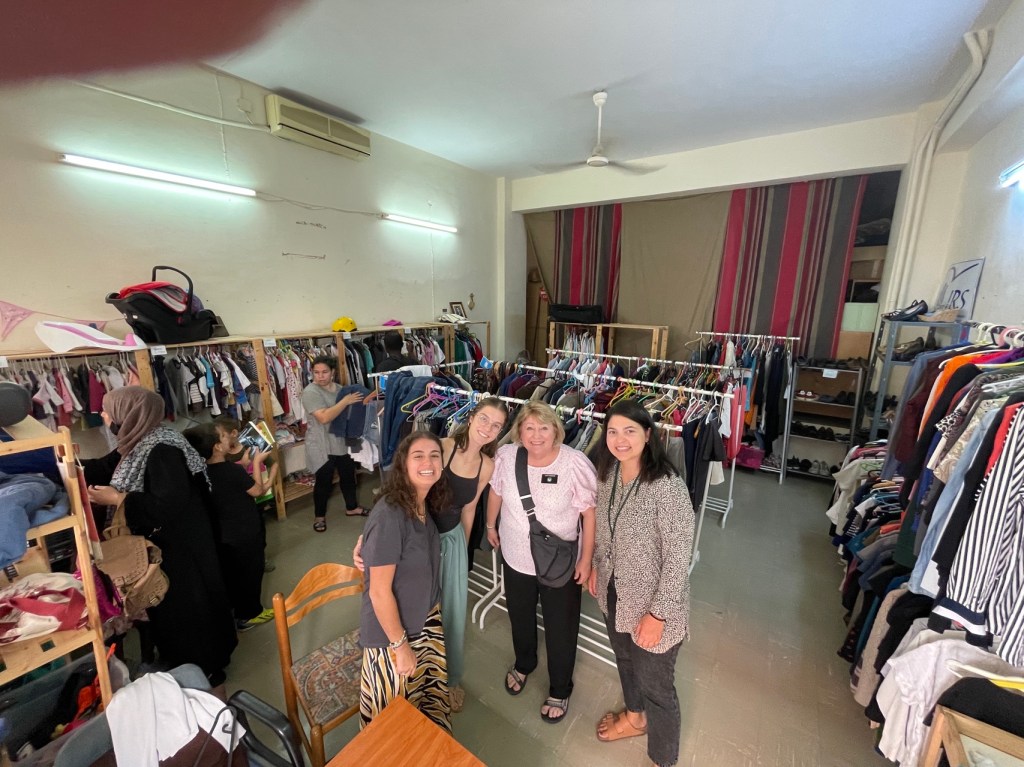
Distributing Clothes at a community center serving refugee camps near Serres
In Greece, we have a perfect storm of refugee and homeless needs. Most refugees arrive in Greece on flimsy boats or rafts, coming from Turkey or Africa. The branch president of Thessaloniki described the journey of a recent arrival to several of the migrants who attend the branch and was surprised at the minimal response he received. It turns out that most of them had arrived on Greek shores via boat as well. One of the members attempted the boat crossing 20 times before he was successful. Incredible stories of persistence and faith reside right in his little branch.
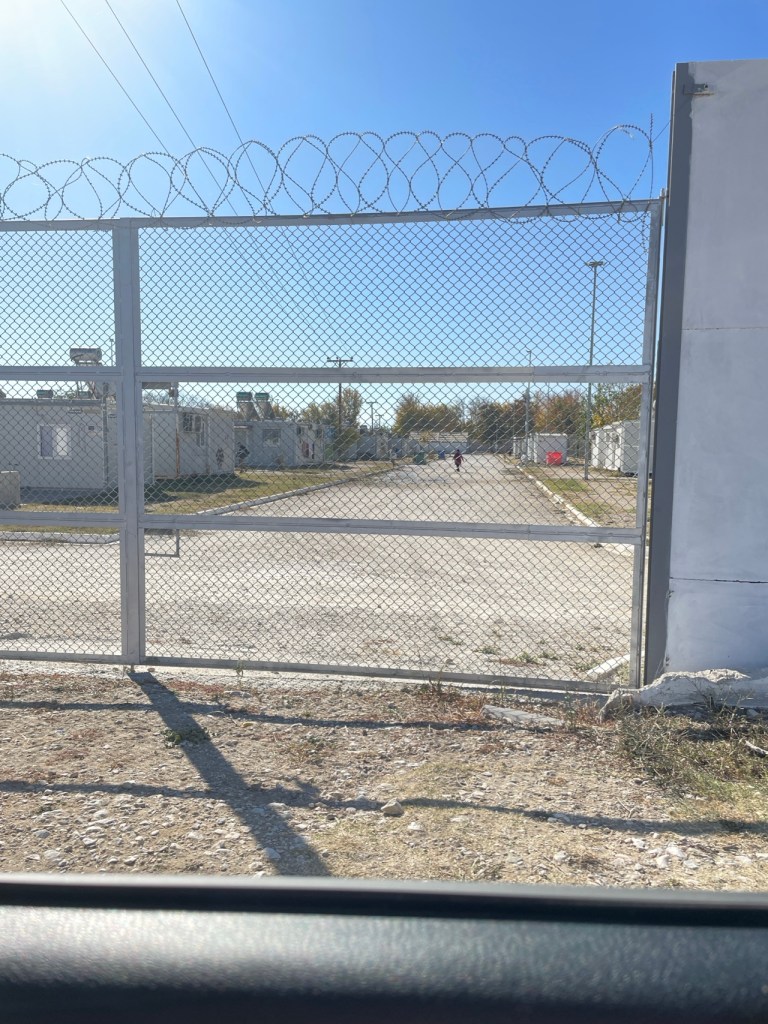
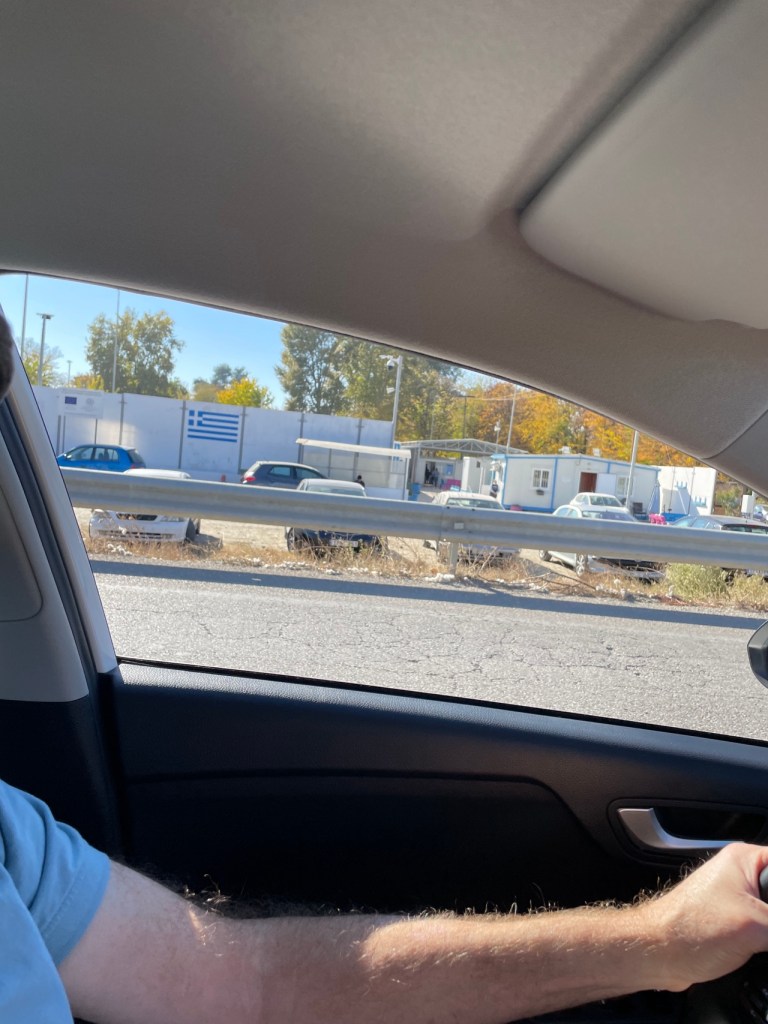
Refugee Camp outside Serres, Greece
The Greek government ministries are attempting to handle a surge of migrants on budgets that were fixed years ago. We hear much about the situation of Migrants in Athens where we live. We are a metro ride from many of these organizations and visit them often. Thousands are in need of even the basics, food and clothing, and the shouts are continuous about their predicament.
The needs of Migrants in the refugee camps are even more desperate, particularly those on the Greek Islands. They lack the most basic necessities such as blankets and sheets, and winter is here. Scabies and other skin diseases are rampant through the camps. From the islands, we here stories of refugees, including women and children, sheltering in cardboard boxes during the rain. Funding is just not there, and the tiny populations of these islands cannot cope with the surge. The number of unaccompanied children arriving in Greece is also on the rise. Most come on their own, but some lost parents on the ocean crossing to Greece. These are the silent ones. Their plight is every bit as bad as a hurricane or earthquake survivor, but they don’t show up on the evening news. Due to their isolation, they are invisible.
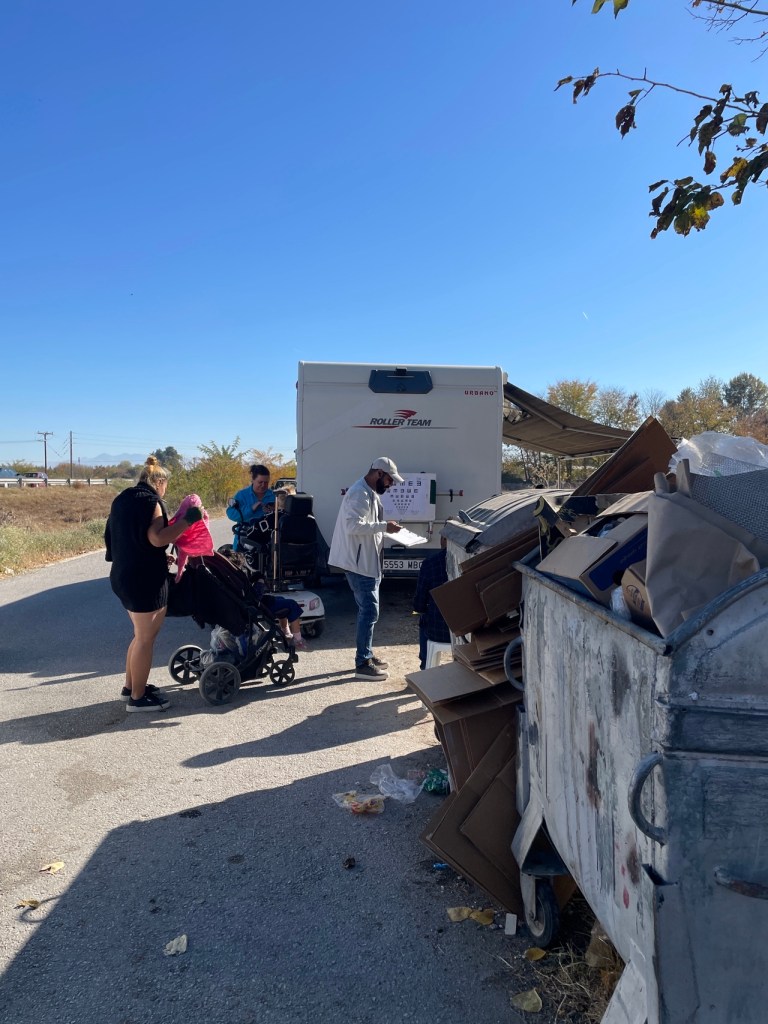
NGO Light Without Boarders outside a refugee camp in Serres
When migrants reach Greek shores, most are picked up, or report themselves to the Hellenic Police, the national police department. The HP are tasked with processing each migrant, checking papers, trying to identify the terrorists and criminals among the many who are simply seeking asylum. This process can take less than a week, or up to six months. At this time, the migrants are put in the queue for an asylum interview. While being processed, they are held in detention centers and cannot leave. Due to the surge in migrants and lack of funding, many in these centers do not have even bedding and basic hygiene supplies.
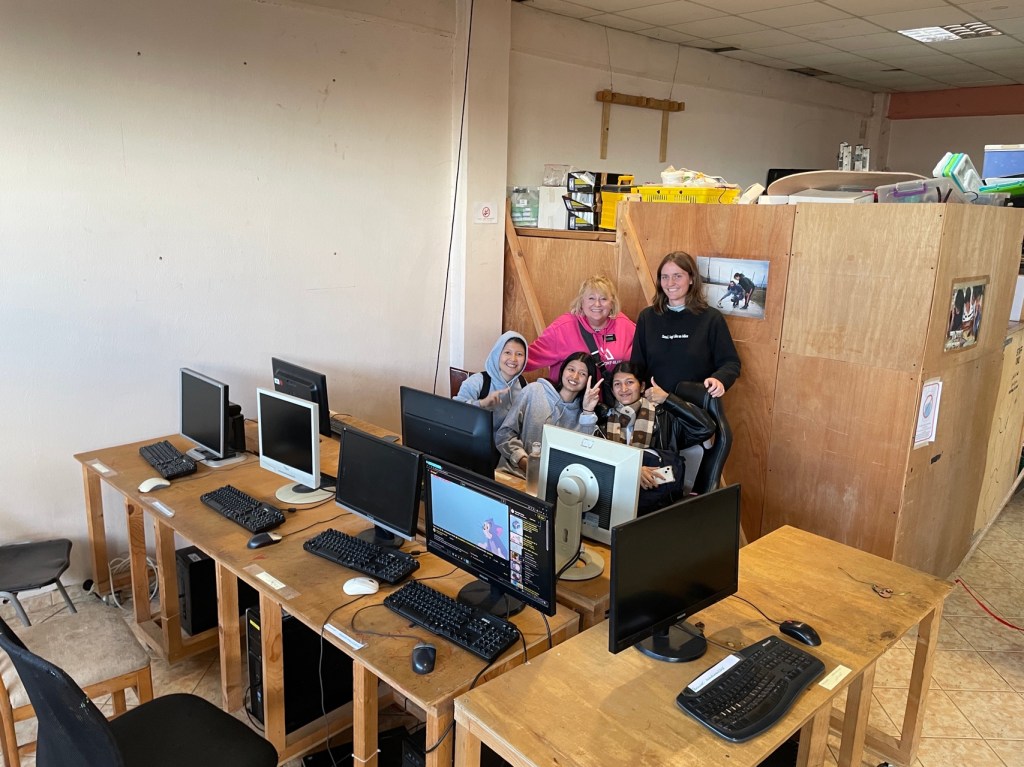
Bicycle Repair WorkshopComputer Lab
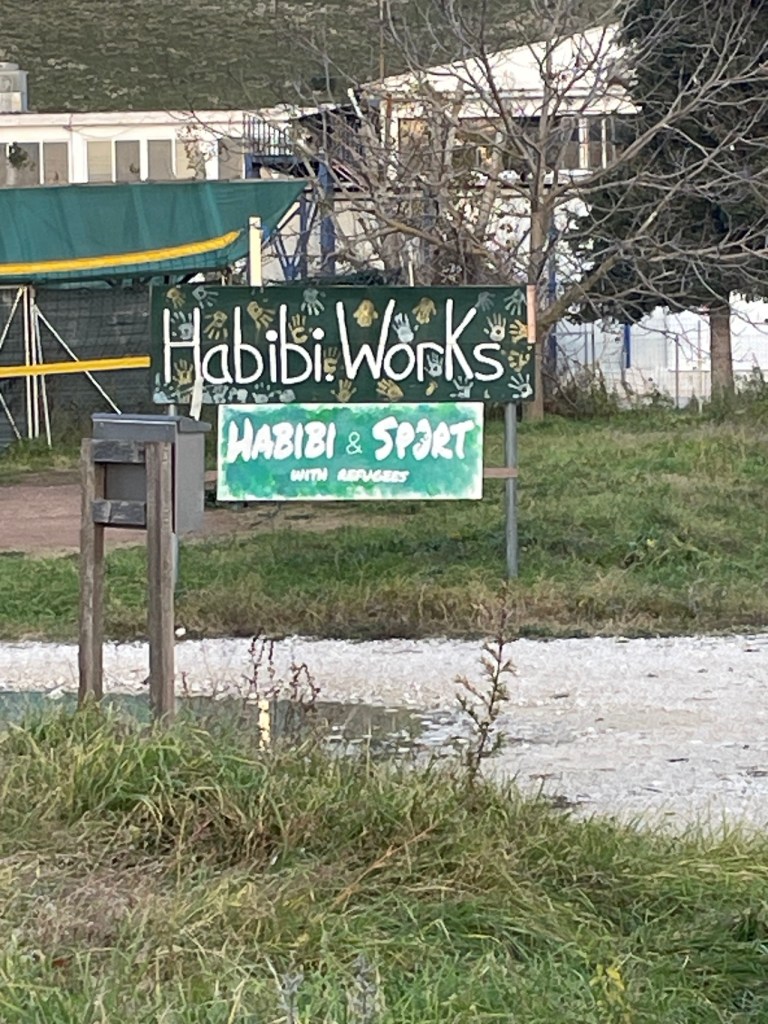
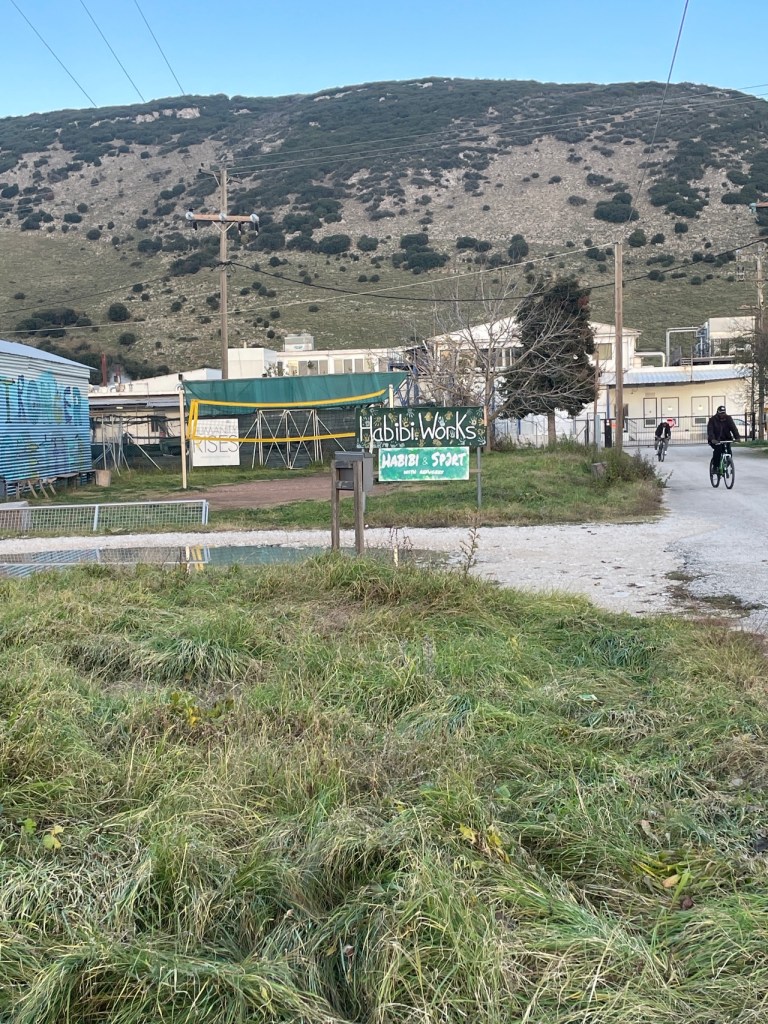
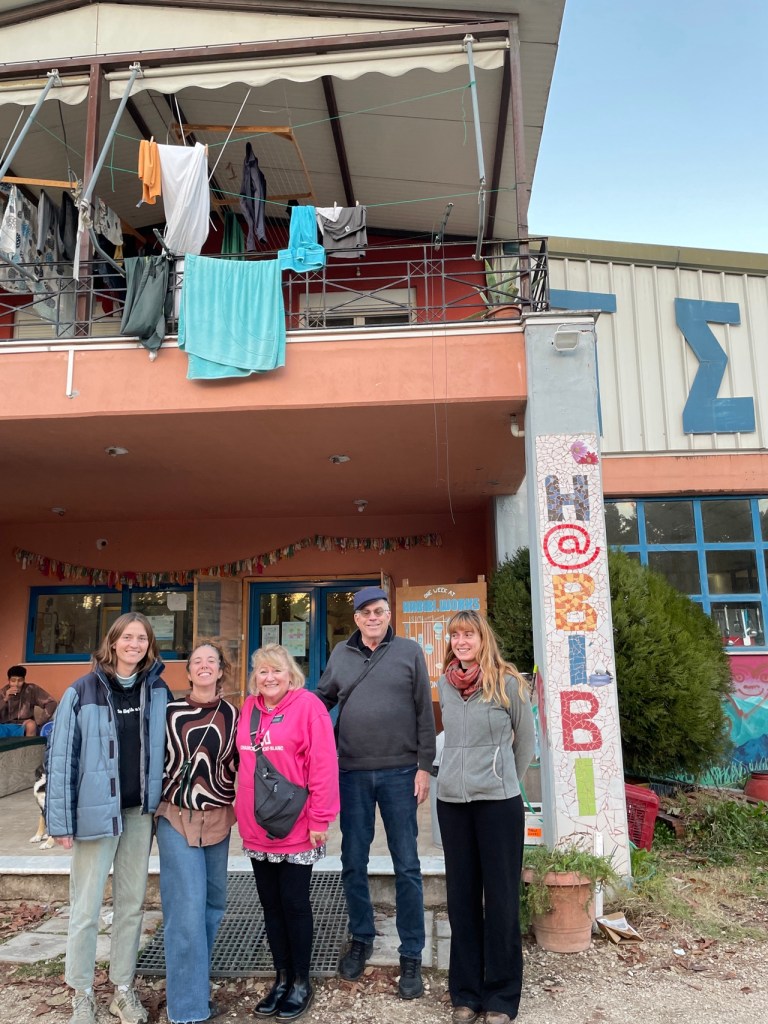
Habibi Community Center outside a refugee camp near Ioannina
Once released from the detention centers, the Migrants are transferred to a refugee camp, run by the Ministry of Migration and Asylum (MoMA). Fixed budgets and surges in refugees have left many of the asylum seekers in these camps destitute as well. As in the detention centers, they lack blankets and bedding. In these camps, migrants wait for their asylum interview, which can take months, and then for the results of the interview, which can can take months or even years. During this wait, they receive a monthly stipend from the government, in the order of 70 euros a month. Families receive more, but it is still very small. After several months, an asylum seeker is eligible to find a job, but with unemployment in Greece at 35%, that is difficult. Many find jobs in the tourism industry, but the pay and benefits are small.
If a migrant is granted asylum, they are eligible to apply for travel papers and in many cases, a passport. If they are not granted asylum, they may appeal. Once a decision is made, all loose government benefits, including health care.
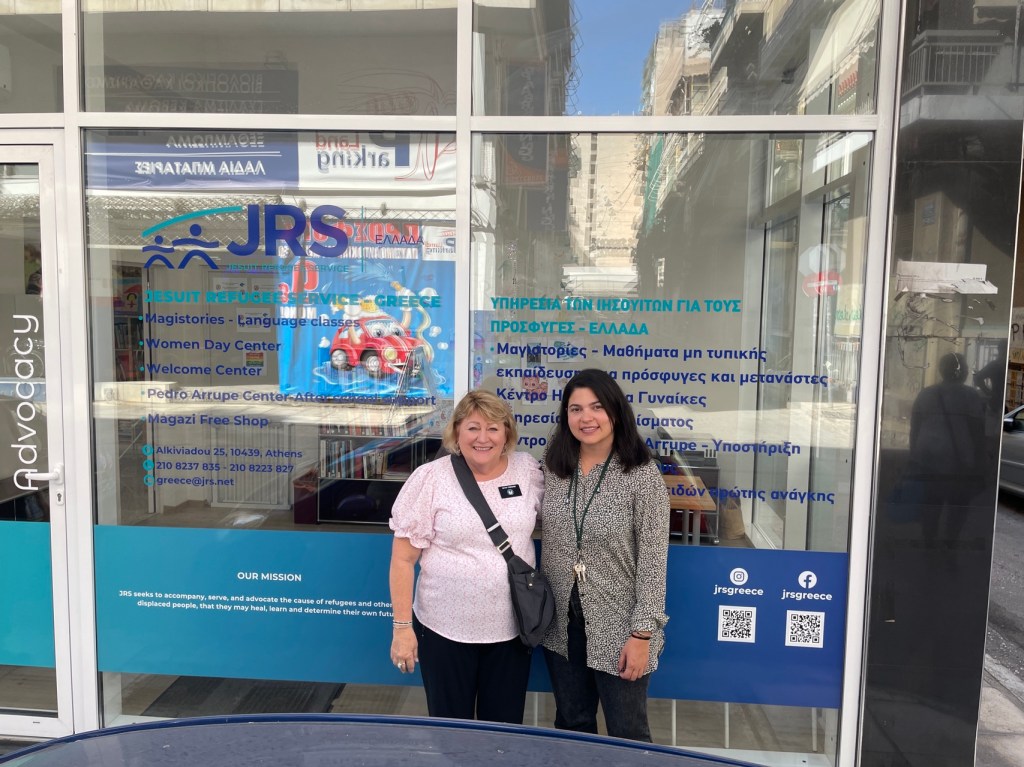
JRS Refugee School in Athens
There are many migrants in Greece who were denied asylum or are in Greece illegally. They cannot legally work and have no government benefits. Many women in this situation resort to prostitution, which pays as little as 3 euros a day (about $3.50). We had a woman at our church who was drawn to the missionaries and wanted to be baptized. She walked this very path and wanted to change her life.
Loading food bags at InterSOS
NGOs (Non Government Organization, to those from the states, a non-profit) are doing all they can to assist migrants and other vulnerable in Greece. Vela, an NGO working in Eastern Europe focuses on the unaccompanied children. They have established Safe Zones where the children receive shelter and food as well as medical and psycho-social support. Due to overcrowding and lack of funds, particularly on the Islands, many unaccompanied children reside in the regular refugee camps where they are susceptible to exploitation and abuse. Through the church, we did a quick project to supply blankets, coats and hygiene supplies to these Zones.
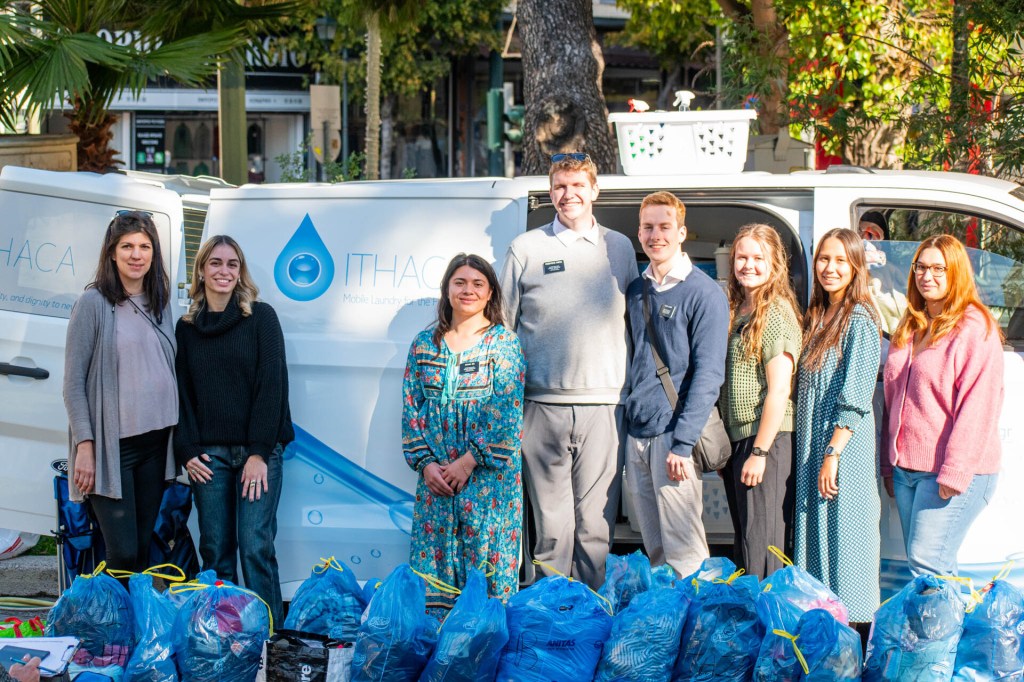
Distributing food and hygiene supplies at Koumoundourou Square. Photos courtesy of Ithaca Laundry
The men and women of the Greek Ministries are tireless in their efforts to cope with the crisis, but the asylum and refugee system in Greece is simply overwhelmed, and the humanitarian needs are great. The problem is multifaceted, and as a church, we cannot solve all of these problems, but we can help. One of God’s children at a time.
We love serving in Greece. The stories are hard to hear and the work seems endless, but we are His hands in ministering to those least fortunate.
From time to time, we here about the humanitarian work done by The Church of Jesus Christ of Latter-day Saints. In conference or in church publications we hear briefly about the amount of money or the number of projects carried out by our church. We also hear critics lament that the church is hoarding money, and we should give it to the poor. It reminds me of the story in John chapter 12; Mary taking an alabaster of expensive oil and pours it on the feet of the Savior. Judas Iscariot complains that a better use would be to sell the oil and give the money to the poor. It isn’t that simple.
As part of my doctoral work, I studied the humanitarian efforts of the western world, and how little impact these efforts had made over the last 50 years. The title of one of the books I researched says much: ‘The White Man’s Burden: Why the West’s Efforts to Aid the Rest Have Done So Much Ill and So Little Good” by William Easterly. Though the book is out of date, almost 20 years old, his main points are valid today. It is hard to help others through humanitarian work. Roads are built which soon fall into disrepair. Wells are dug which fail after a few short months. Much of the aid given makes the recipients all the more dependent and even worse off when the aid stops. Handing out money only fuels this problem.
Most of the aid given by the west is dictated top down. Money and goods are dispensed by what we westerners think should be done, with little regard for cultures and customs of the people receiving the aid. Giving aid or help in any form requires intense thought and care in how that aid will be received and interpreted by the recipient culture and society. We are all about aid which fosters long term independence and self-reliance. Money alone does not help. Look at the amount of of money poured into the United States welfare system, creating generations of dependents. The U.S. welfare program destroys families and punishes those who try to work their way to independence.
Large foundations and other organizations, when dispensing aid, usually approach a community and dictate the aid they are going to provide. They tell the country or community what they think they need, what service or goods they are going to provide, and what they should do to fix their problems. Any aid given which does not understand and respect local cultures, and which is not aimed at developing self-reliance in the long term is doomed to failure.
The churches approach is not to dictate what we are going to do for you, but “what do you need?”, “How can we help you with these problems”. The church advances slowly into a new region or a new type of aid, relying on the expertise of those organizations already entrenched in the local population. Rather than becoming just another organization in the fray, we learn from those experienced in aid to the region, and consult with local leaders as to what we can do as a church to help them help themselves.
In the past, the church has provided aid through Latter Day Saint charities. The name of the Church was not used. Missionaries wore special tags that did not have the name of the church on them. Late last year, the humanitarian missionaries here in Greece hosted an NGO appreciation event, with catering and gift bags for those in attendance. As we visit the various NGO representatives, many of them mention the appreciation event, and were surprised that we are a church. They assumed we were just another small philanthropic foundation. That has changed. Though we were given such tags in the MTC, we were told soon after that we should wear our missionary tags. We use the name of church and introduce ourselves as missionaries for the church with everyone we meet.
Sometimes this backfires. Recently, a large donation was rejected by an organization in Eastern Europe because those working in their philanthropic wing threatened to quit rather than accept funds from the Mormons. We are not after the honor or the publicity, but people should know in an open, honest manner what our church is doing in the world.
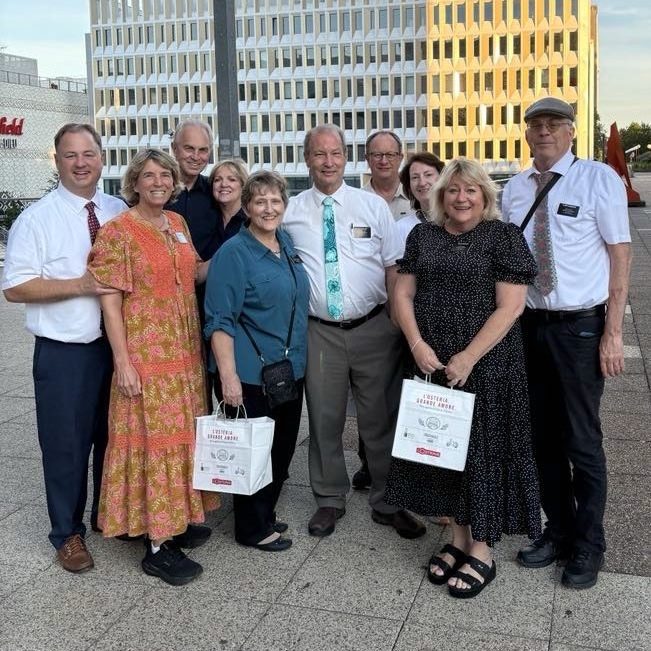
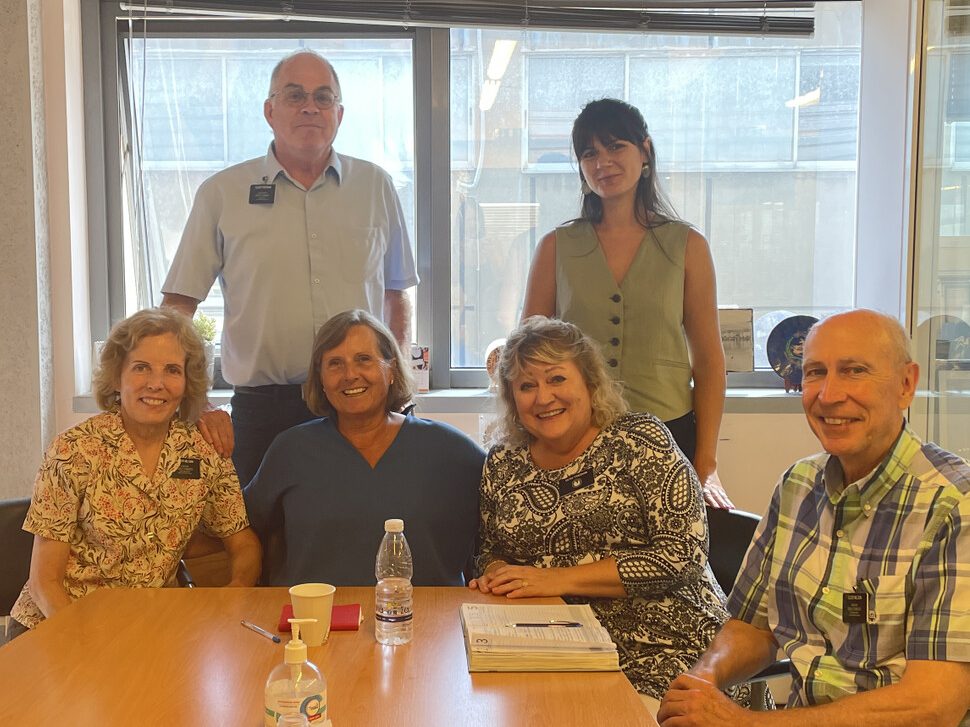
The Nelsons, The Frodshams, Laura Papa (Front, 2nd from left) Eleni Metsa (back right)
We recently met with Laura Papa, the founder of a local charitable organization, METAdrasi. She rejected many offers from foundations and other organizations because there were too many strings attached to the funding. These organizations dictated to her what she needed to do to help the refugee women and children in her care, but it was not what they really needed. She would forgo funding rather than provide the wrong type of help. Her focus is to help refugee women rise above their circumstance and learn to provide for themselves and their children.
We have been in Greece two months, and have met many other wonderful people who have dedicated their lives to the assistance of the poor and needy.
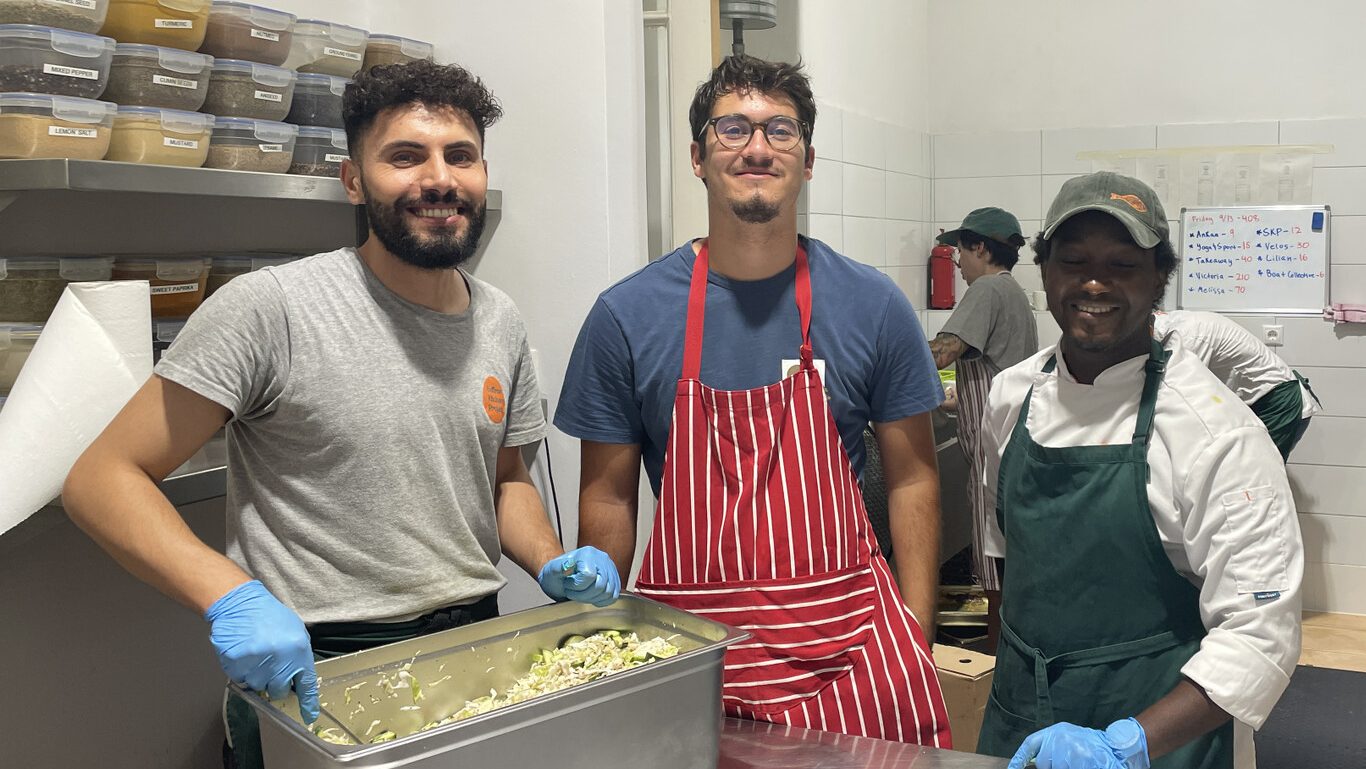
Saffron Kitchen and AnkaaAnkaa sewing projectSaffron Kitchen staff
Saffron Kitchen operates in down town Athens, providing thousands of meals for refugees, homeless and other vulnerable people in the city center. They work through dozens of other organizations to distribute meals. Each time we visit their facility, we are overwhelmed by the energy and commitment they exude. They not only feed those who have no idea where the next meal is coming, but they foster independence and self-reliance by hiring and teaching refugees how to cook.
Irida center staff
The Irida women’s center in Thessaloniki focuses on women and their dependent children. Many of these refugee women have experienced untold tragedy and horror as they made their way to Greece. Pregnant, destitute, children in their care, the center provides a safe haven where they can heal and receive social and legal counseling.
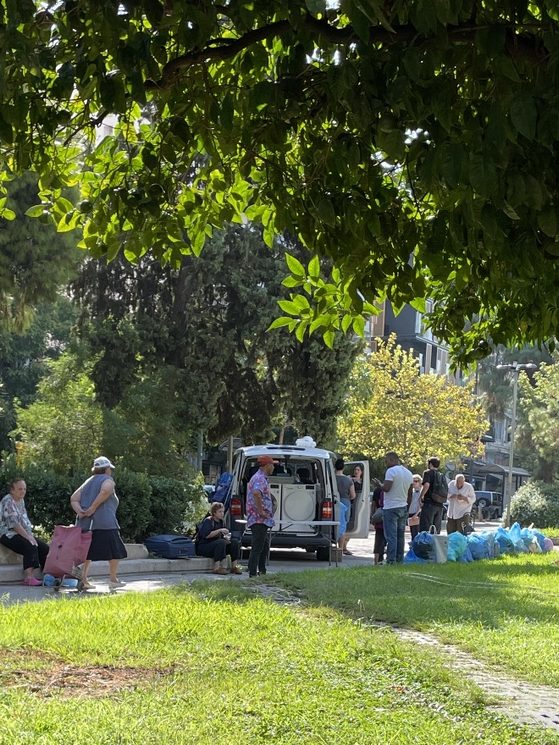
Ithaca Laundry takes a mobile laundry van to various places in Athens to wash clothes of refugees, homeless and others who have no way of laundering their clothes. They provide counseling as well as people wait for their laundry. There focus is again on self-reliance. Job seekers can now go to an interview with clean clothes. Children to school.
The church has provided medical equipment for several municipal clinics in Thessaloniki and Larissa, as well as a clinic run by Médecins du Monde – Greece (Doctors of the World) in Athens.
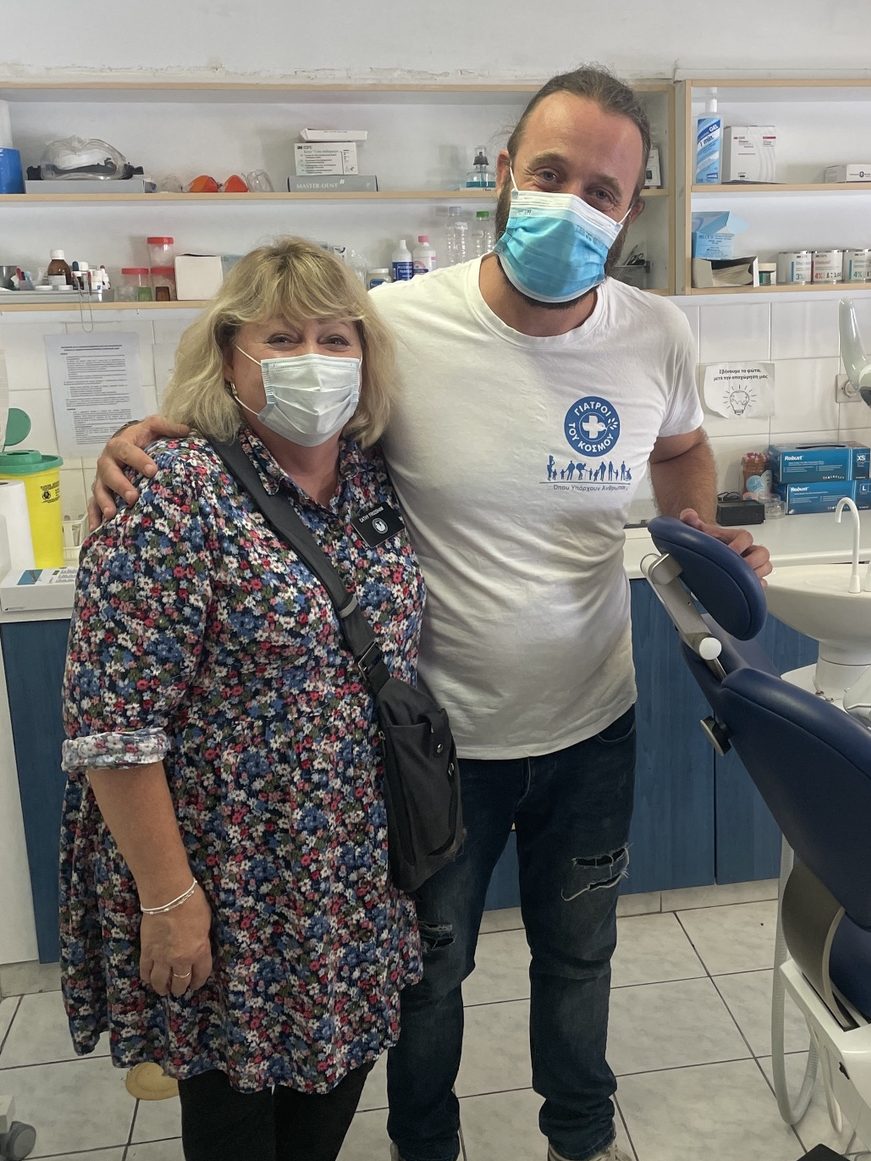
MdM DentistClinic iin ThessalonikiCatherine with Theo, the Larissa clinic directorTheo and Manolis from UNHCRMedical and Dental staff in Thessaloniki
One dentist spends two day a week at the clinic providing dental care for refugee children. We love their commitment and their energy.
We asked many of these dedicated individuals what problems they themselves face in this unending work. The response we hear most is “burnout”. Day to day they lift the hands and heal the hearts of those who have passed through unspeakable horror and yet continue to struggle, and in many cases, to thrive.
Many of the people pictured here have little belief or even knowledge of their Savior, but they are directed by His spirit. I pay tribute to these dedicated, caring people who spend their lives in the service of the least fortunate. We are blessed to have met them, work with them, serve as His hands in their support.
The Church of Jesus Christ of Latter-day Saints is working to gather Israel, both spiritually as well as physically. We are humbled to be the Lord’s hands in Greece. His work rolls forward with each step we take. Each small gesture for good. Each penny donated by a primary child. Each humble prayer that ascends to heaven. A phrase by one of the wonderful senior sister missionaries here in Athens comes to mind. “Who wouldn’t want to be us”. What a joy to be in His service.
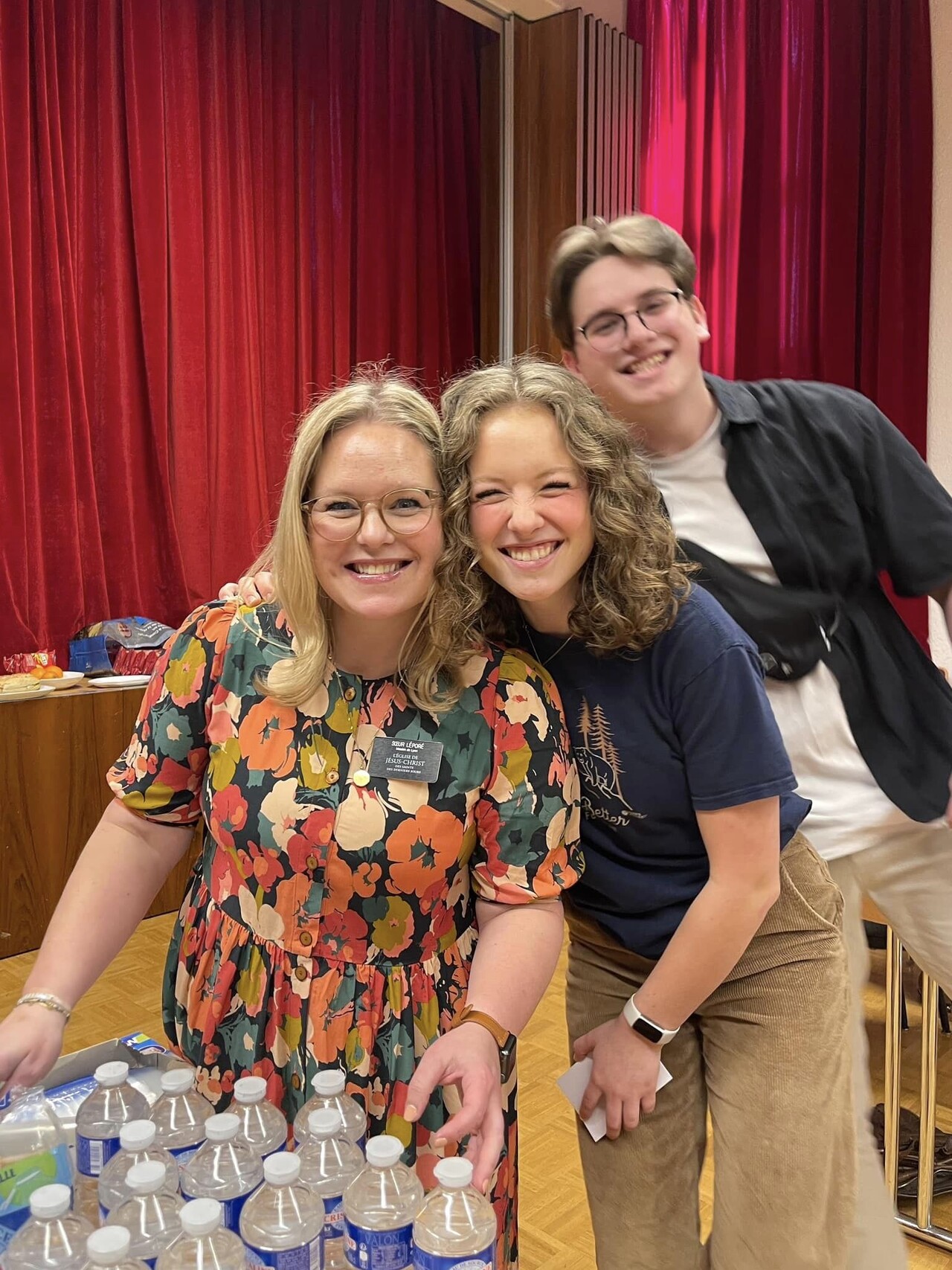
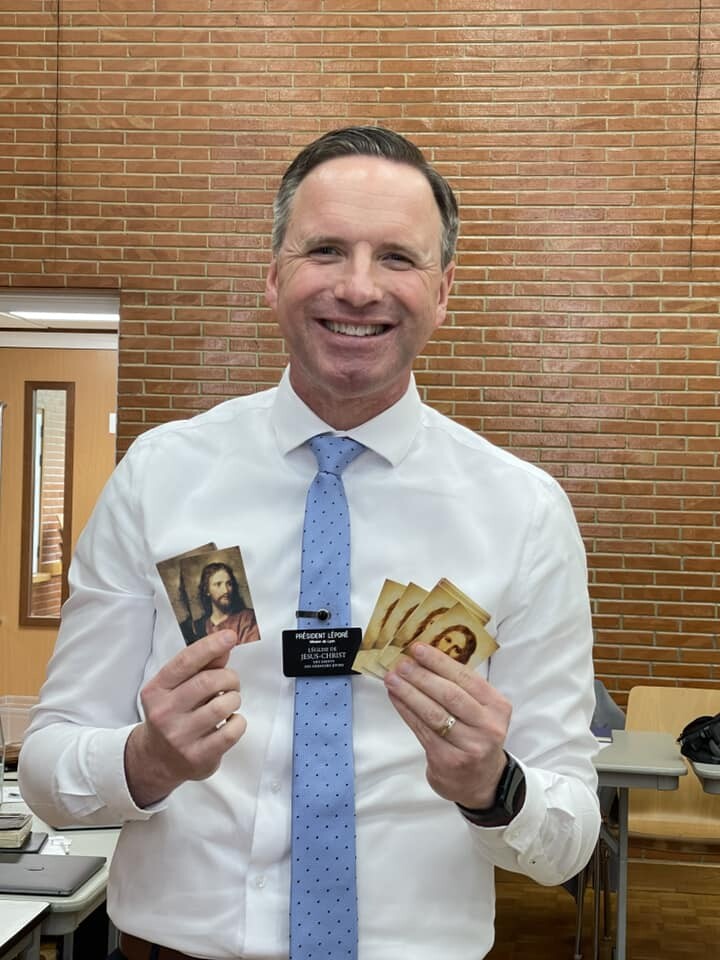
Last July, our mission president, Roland Léporé. And his wife, Amie, completed their three years of service to the people of southern France and returned home. They were replaced by Jason and Jennifer Soulier. They could not be more different.
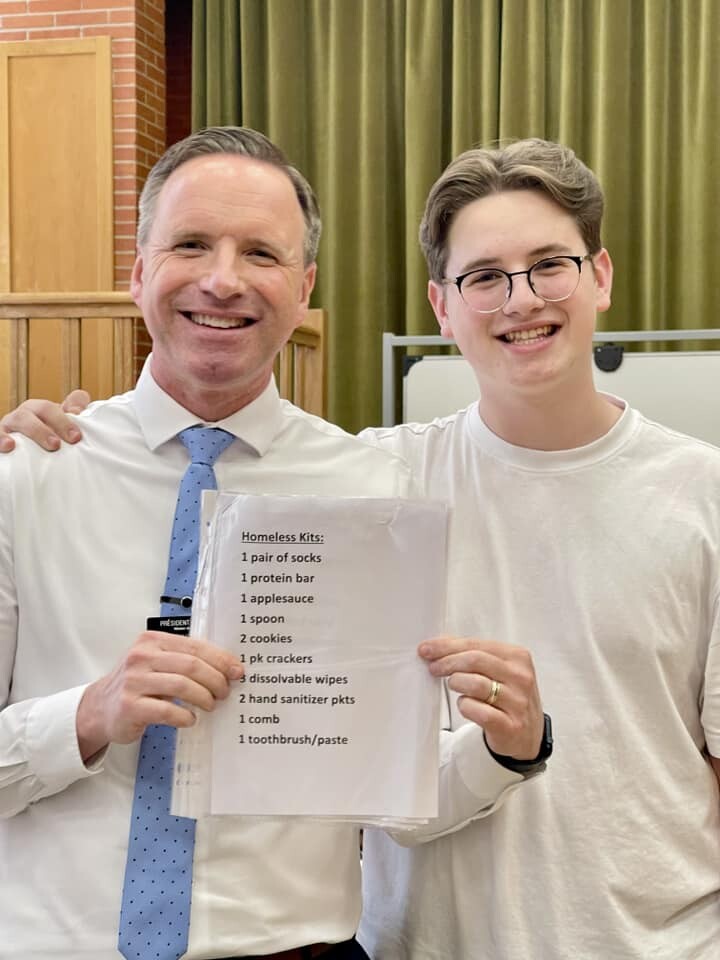
Aimee, Lydie, Charlie LéporéPresident LéporéPresident Léporé and his son, Charlie
President Léporé is a quiet, soft spoken man whose spiritual presence dominates the room. In zone conferences and other meetings, he stayed in the background for most of the meeting, speaking occasionally and allowing his missionaries to conduct and present. Many missionaries told us that when they were in the presence of President Léporé they felt they were in the presence of Christ. He was true shepherd. The young sisters and elders knew he was a true servant of the Lord, and they loved him.
President and Jennifer Soulier
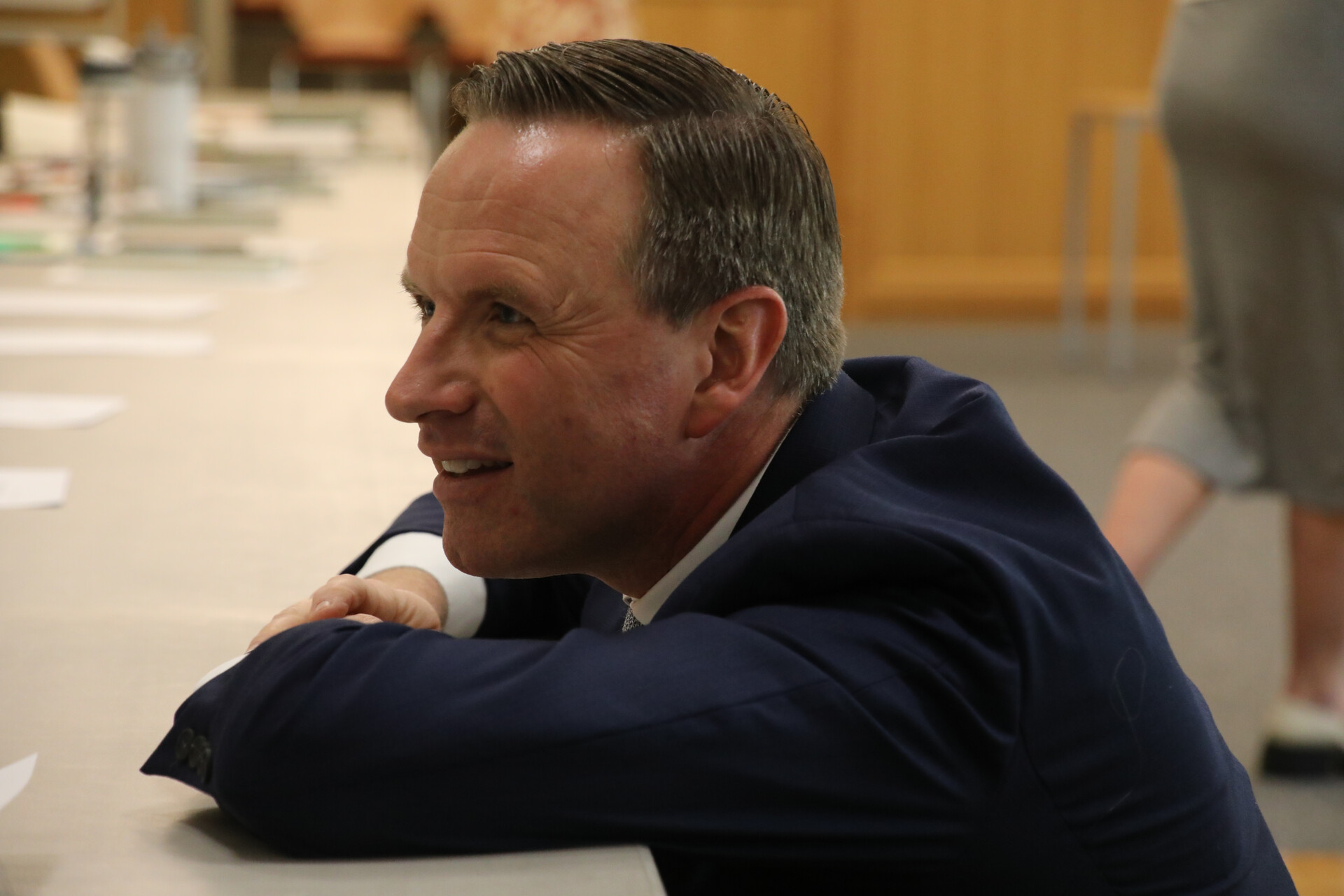
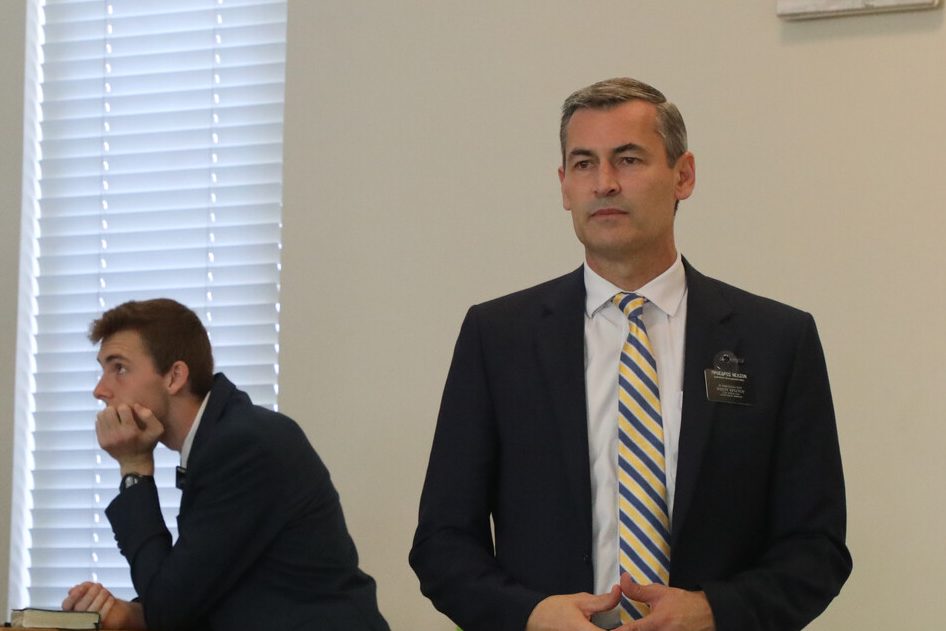
President Soulier was a salesman in his former life, and exudes the confidence and energy of a motivational speaker. Where President Léporé’s meetings were quiet and thoughtful, those of President Soulier tend to be more loud and boisterous, They both work. I understand there is little overlap as one president replaces another. One president and his family leave before the other arrives. I think the brethren do that for a reason. They want the incoming presidents to follow the Savior, to use their own talents, and that of their companions in their sinngular manner, to move the mission forward as servants of Jesus Christ, using the talents unique to them.
Both couples are powerful men and women. Both are servants of Jesus Christ. Both have a mantle of leadership. Both focus on the work of the Lord and bring that work to fruition in utilizing their unique talents and gifts endowed from on high.
Unfortunately, we served with the Souliers for just a few months before we were transferred to Greece. During that time, I was impressed with their insight and problem solving abilities. Like their predecessors, they are people of faith. They are called, and are responding to that call to the best of their abilities and more, abilities that are magnified by the power of the spirit.
Emily Nelson with the SistersDavid NelsonSisters Nelson and FrodshamAthens Zone Conference
We are now serving with President David and Emily Nelson of the Bulgaria Greek mission. Not many missionaries have the experience of serving under three mission presidents. We are just getting to know them, and they too have a unique style of leadership. He is gentle, thoughtful and willing to listen to even the smallest need. They love the missionaries, love of the Lord and the Lord magnifies their talents as well in His infinite, intimate way. We are truly blessed.
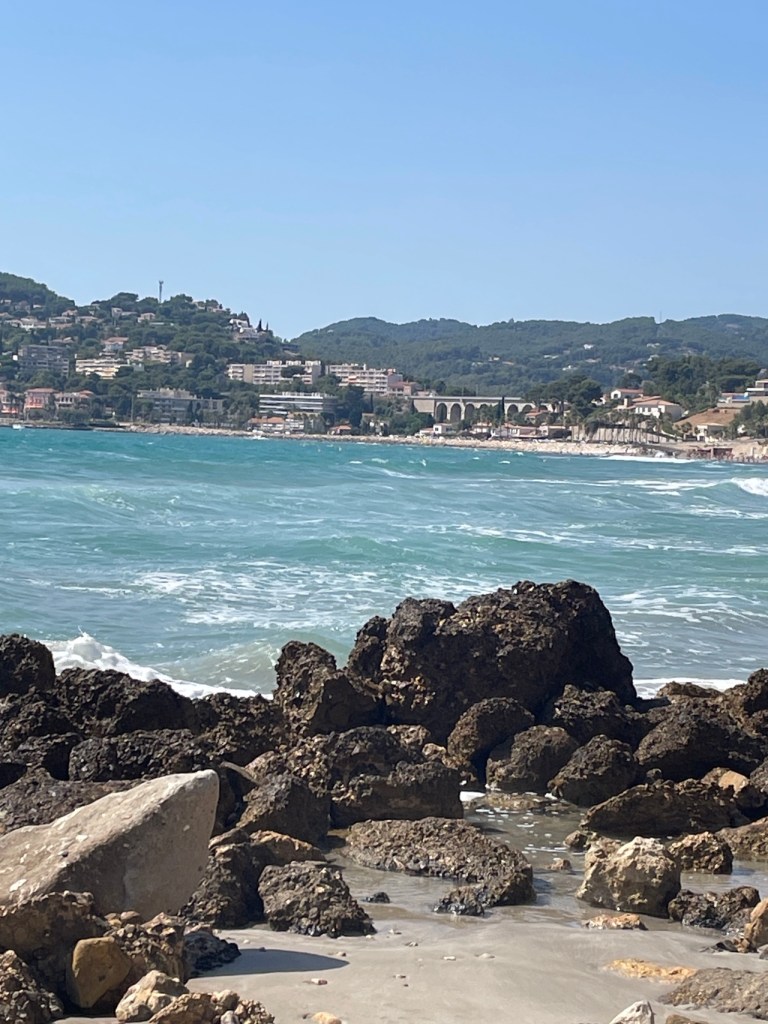
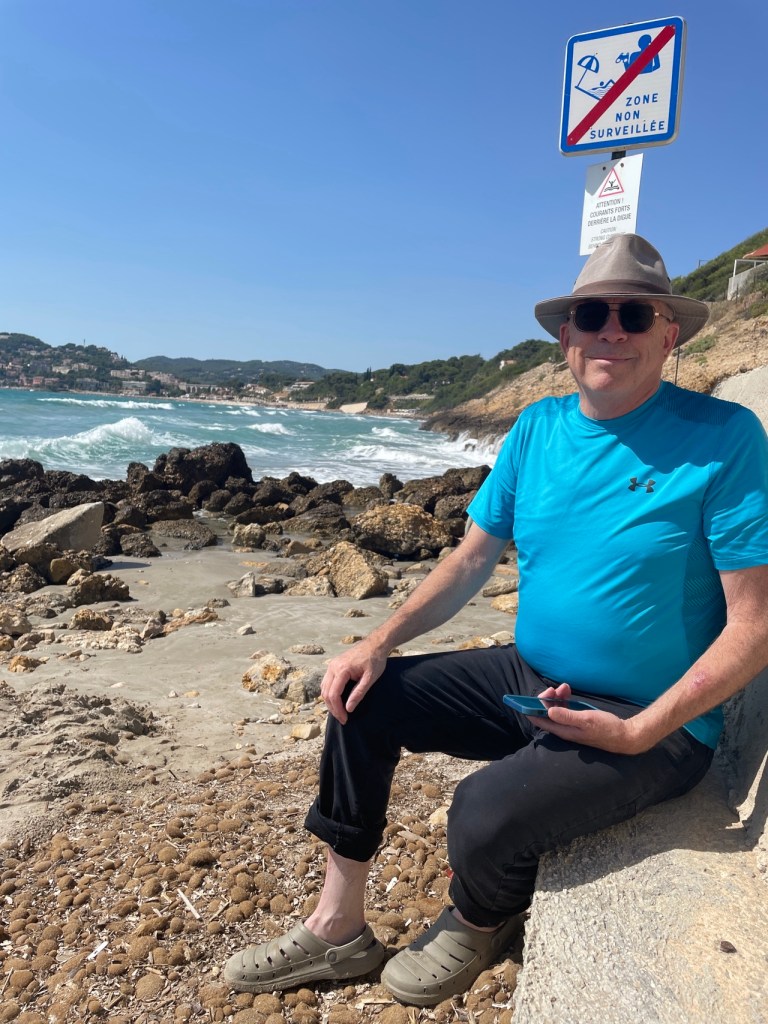
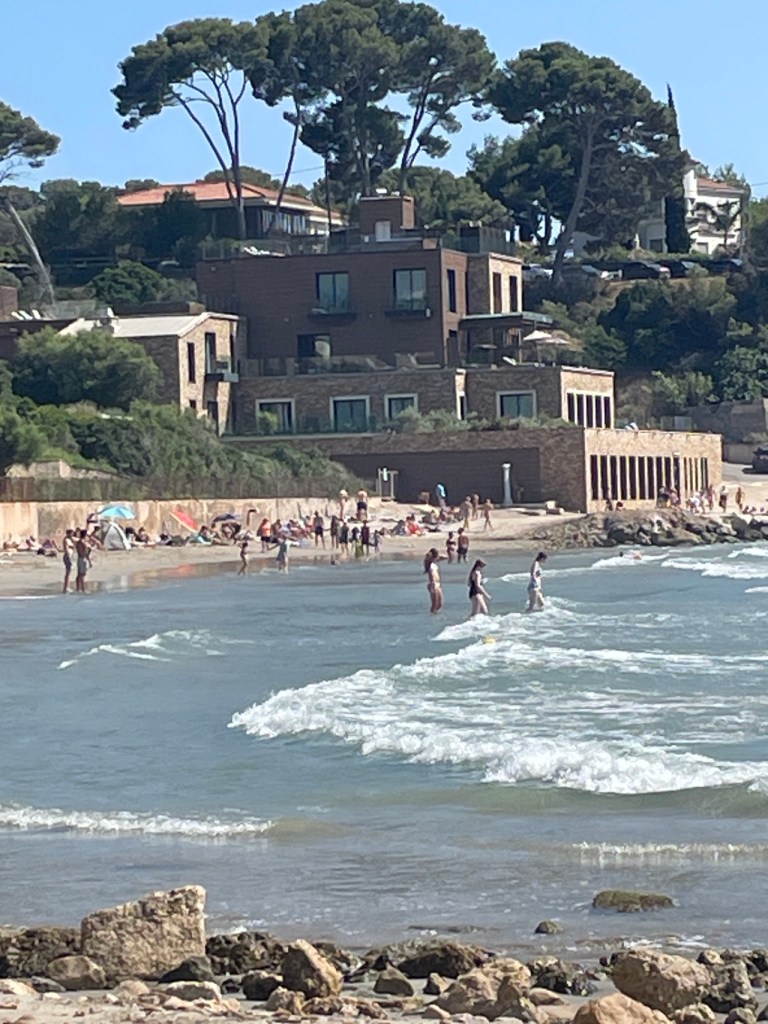
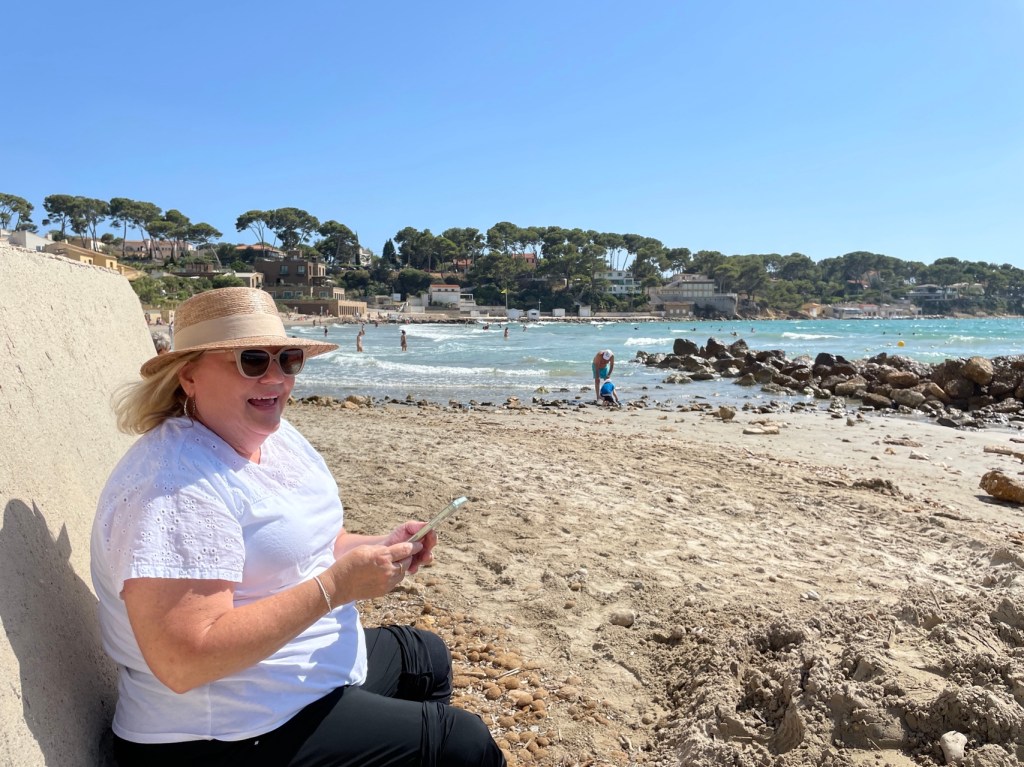
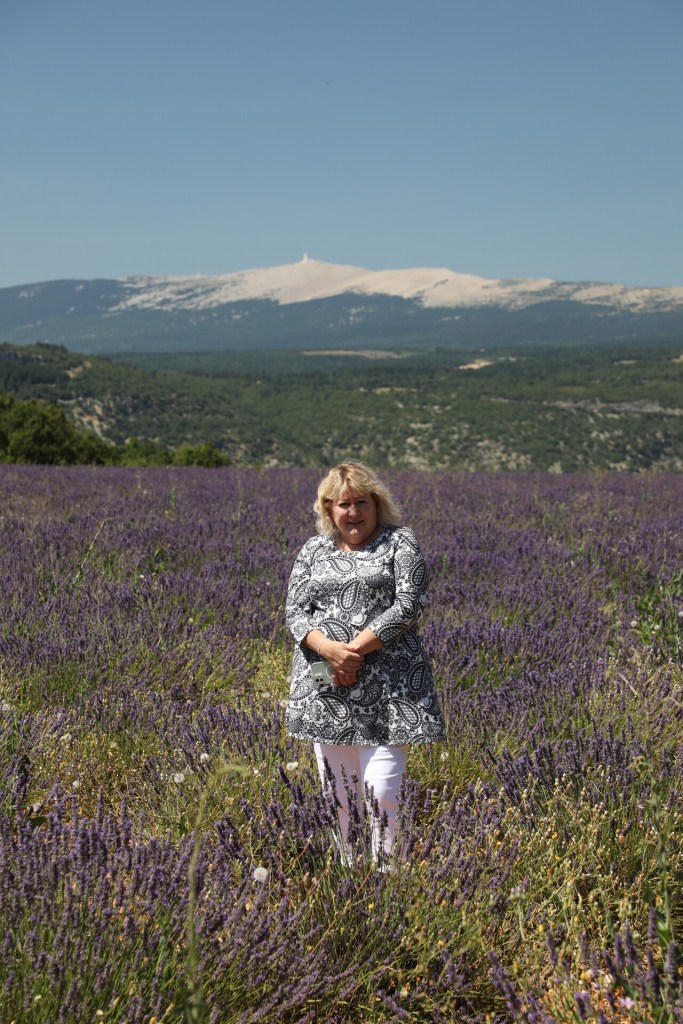
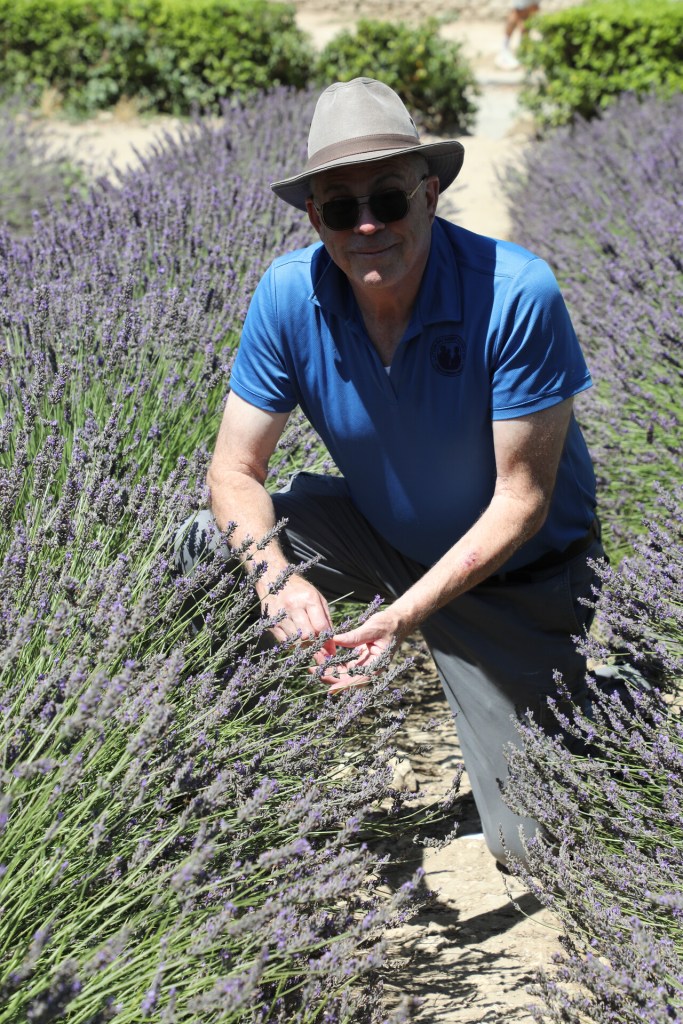
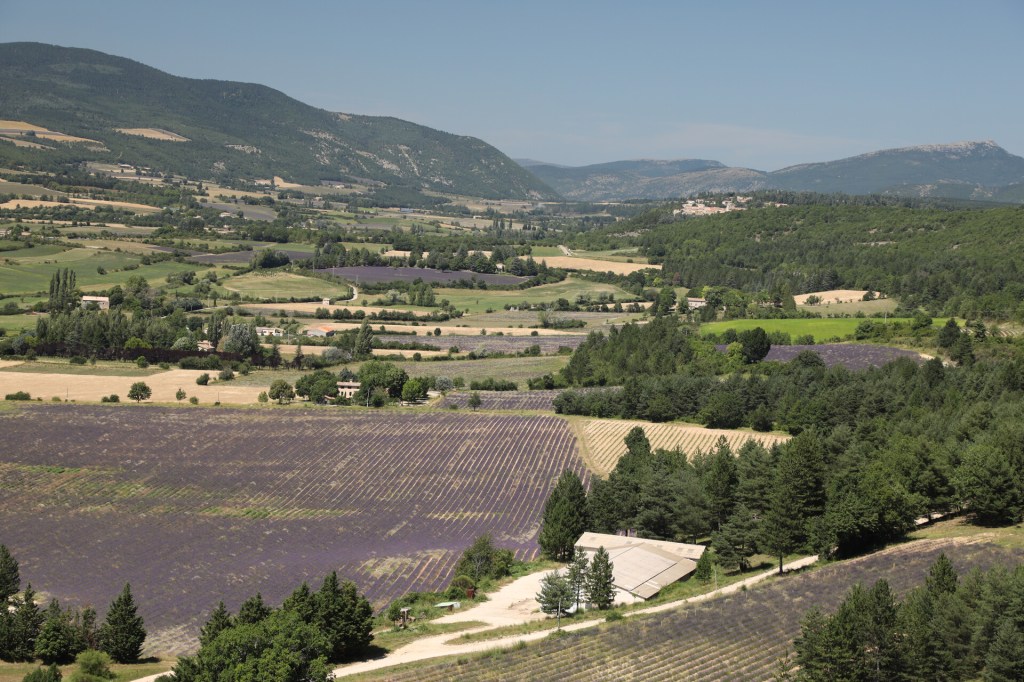
(I have several posts from our mission experience in Lyon, France. I will post these over time as we continue our experience in Greece.) I LOVE LAVENDER! In Southern France they grow Lavender, and it only can be enjoyed 1 month out of every year. It is usually the end of June through July or sometimes July through the beginning of Aug. Well, we kind of missed it but still saw some beautiful fields. They just weren’t as colorful as they can be. We drove down for a couple of days for our P-Days – missionary preparation days. We drove to a small little town near Toulon on the Mediterranean. It had a beautiful beach that we walked on but we didn’t bring swimsuits on our mission. Although we can swim, we just didn’t think about it. We had a beautiful hotel and a wonderful restaurant right on the beach. Here are pictures of the hotel and beach.
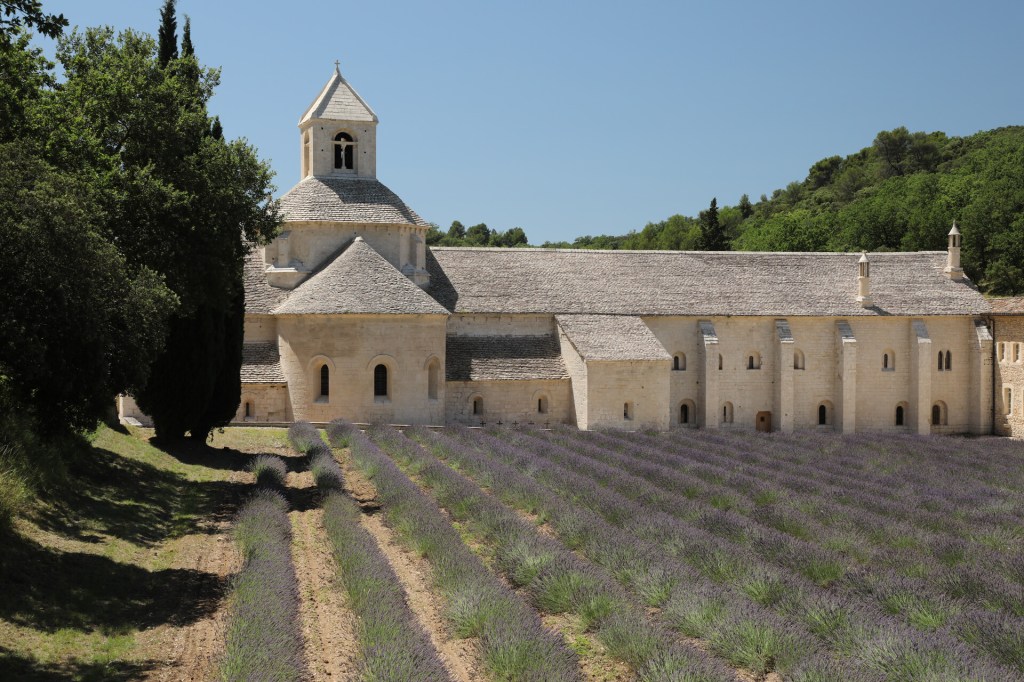
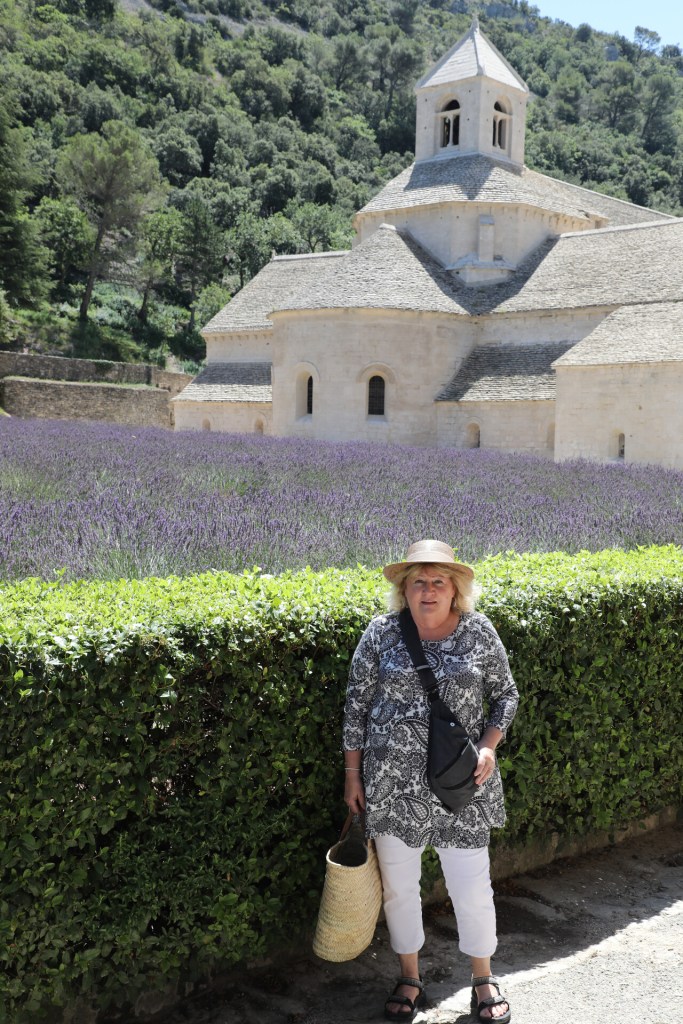
The next morning, we drove to Gordes, France which has the Abbaye of Senque where monks live and sell Lavender products, etc. That was beautiful. Here are pictures of the Abbaye and Gordes.
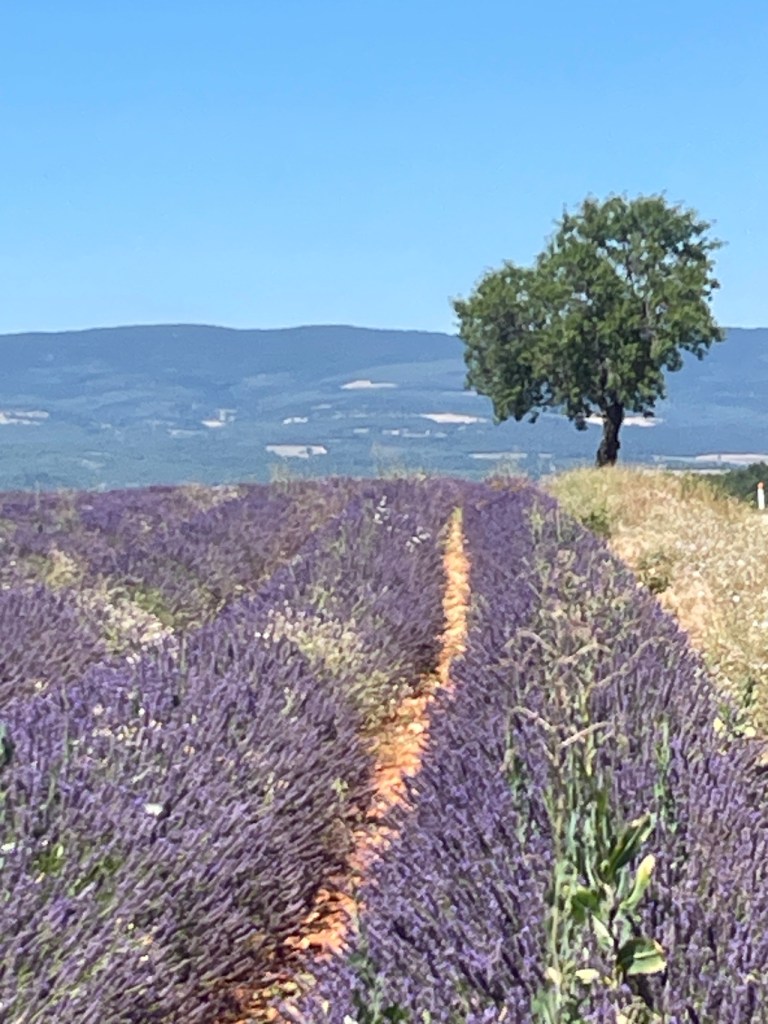
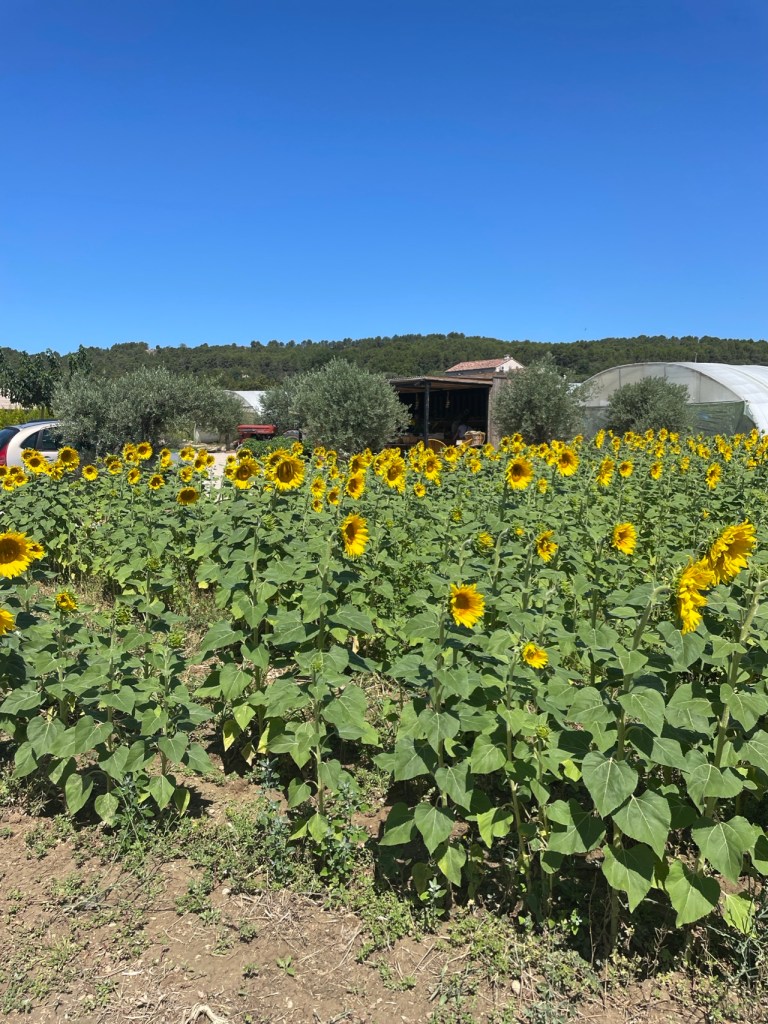
Next, we heard that the little town of Sault has the best Lavender fields, but it takes a bit to drive there on two lane roads. It was so beautiful. We found a field of Sun Flowers which I love as well and produce stands. The lady at the produce stand gave me a bouquet of Lavender and she said it is dry and not pretty. I loved it. As we got closer to Sault, we saw many Lavender fields and it was beautiful. I wish we came a week or two earlier the color would have been so brilliant!! But it was worth it because we won’t be in France the next time it is in bloom. (How little did we know how true that would be.)
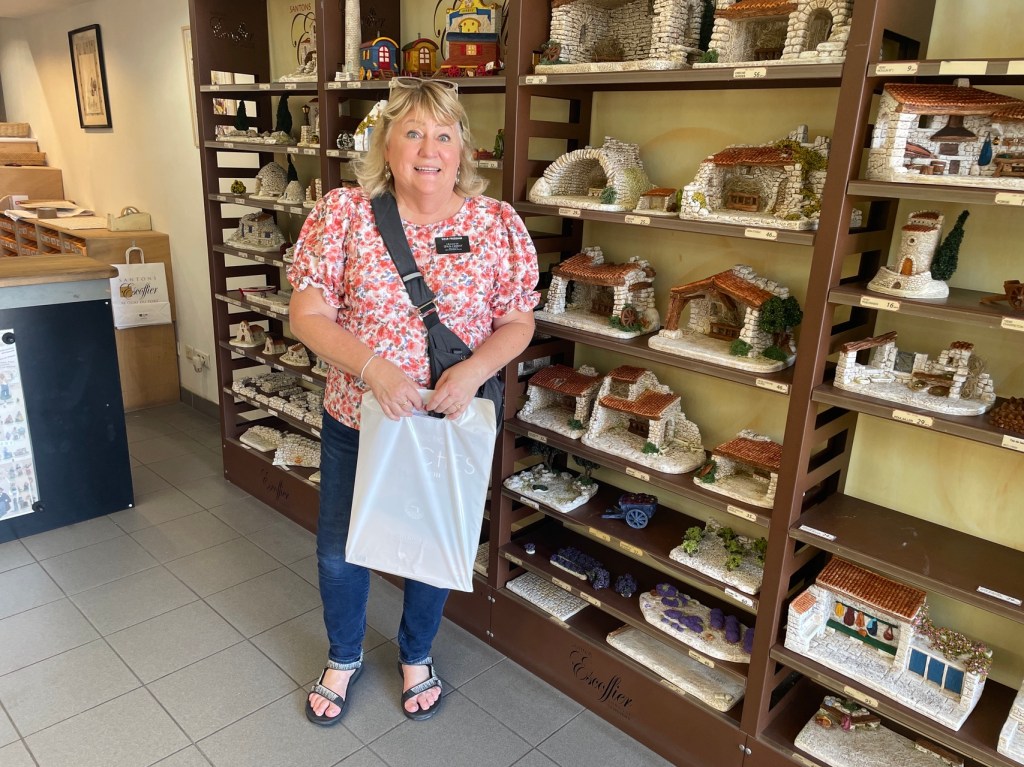
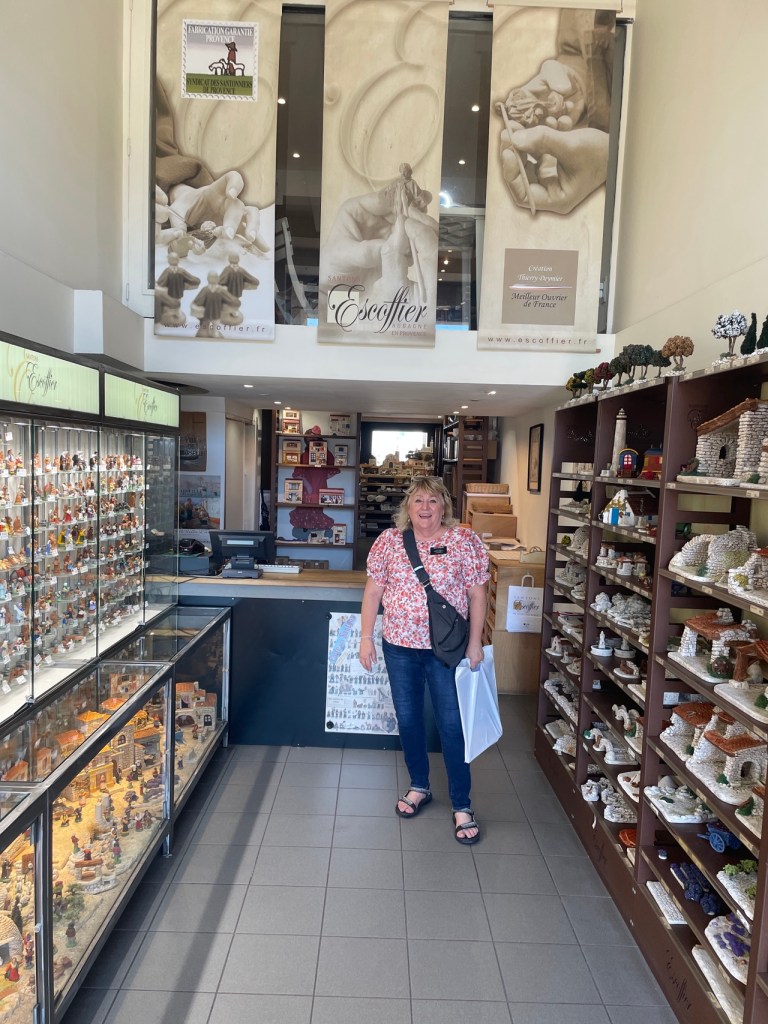
Here is a picture of the town of Sault. So, French and cozy. We loved it. I found a few Santons as well. The one thing I want to get in France to take home is a Nativity made from Santons. They are a French ceramic figurines. Some are small and some are large.
I bought 3 when I was in France as a teenager and my kids have looked at those for all these years. haha! It was an art started back in the 1700’s where the Santonairs would make clay people doing French things. Like a baker, farmer, store owner preacher or butcher etc. They are all from their daily lives and beautifully made. I hope before we leave, I can find some that I can bring home.
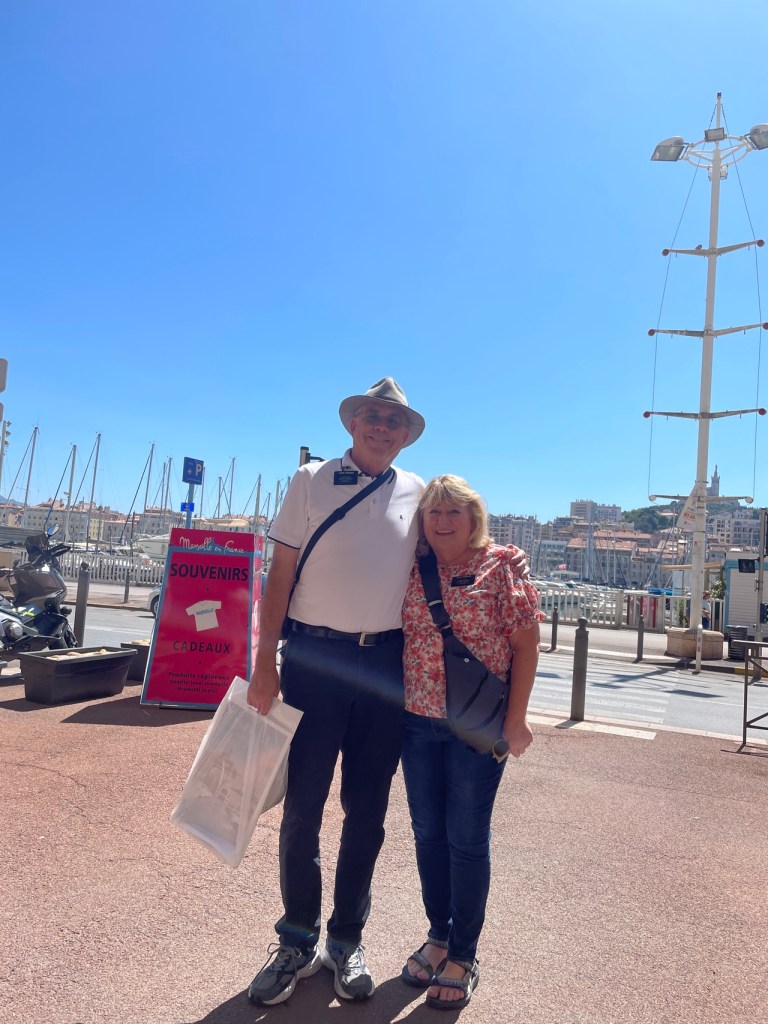
We did make a quick trip to Marseilles when we got the call that we would be moving to Greece just before we left France and I was able to purchase a nativity set. Above is the Santon Store in Marseille.
We love France. We love the people, the members of the church who are so stalwart. We will miss them. We love the countryside, the beauty of France. We are lucky we got to see so much, but there is so much more we wanted to see.
We have been in Greece one week now and are beginning to get a handle on all of the work there is to be done. Most countries in Central Europe have three or four humanitarian projects open, we have thirteen with two more in definition. It has been months since a WSR (Welfare Self-Reliance) couple has worked on projects in Greece. For a while, the country was covered by someone from the area office, then the husband of the last couple here was called as the Branch President. With the responsibilities of that calling and health issues, they had no time to work on humanitarian projects. When they returned home for health issues, the Area transferred us to Greece to catch up.
The Frodshams and the Nelsons
The Nelsons, a couple in the Frankfurt office who assist WSR couples in Europe, spent the last three days with us, going over all the projects in Greece and visiting NGO representatives in Athens. (An NGO, or Non Governmental Organization is a non-profit charity). These organizations help refugees including children who lost their parents while trying to get here. They help them with medical care, hygiene, food, job training and courses on how to assimilate into their new country. The stories are heart wrenching. Once we get on top of the backlog of correspondence, we will visit various sites in Greece to assess the problems and how these organizations are using church funds to address them. We are already planning a trip to Thessaloniki, about 500 km north of us, to visit two or three organizations and the refugee camps they are assisting.
Laura Papa, Elani, the Nelsons and the Frodshams
We met a woman yesterday, Laura Papa, who started an organization called MetaDrasi, dedicated to assist refugee and disadvantaged women with housing and care. Unaccompanied refugees children were held at police stations or other detention centers under appalling conditions, the system in place simply did not know what to do with them. A focus of the organization she started was to get these children to a safe place and provide them with the nutrition, health care and support they needed. She is a force of nature. Some of the women they assist were raped during the flight from their home country and have a multitude of problems to face.
Catherine and the dentist from Doctors of the World
We visited a medical clinic in central Athens that serves refugees, ROMA (gypsies) and other disadvantaged people. One of the volunteers we talked with is a dentist in Athens. He has a thriving practice, but donates two days a week to provide basic dental care to both adults and children. I don’t think we have ever met someone so upbeat. No one is turned away. There are wonderful people here in Greece who dedicate their lives to the care and well-being of the least fortunate. It is gratifying to see what the church is doing to support this humanitarian work.
Twice Catherine started to tear up as these dedicated people talked about helping children refugees who are alone or young women who are pregnant because of abuse as they left their countries. Many refugees in Greece live in camps. They are fleeing their countries because of war or violence, hunger or lack of freedom. We will be visiting these camps to see what the church can do to help fund programs to help them with healthcare, food, language skills etc . . . We were meant to be here.
We visited a portable laundry service, Ithaca Laundry, that the church helped to purchase a van to wash clothes for homeless. The van is full of washers and dryers and they drive it from place to place and wash clothes on the spot. While there, they feed them and offer counseling.
We will continue to post about the humanitarian work moving forward in Greece, but will not post pictures of the people being helped by these efforts. Government regulations forbid posting pictures in a public forum and the church agrees and supports this policy. We can, however, post pictures of the sites and some of the people who give so much to their care.
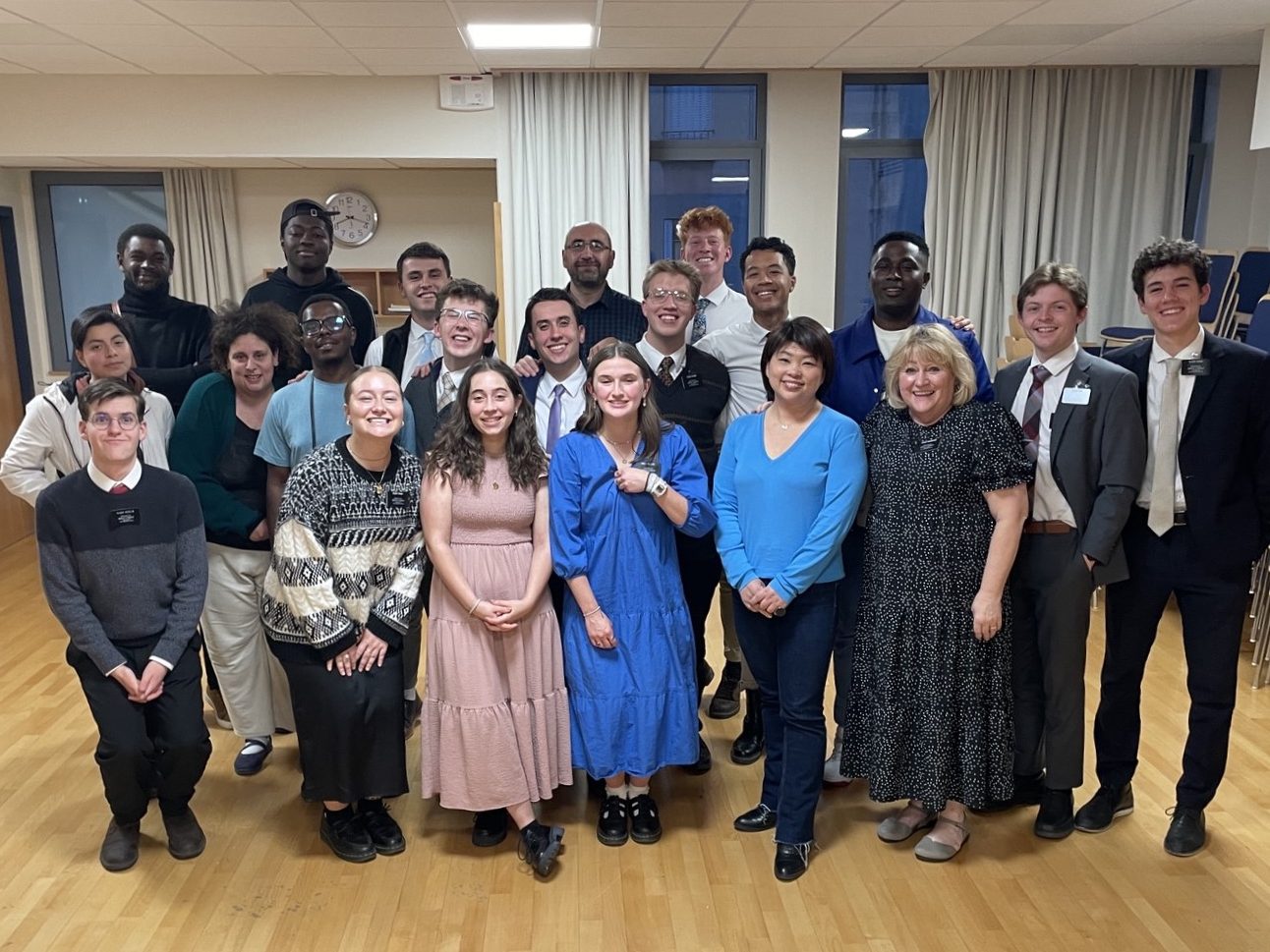
(We successfully transferred to Greece and are coming up to speed on the many humanitarian projects sponsored by our church. This post is as much for us as for anyone else, to remember the incredible friends we have made in our 9 months of service in Lyon — Tim) Probably one of the most fun things about our mission is meeting the wonderful missionaries! We consider our young missionaries our grand kids or “Petite enfants” as they would say in France. Then our special senior couple friends are awesome.
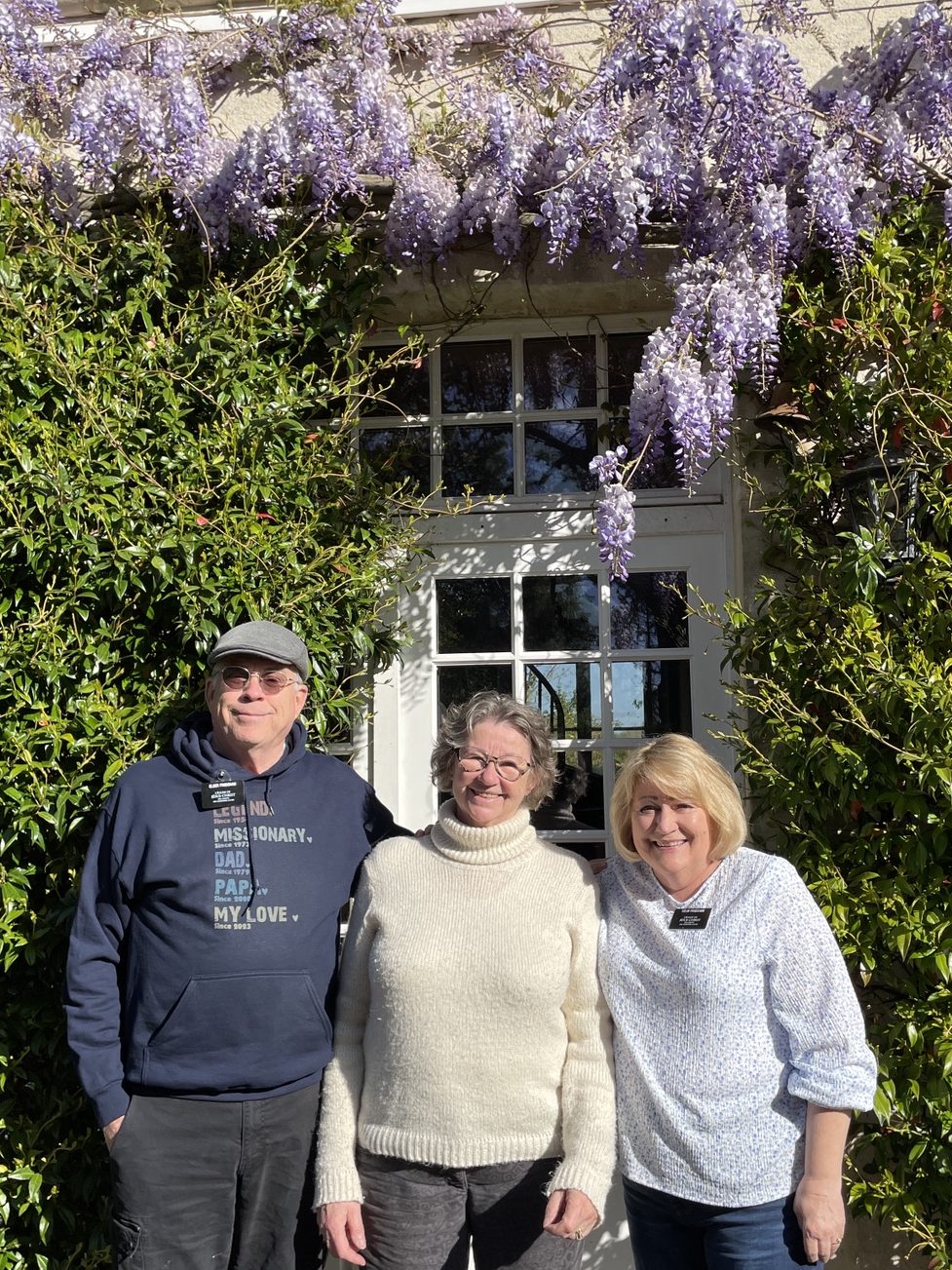
We first met the Hardy’s. Liz and Dave from the state of Washington. They worked in the office and because our instant friends. We sure love them. They went home a month ago and we miss them so much.
Dave and Liz HardyCatherine and Liz Hardy
We also met the Gannaway’s. Trish and Joe. They also worked in the office, and they served for 29 months with Lepore’s, our mission president. They were lots of fun as well. We enjoyed visiting them in the office and we went to dinner and had them over for dinner. The Gannaway’s and Hardy’s are home already.
Joe and Trish GannawayCatherine and Trish GannawayRoland Léporé
We got new Office missionaries. The Dinkelman’s, Linda and Gary from Utah. Such wonderful, nice people. Also, the Miners’s, Jennifer and Larry from Utah as well. Such fun nice friends.
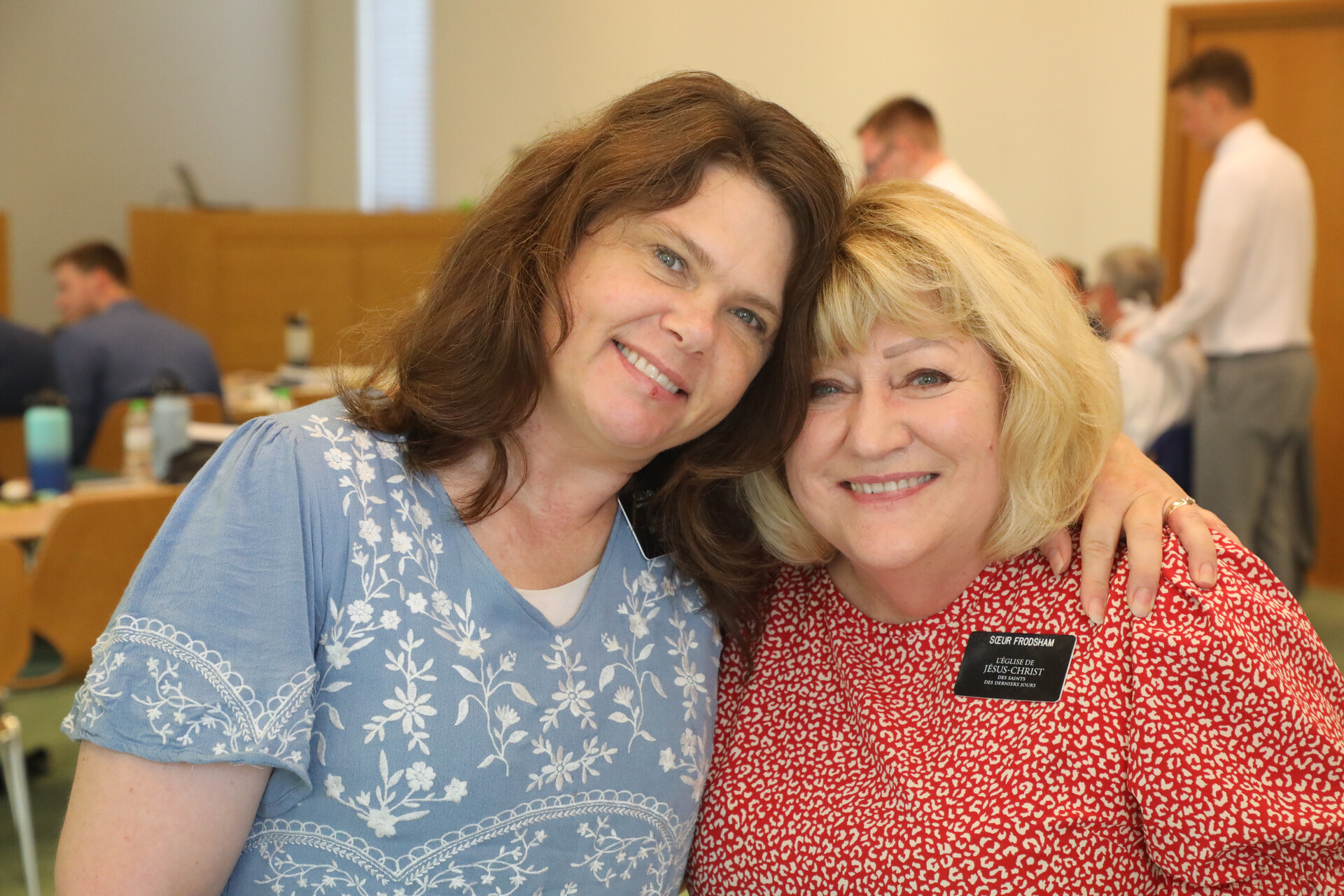
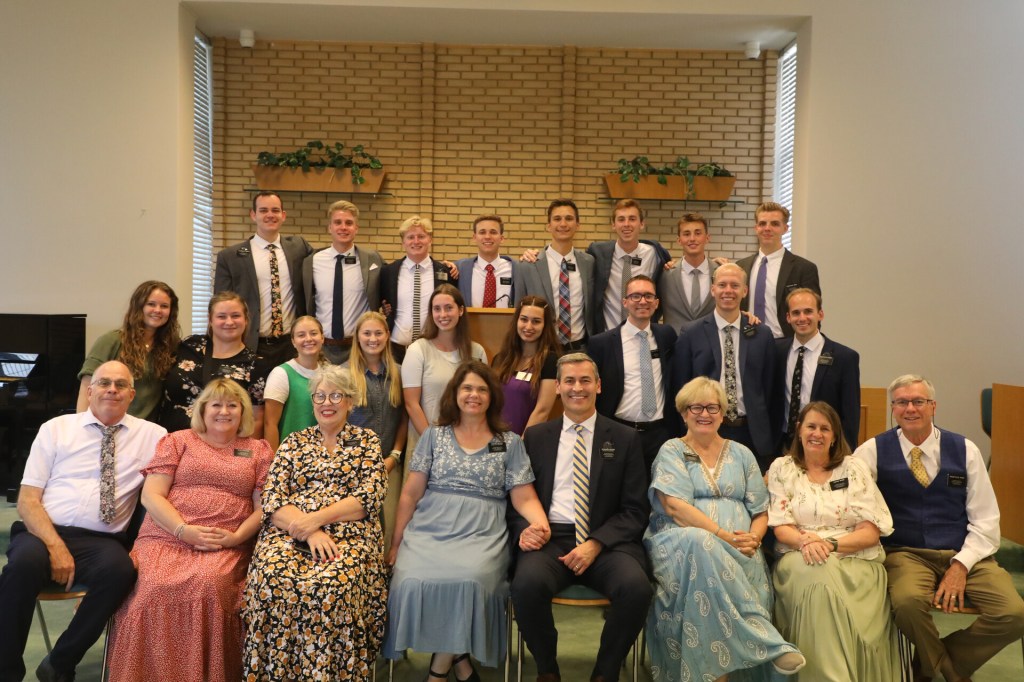
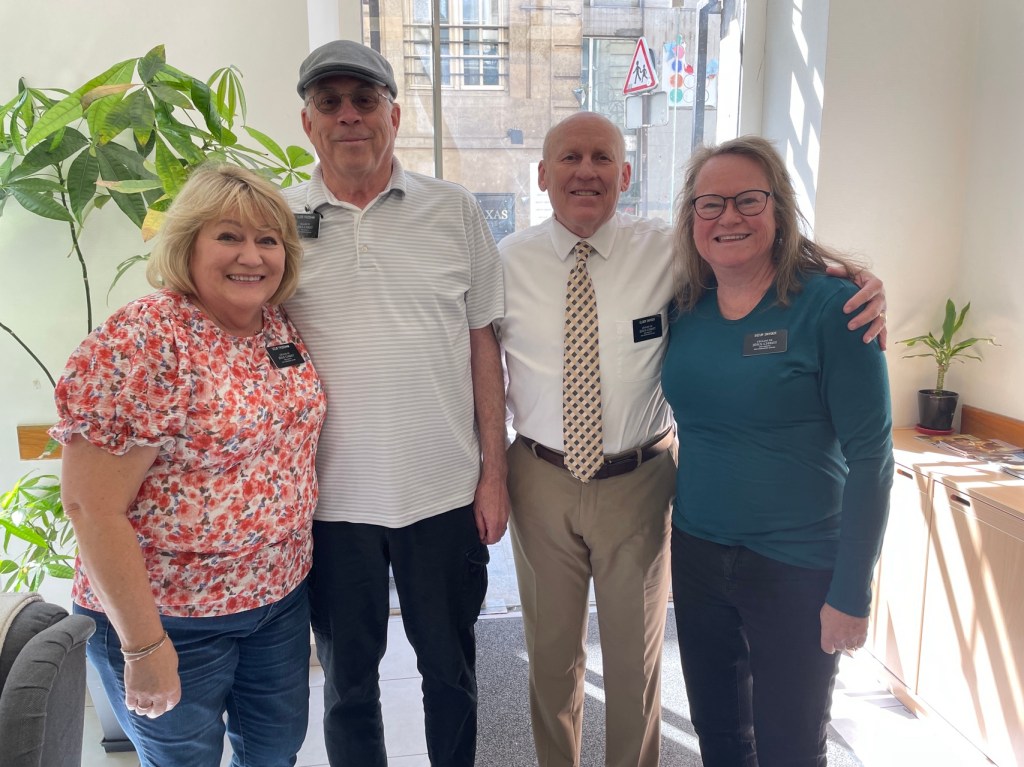
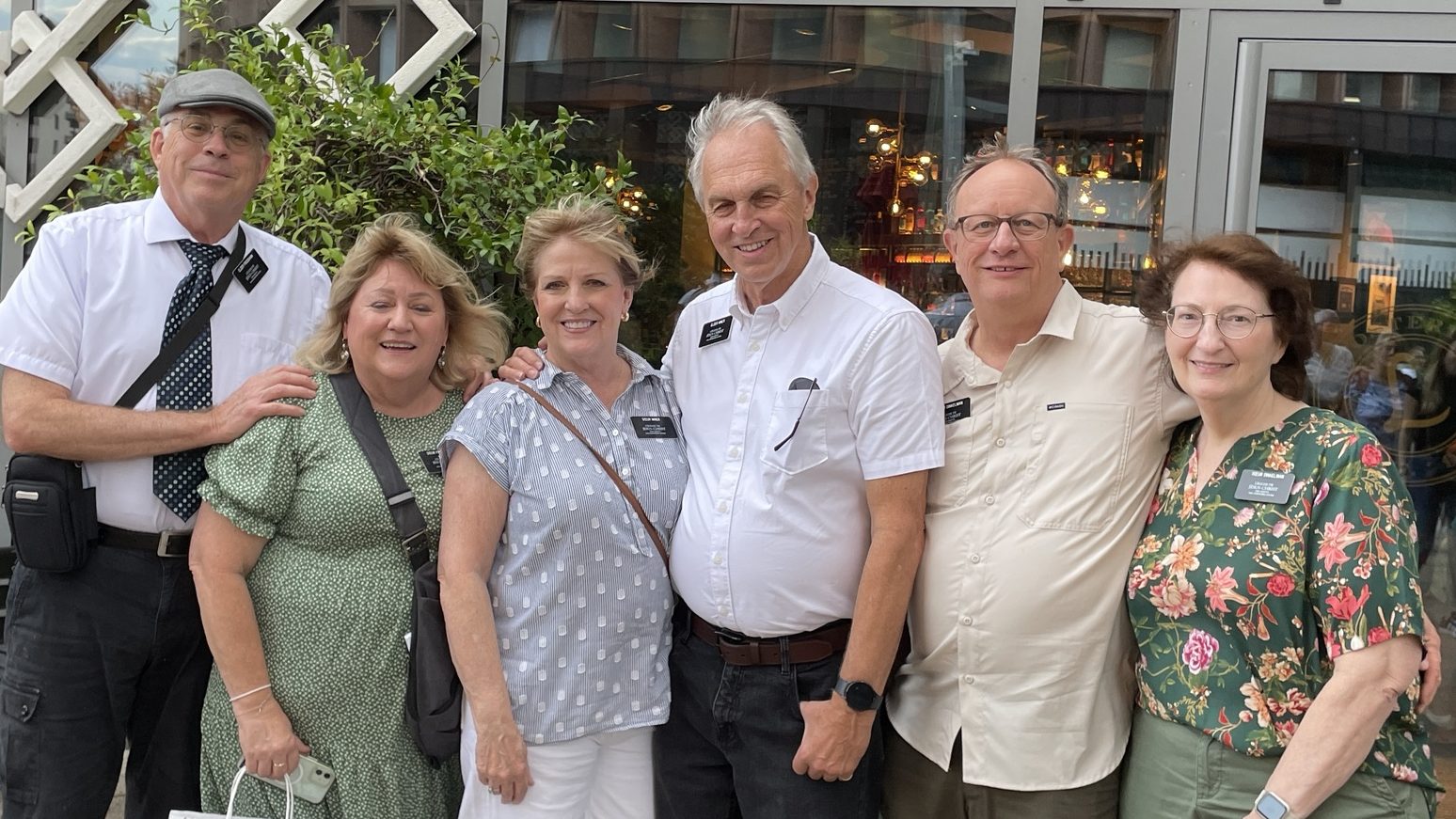
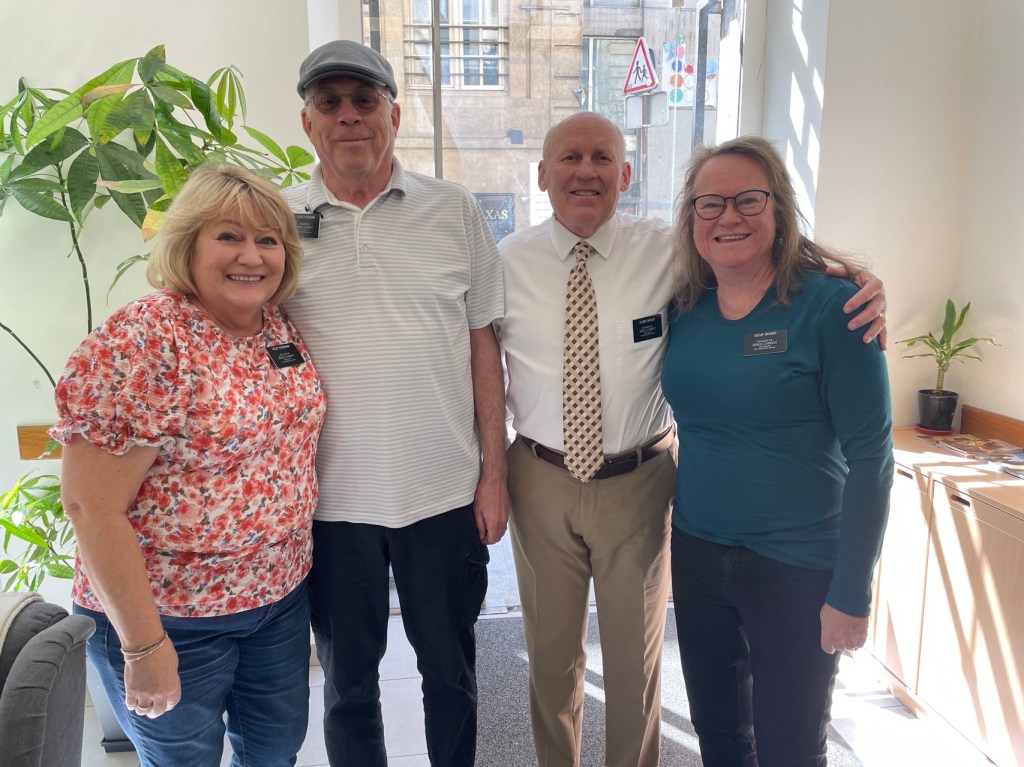
Hardy and GannawaySoulier, Miner, Hardy, Dinkelman, FrodshamLarry and Jennifer MinerHardy, Dinkelman, Miner, FrodshamJennifer and Jason SoulierPhil and Delys SnyderFrodsham, Miner, Dinkelman
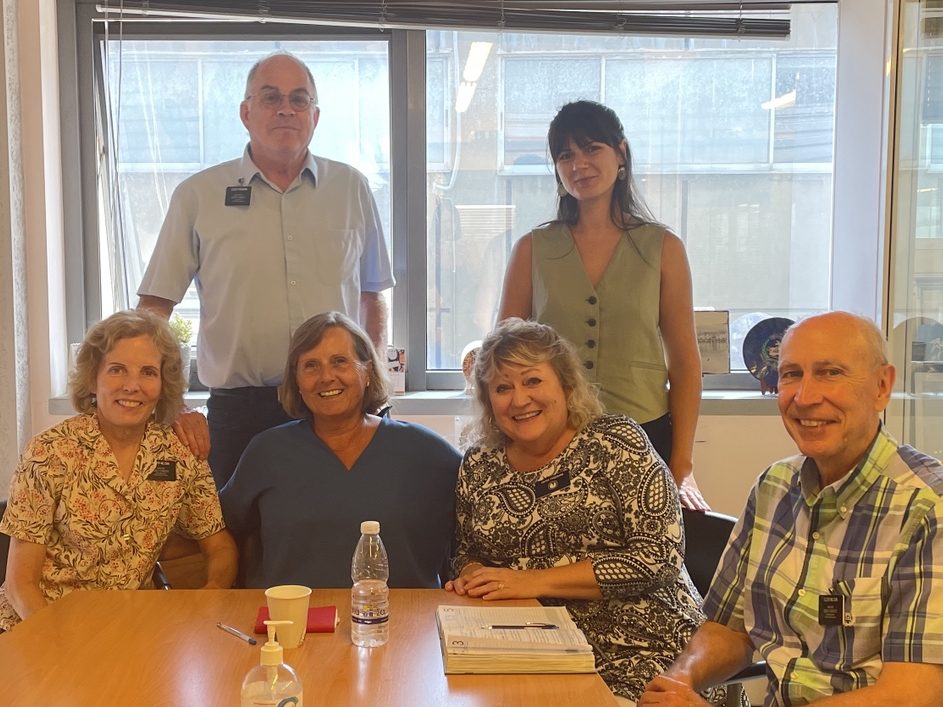
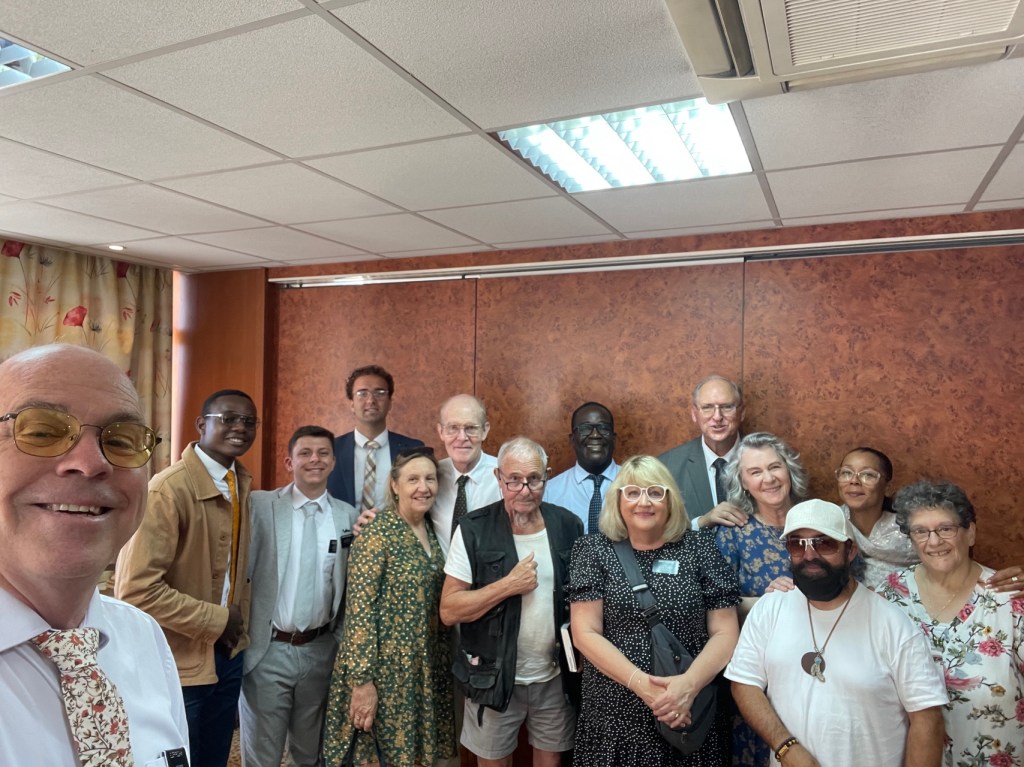
We also have about 10 more senior couples that are serving in the Lyon France Mission. We have a Senior Chat on Messenger so we can all talk to each other. We have 3 that are from France that speak French.
So here are the Powers – Kim and James that serve with the Young Single Adults in Geneva. Bernadette and Kelly McBride serve in Chalon sur Soane. She is the mission medical advisor
Bernadette and Kelly McBrideKim and James Powers
Here are the Herzog’s and the Barray’s that work together in Corsica. It’s so fun to be together.
Troy and Carol HerzogTroy and Carol Herzog, Xavier and Rolande Barray
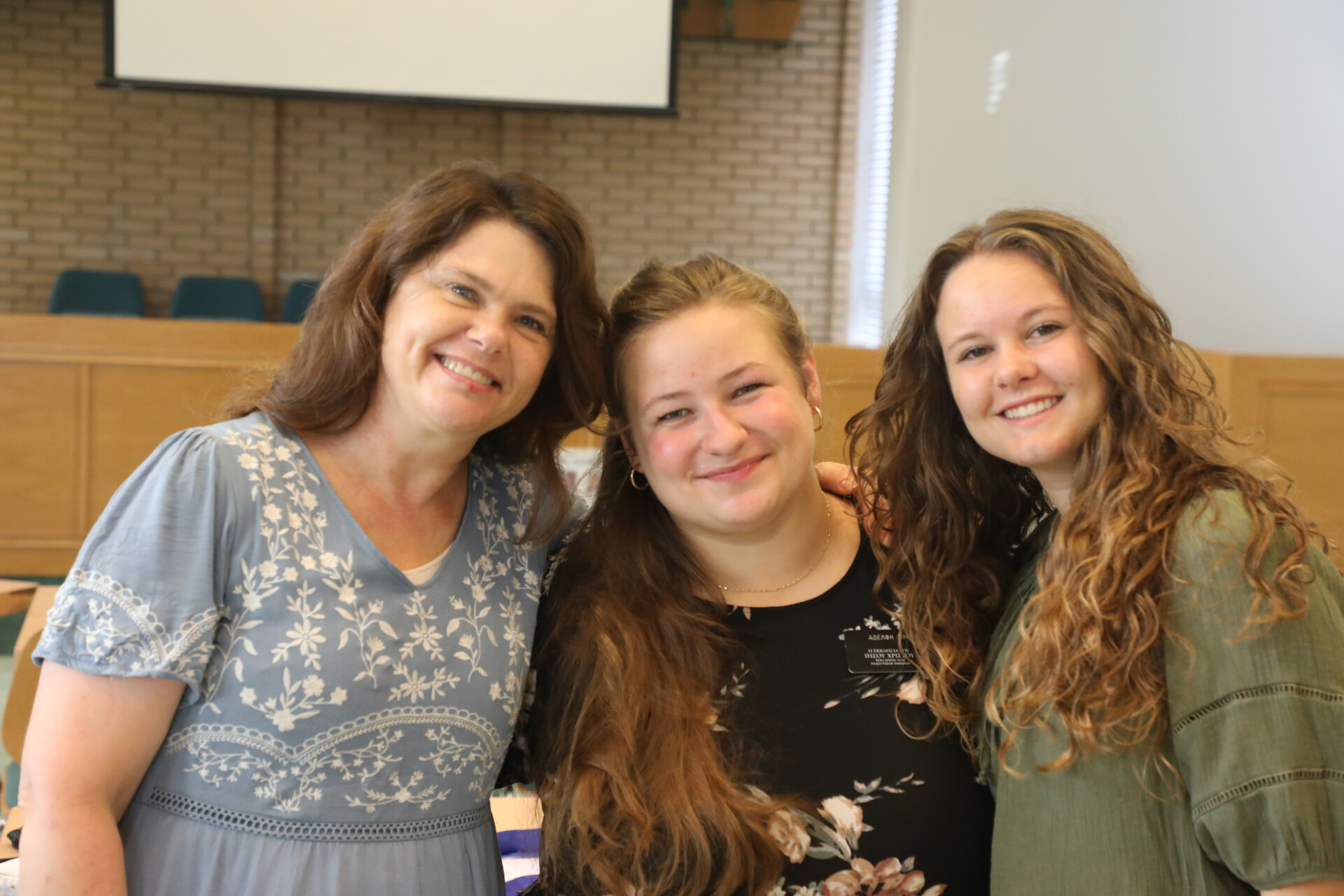
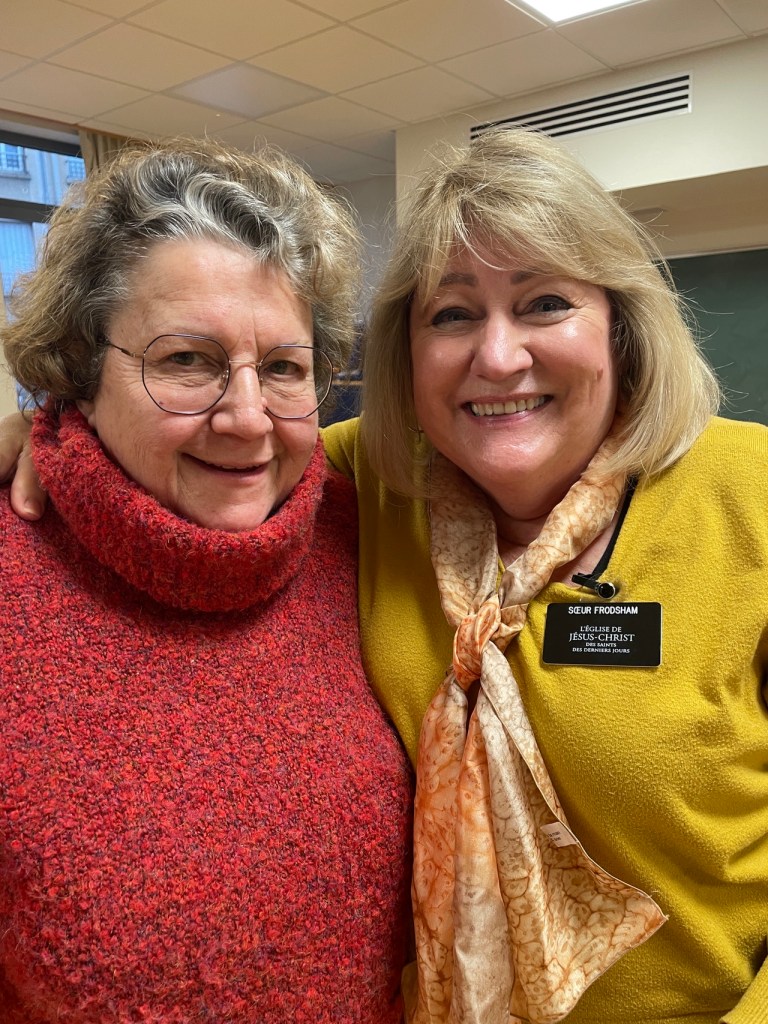
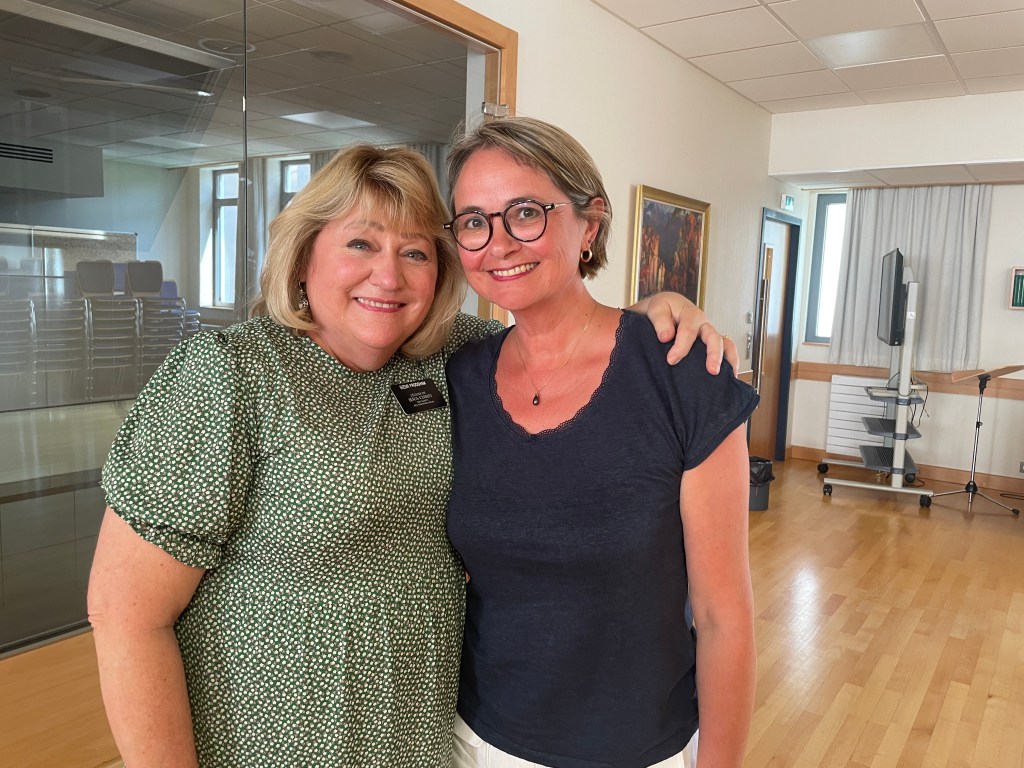
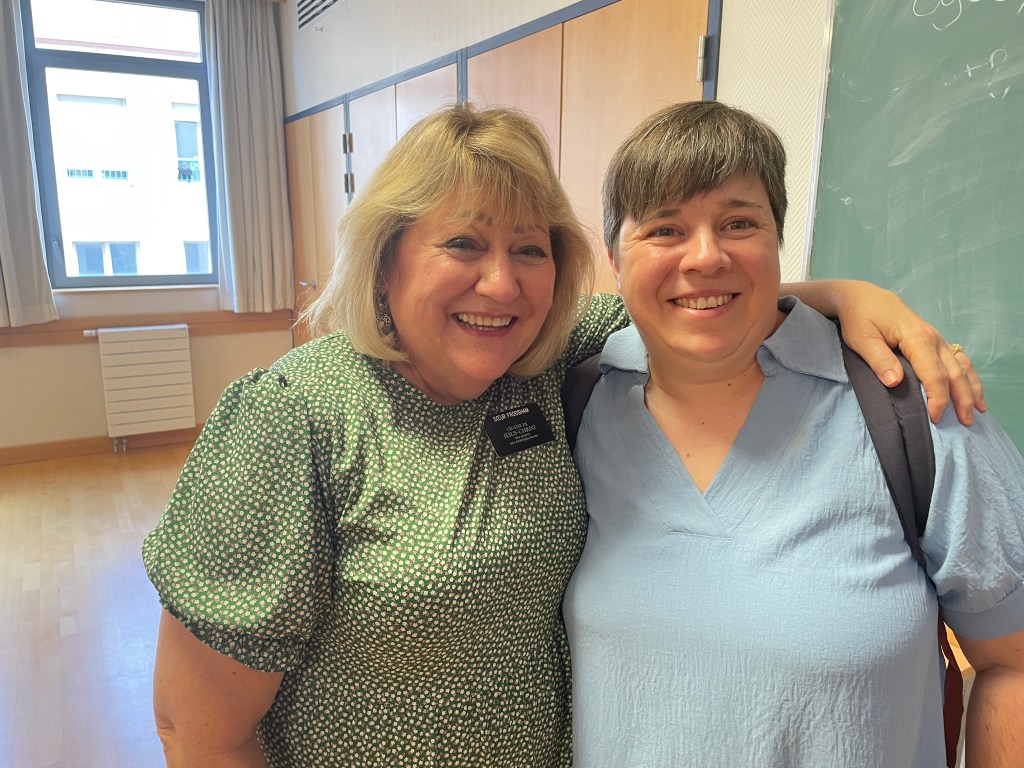
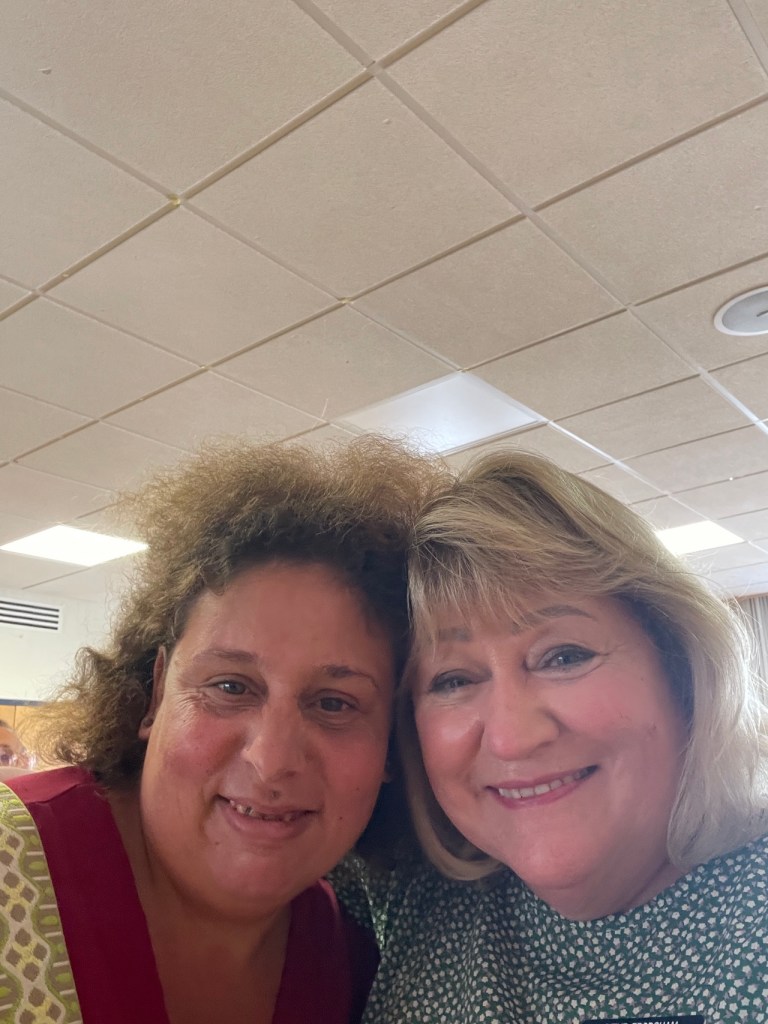
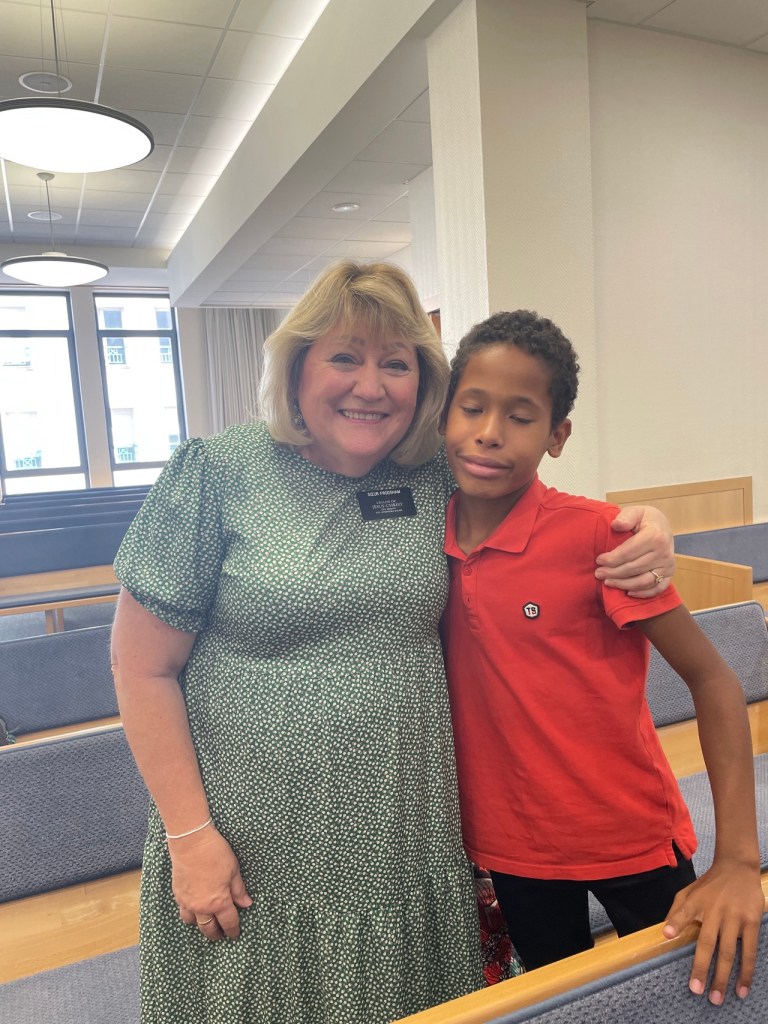
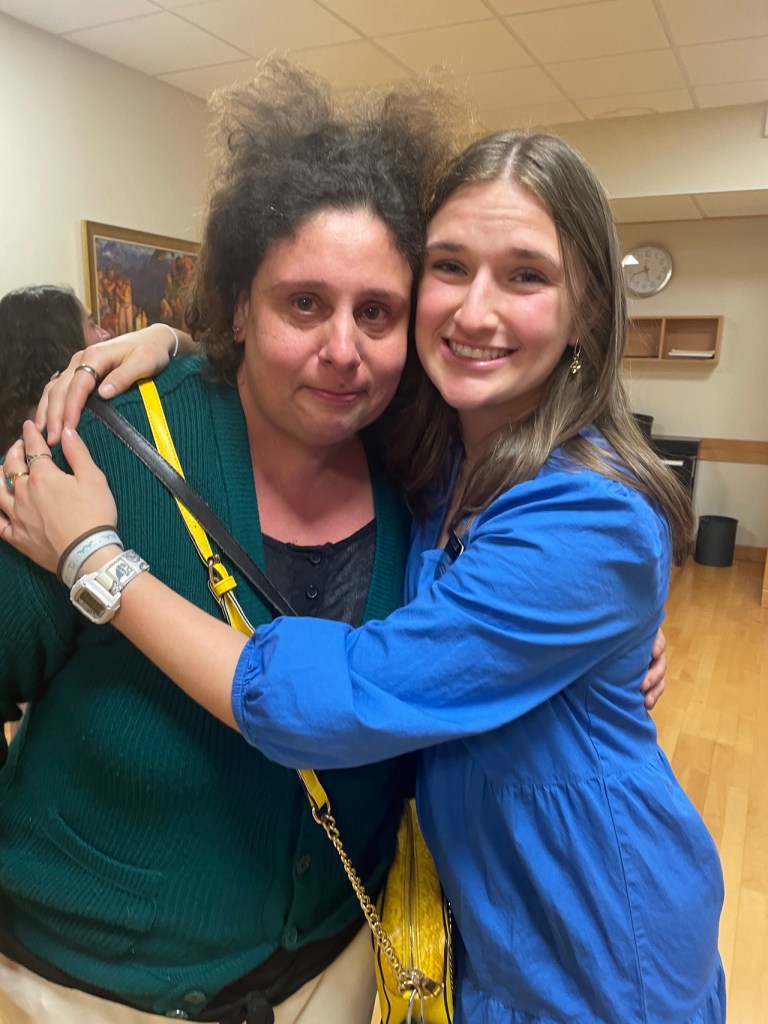
Catherine has made many friends in the Porte Des Alpes ward. One sabbath day, just before sacrament meeting, Soeur Martine grabbed Catherine by the cheeks and told her “you need to learn French” The women of the ward felt Catherine’s spirit and wanted desperately to talk with her
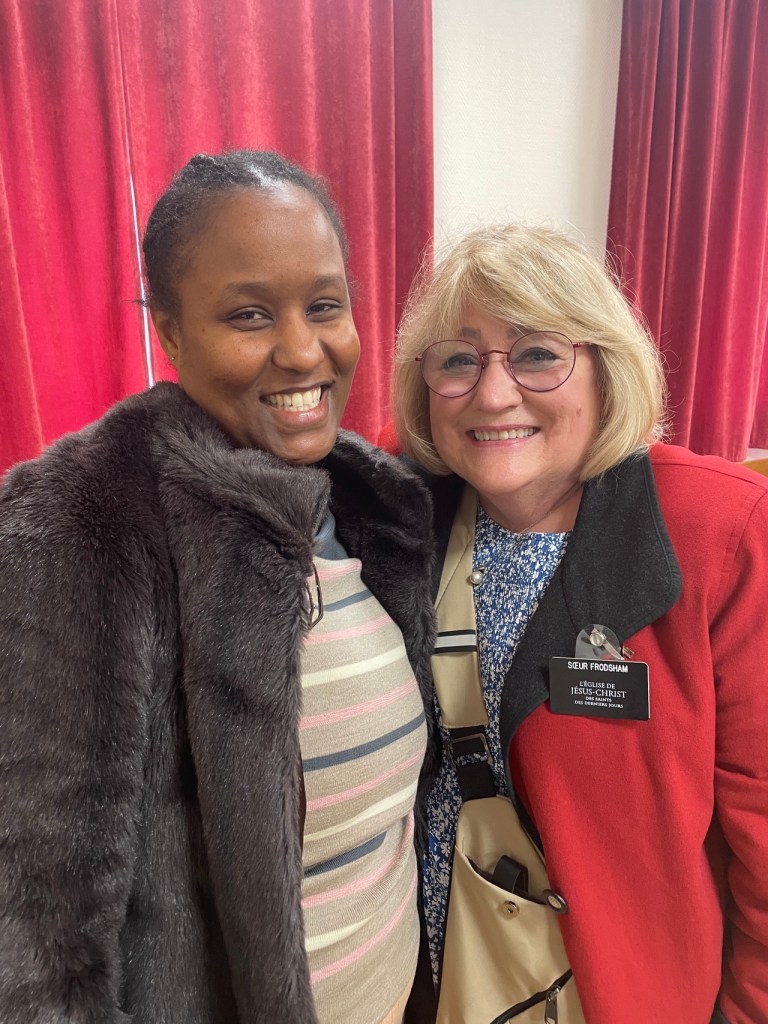
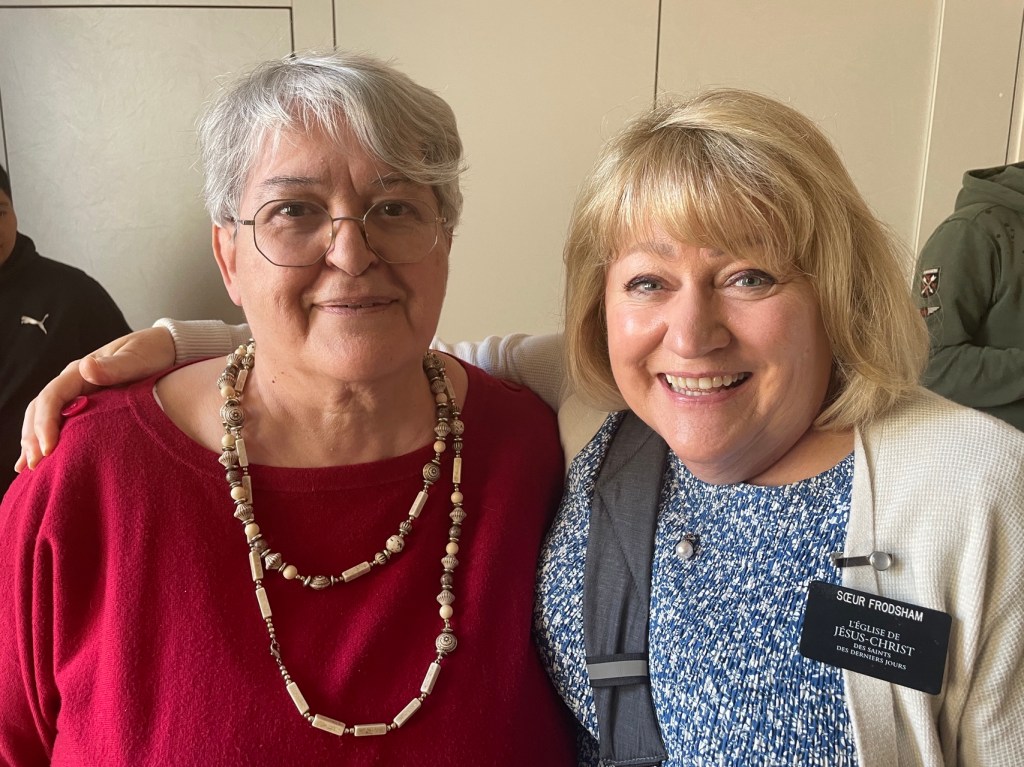
Soeur ConessaClara with Lethuaire and FragaSoeur MartineTheresahTheresah with Elder Sumison and BeardInstant friend in AverySoeur MartineThibaultSoeur Jeanine RouxPorte des Alpes Relief SocietySegoleneLaetitiaVanessaAshleyValerie Moclair and familySoeur Jenine Roux after falling and breaking her shoulder
Soeur Roux is the sweetest, most Christ-like woman one could ever meet. She lost her husband several months after we came to France. She is so gentle, so loving and has a fabulous sense of humor. Just a week or two ago, she fell and broke her shoulder. Thibault took one of our EnglishConnect classes and we met him in person at the CAJAF. We had to include one of many instant friends we have met along the way. Catherine met her at a my path devotional in Evry, France
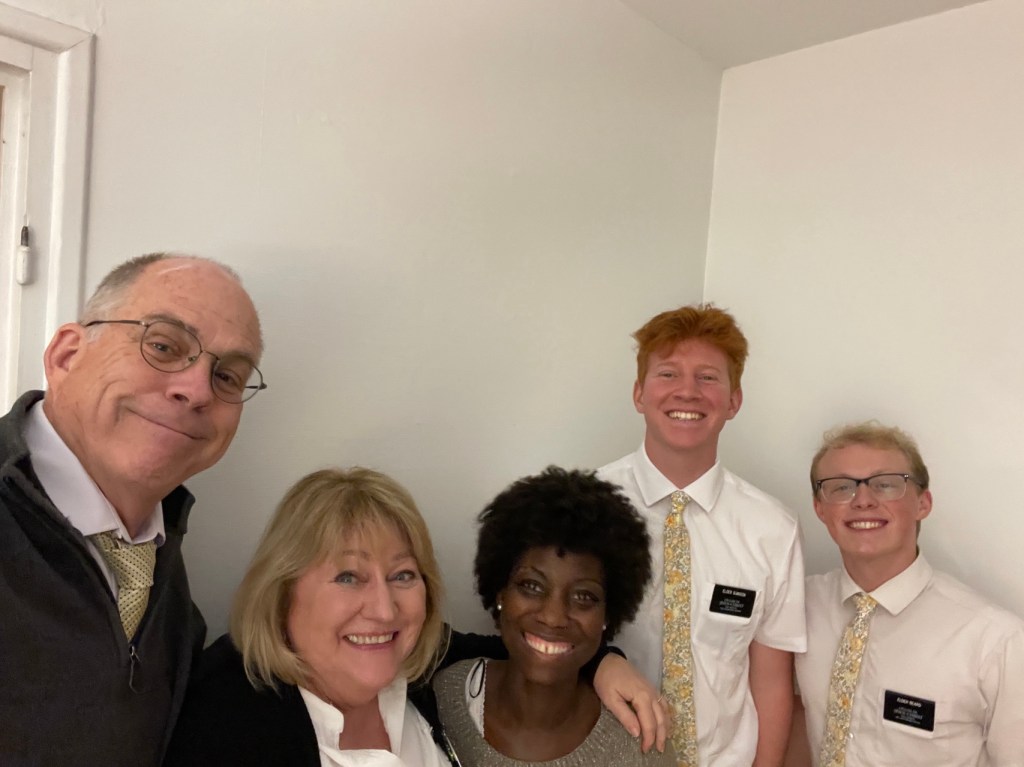
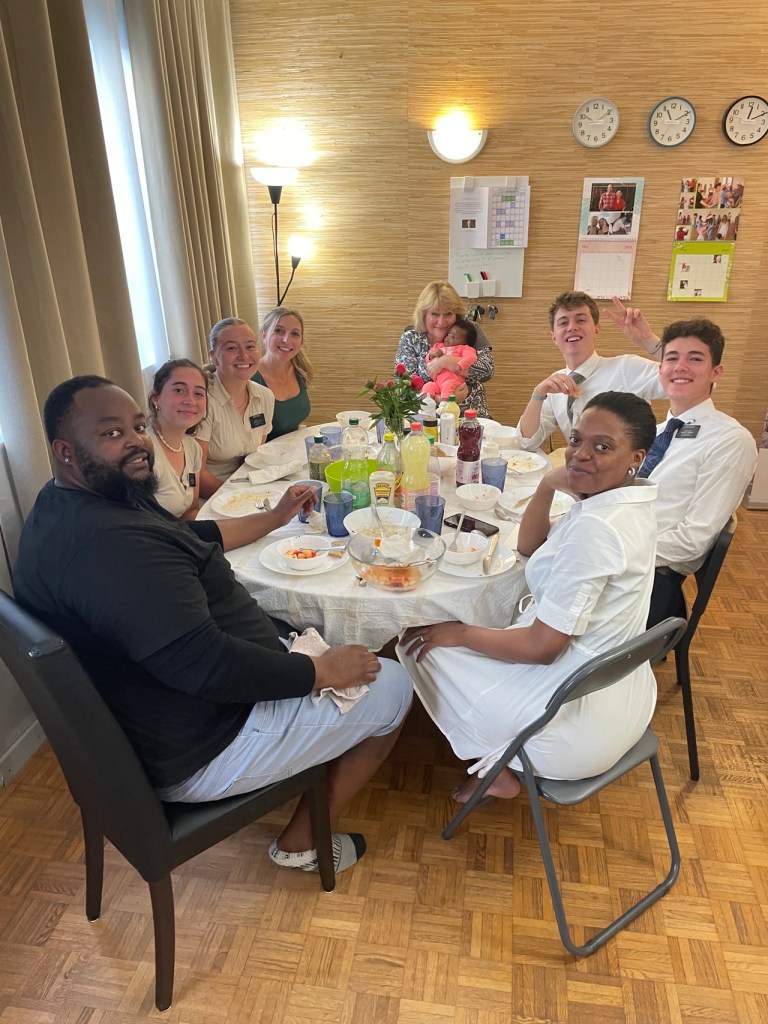
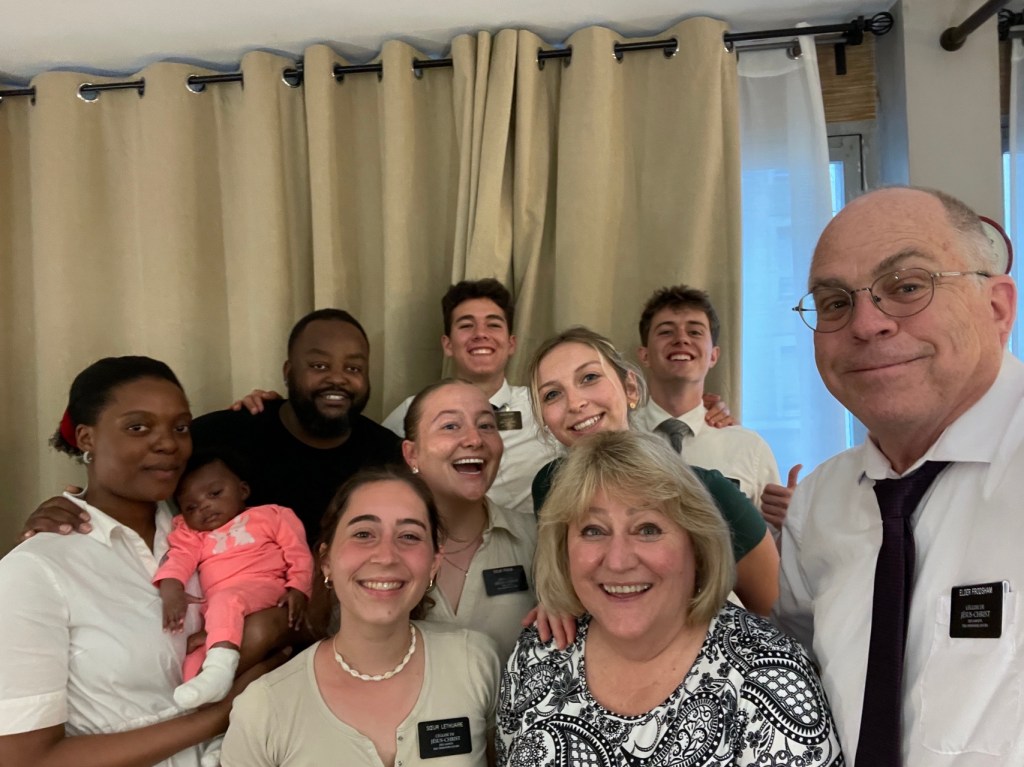
The missionaries brought their friends (we used to call them investigators) into our home to have discussions, or just to feed them dinner and chat around the dinner table. We never let a moment go by that we didn’t testify of the truthfulness of the things the missionaries were teaching them.
Yebei Last and PerryBrown, Adam, Ami ClemontBrown, Adam and ClemontPerry Patello ami Xue FengElder Last, ami, Perry, Hakim in backgroundSoeur Edwards, Lethuaire, Munashe
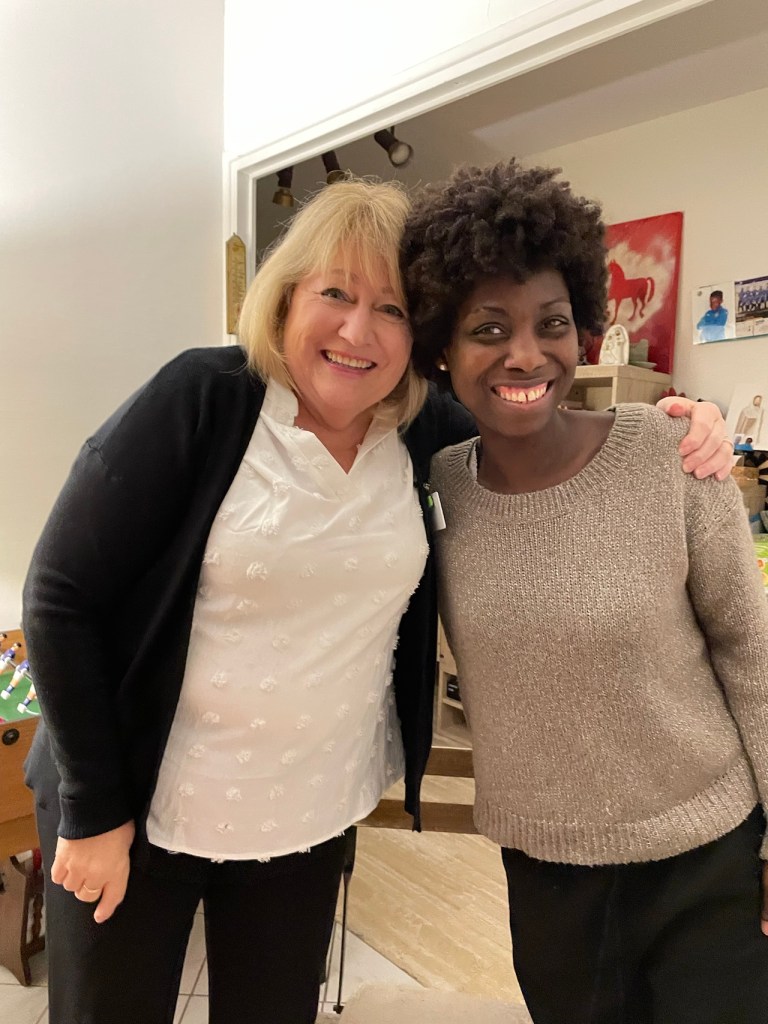
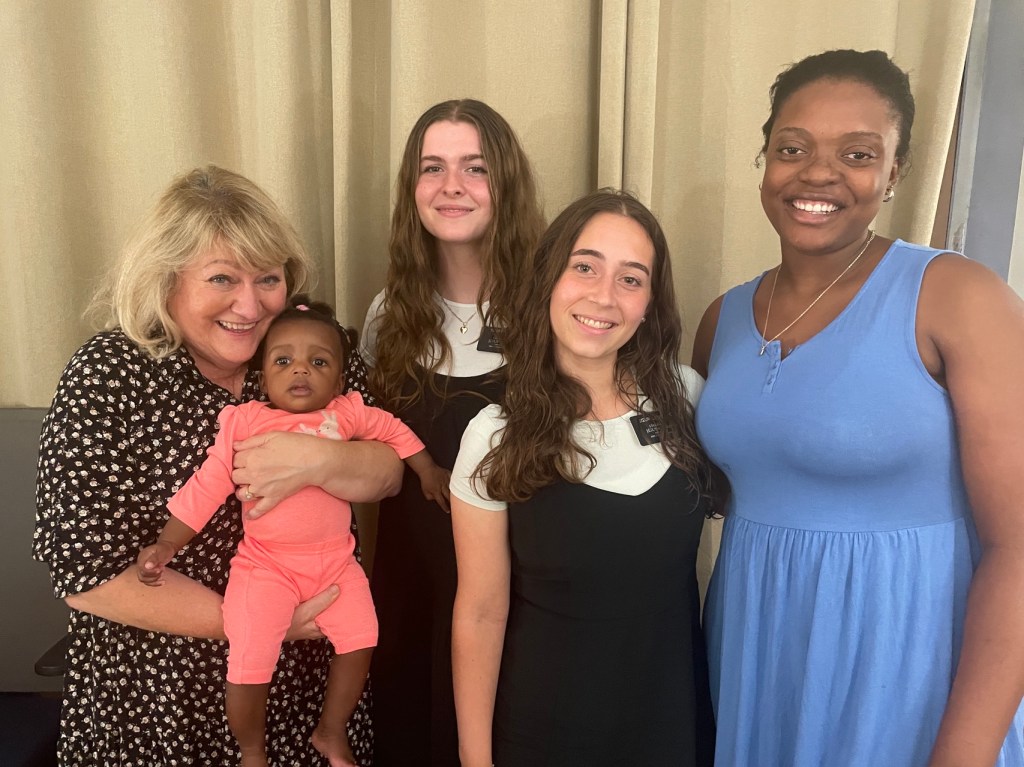
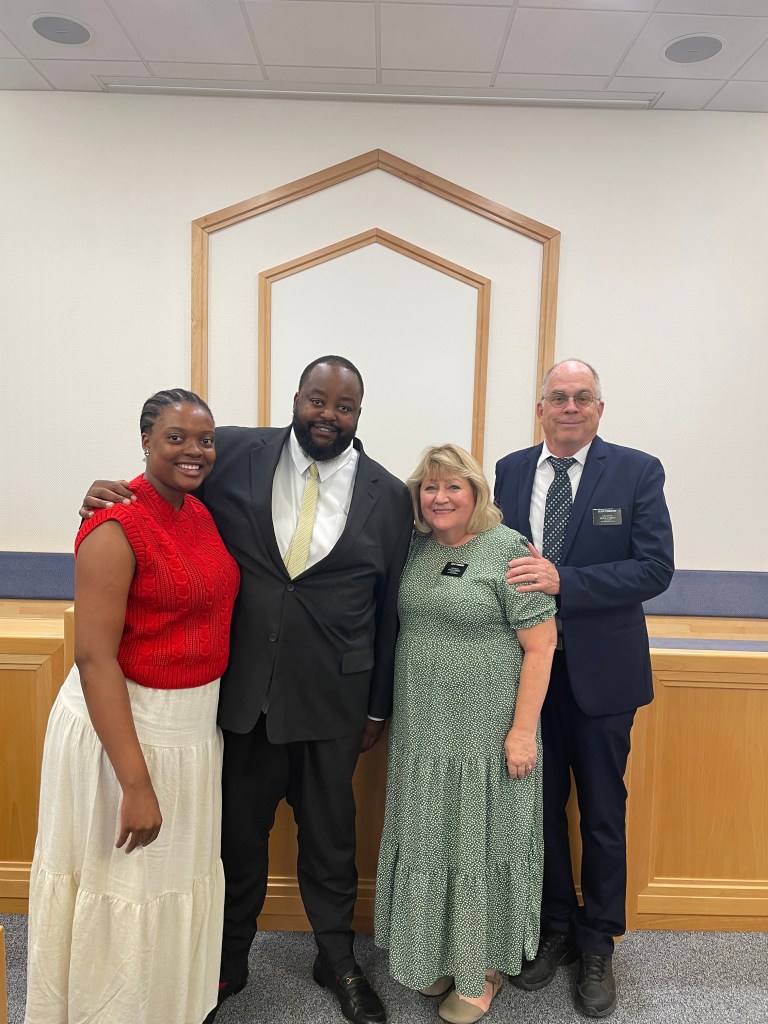
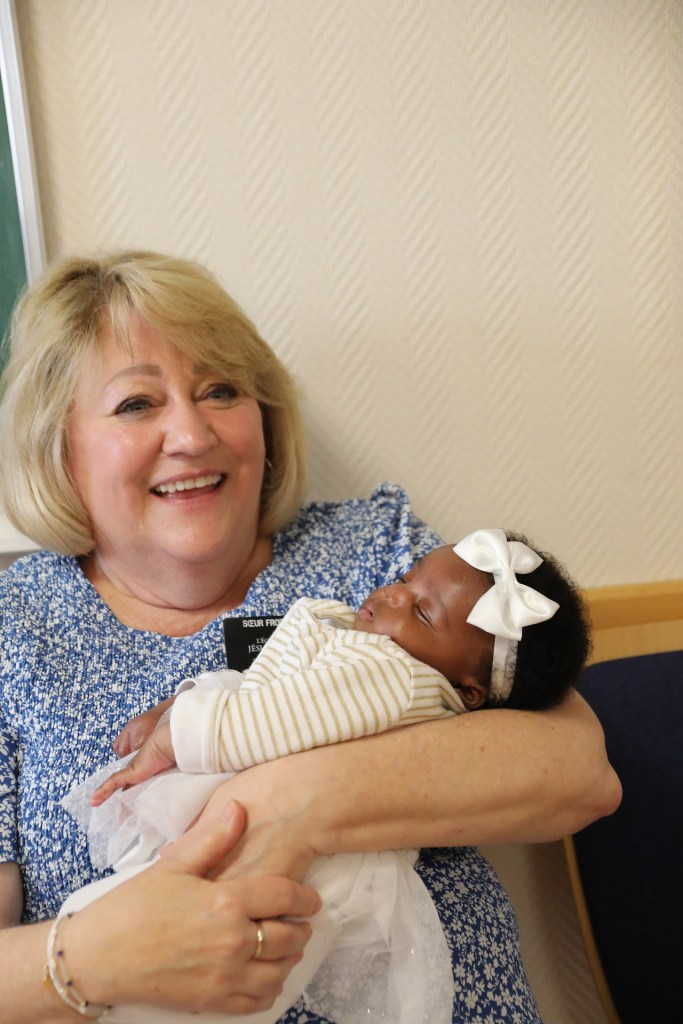
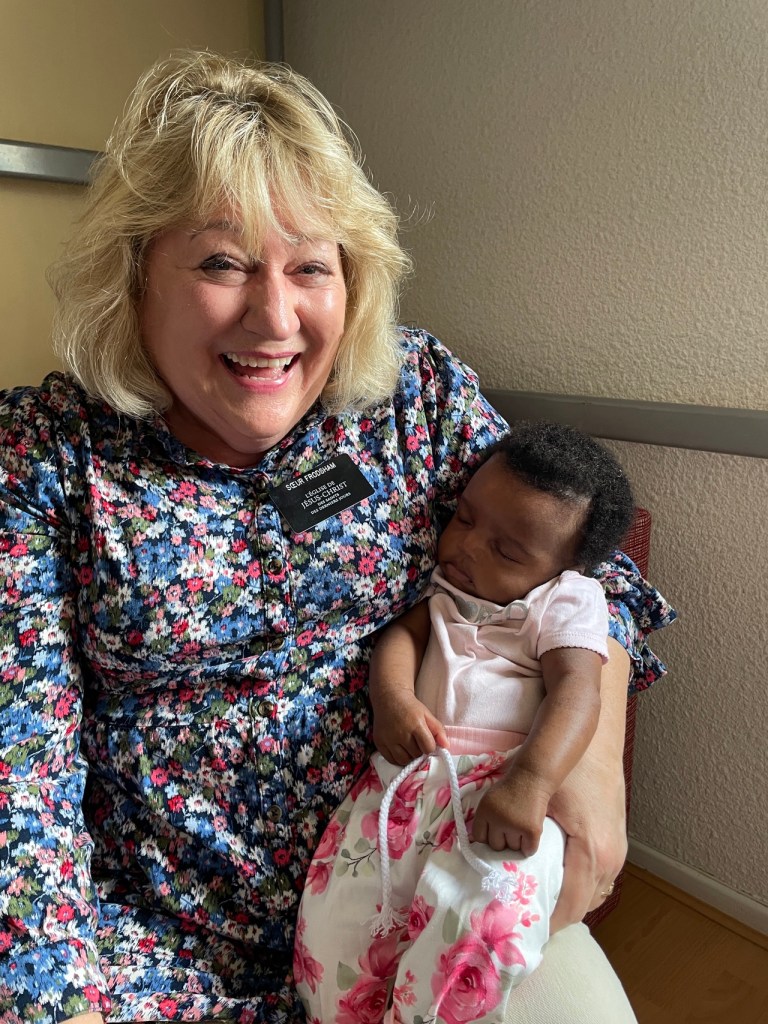
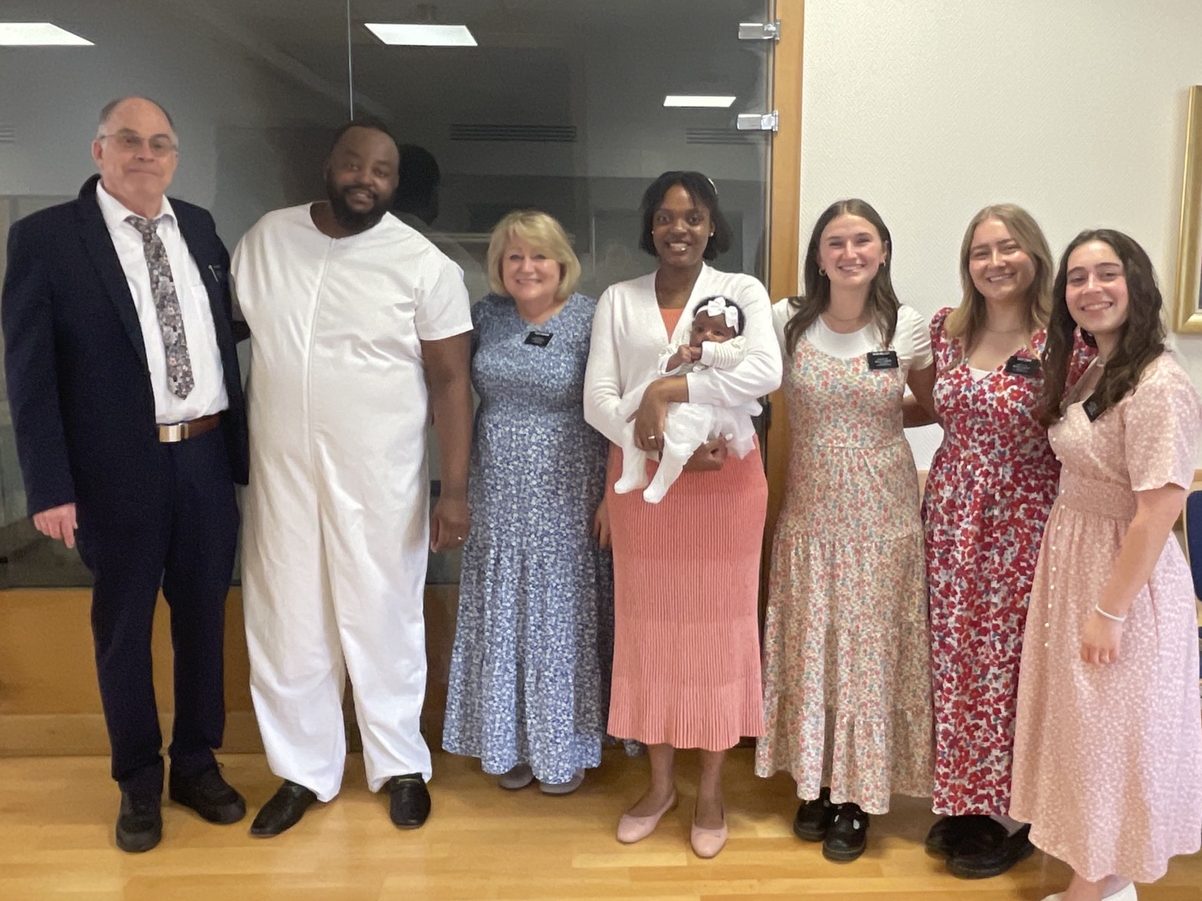
Special friends that were taught in our apartment for months, Munashe and Machilo. They had their baby, Elsie, were married several months later and then Machilo was baptized the next week. As you can see, Catherine will not let go of that baby
Dinner at the FrodshamsMunashe and MachiloIn our apartmentMolinet, Fraga, Lethuaire with Munashe and MachiloMunashe and ElsieCatherine and ElsieBaptism of Machilo
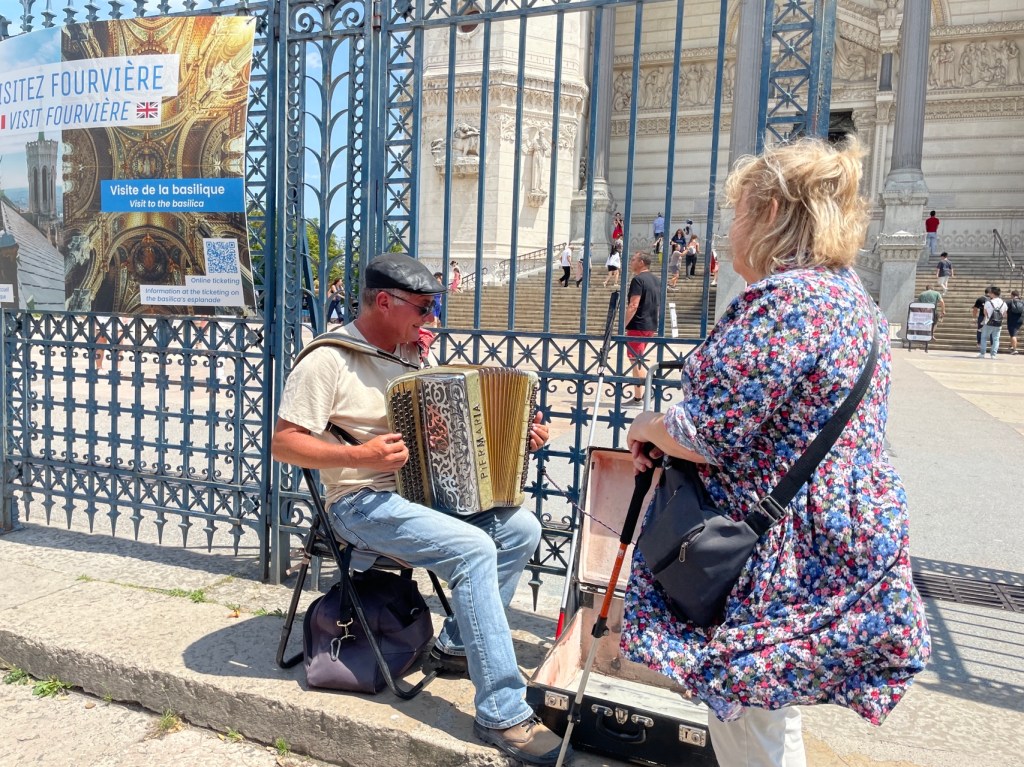
There are many others that we have met along the way. An accordion player who sits outside the Basilica Notre-Dame de Fourvière. Catherine would place a large bill in his pocket every time we visited the Basilica. Florian, the hostess at the B&B we stayed at in Saint Clair Sur L’Elle. Segolene and Serge, whom Catherine mentioned in an earlier post. Gisele, who we met in Caen and who took one of our EnglishConnect classes. The Snyders, our counterparts in Paris, and Dorothee Cannon, our MTC tutor, who stayed at our apartment with her family for two nights while she picked up her son, here on a mission.
Delys and Phil SnyderGiseleDorothee CannonCannon FamilySegolene and SergeCeciliaVanessa and Soeur MollinetAnnaAccordion playing friendFlorian at Saint Clair sue l’Elle
We had several group gatherings. For general conference, single adult activities and church meetings.
General Conference at the San Souci buildingThe congregation of Ajaccio
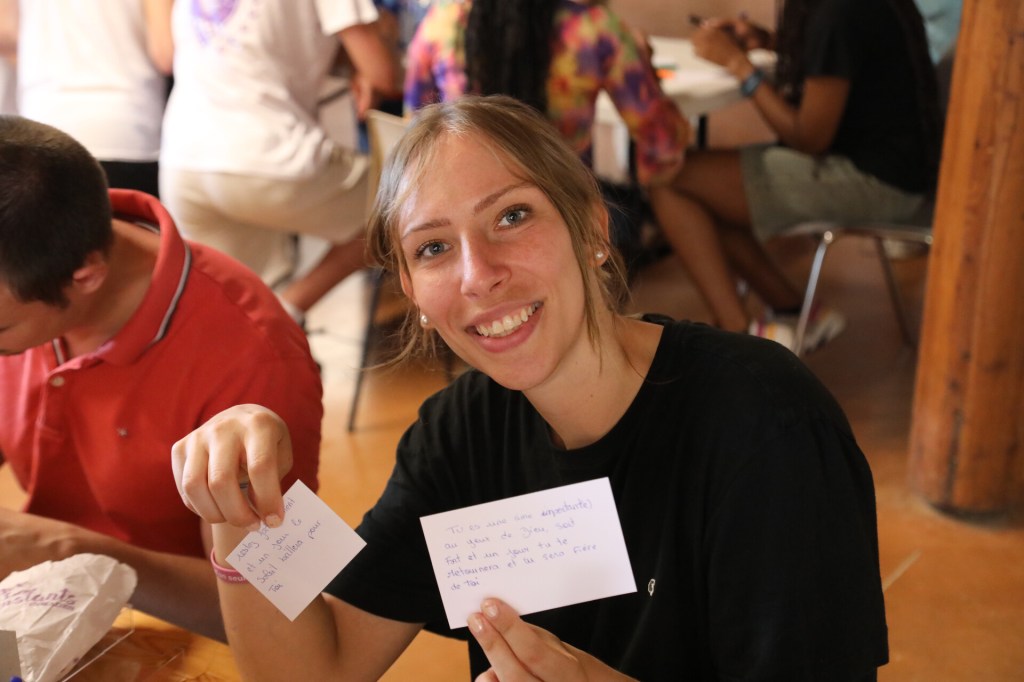
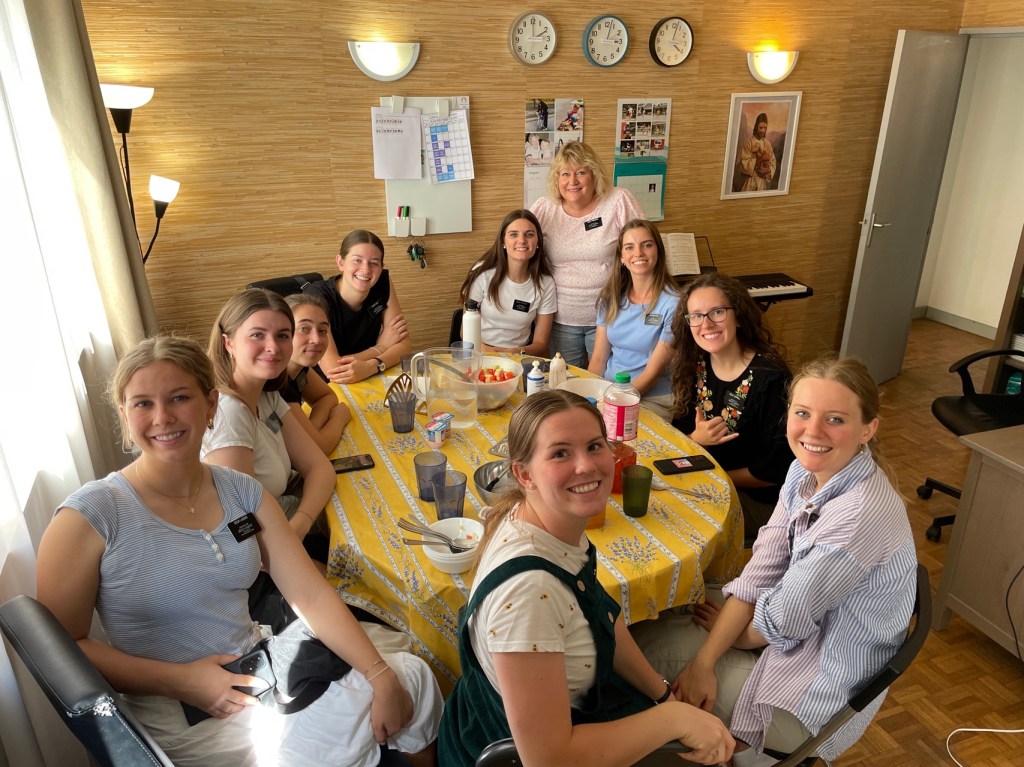
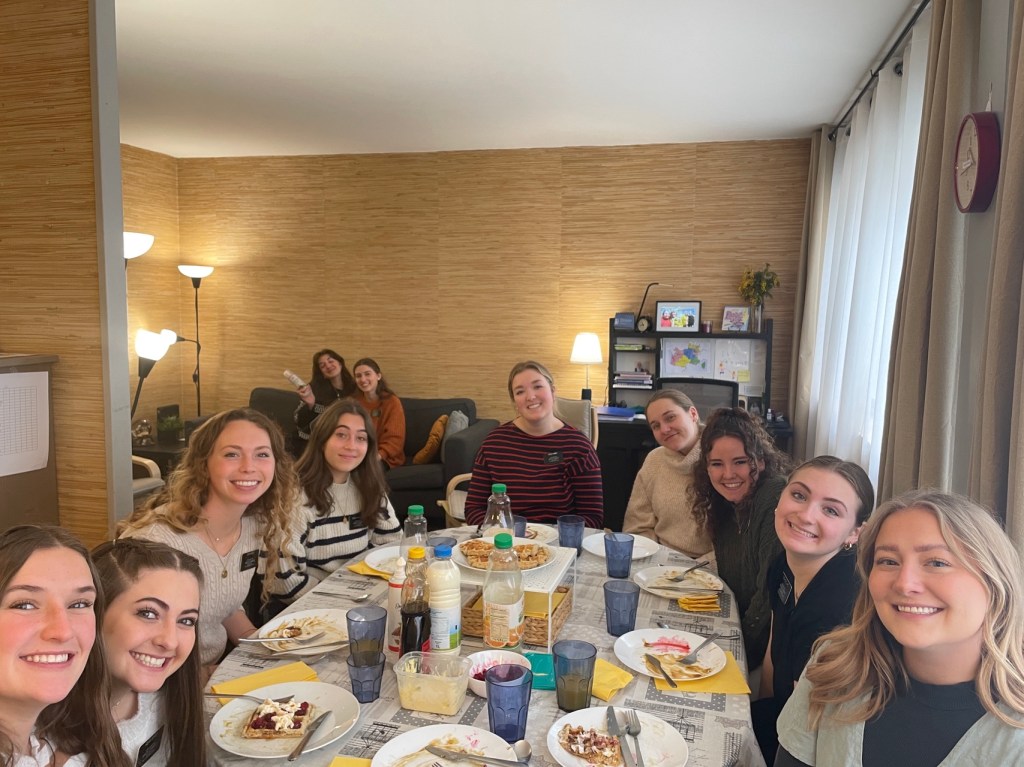
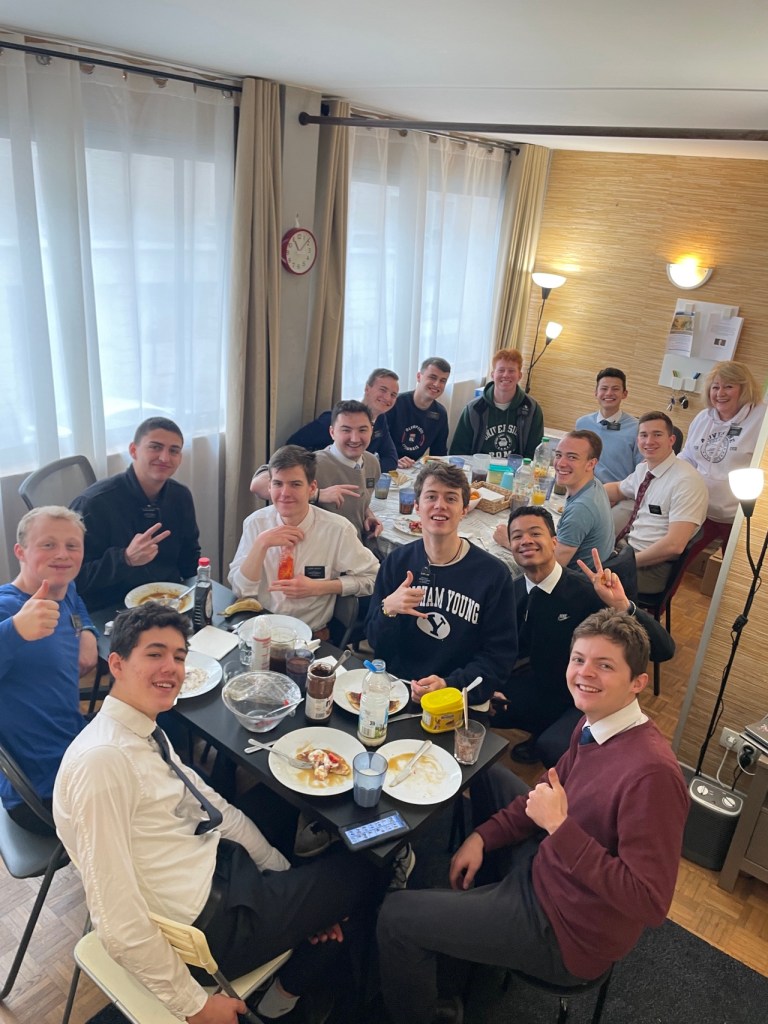
We started a tradition of inviting missionaries over once a transfer on a p-day morning to have waffles. We figured that once every 6 weeks would not be disruptive, but often enough that missionaries would remember and it would be something to look forward to.
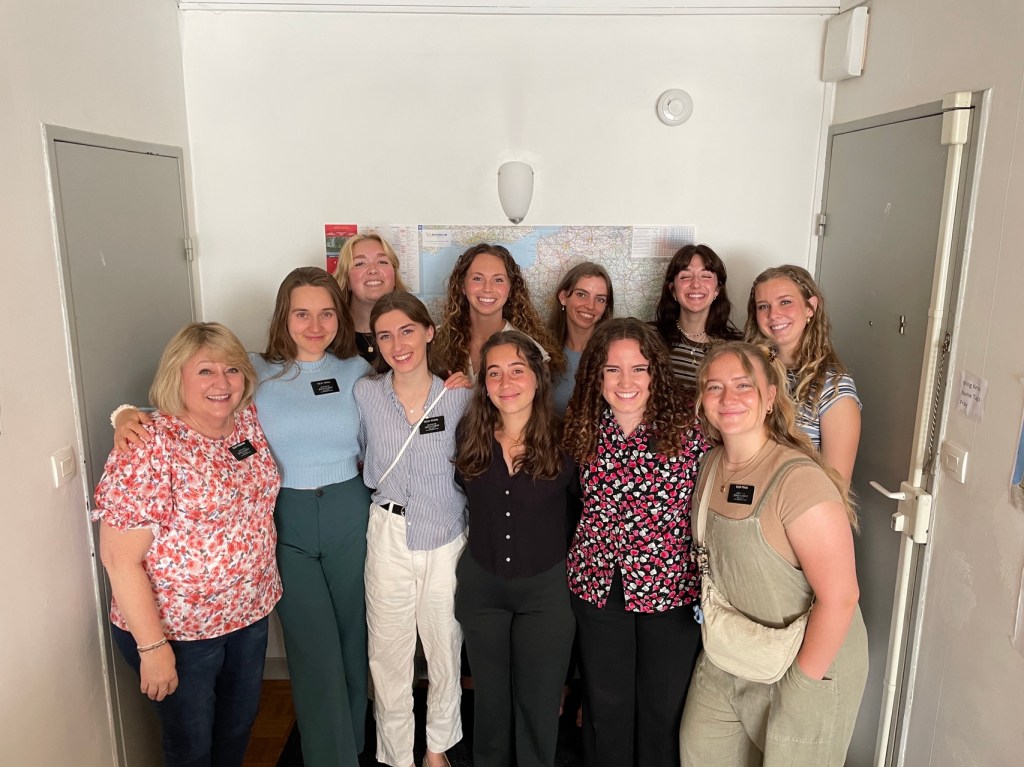
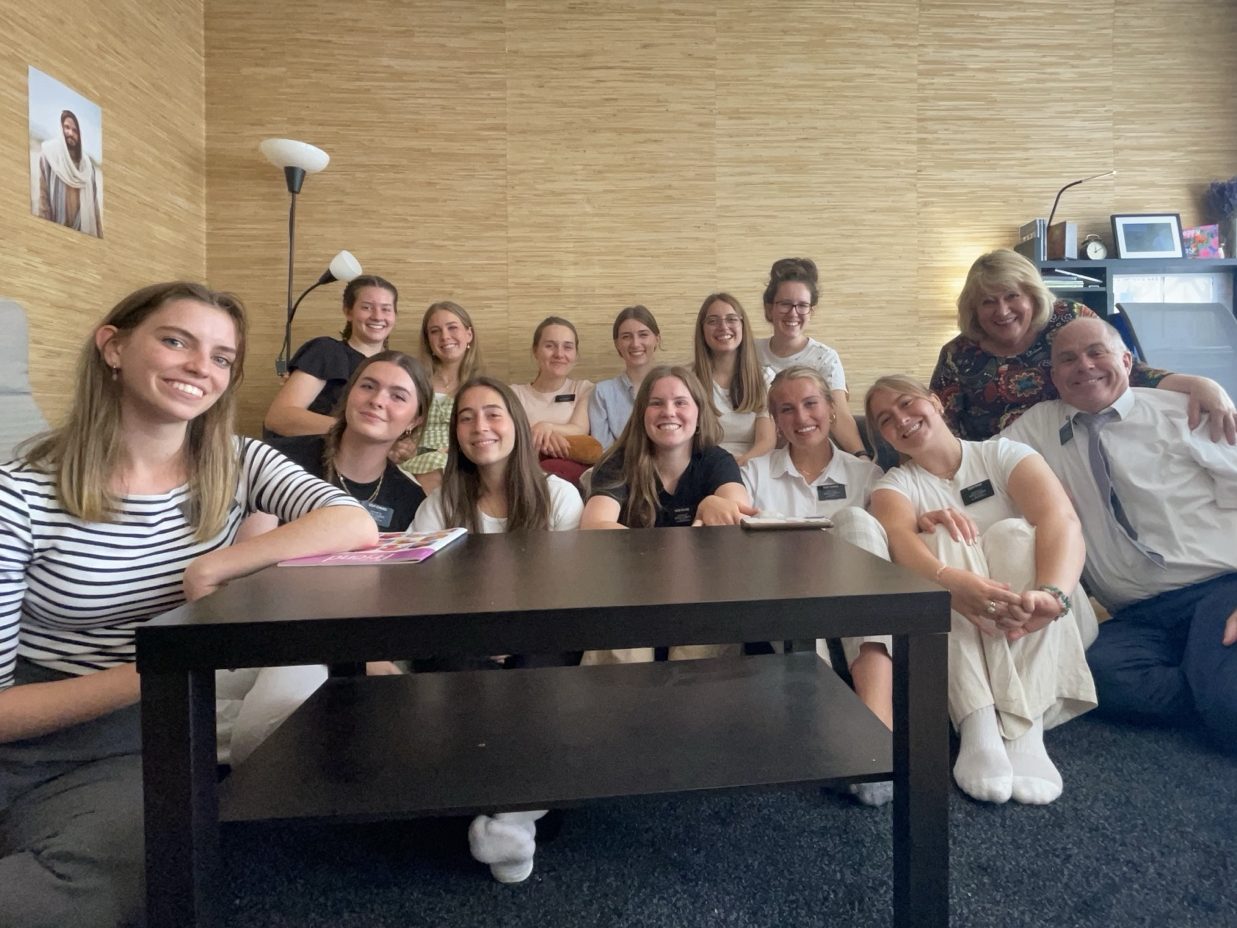
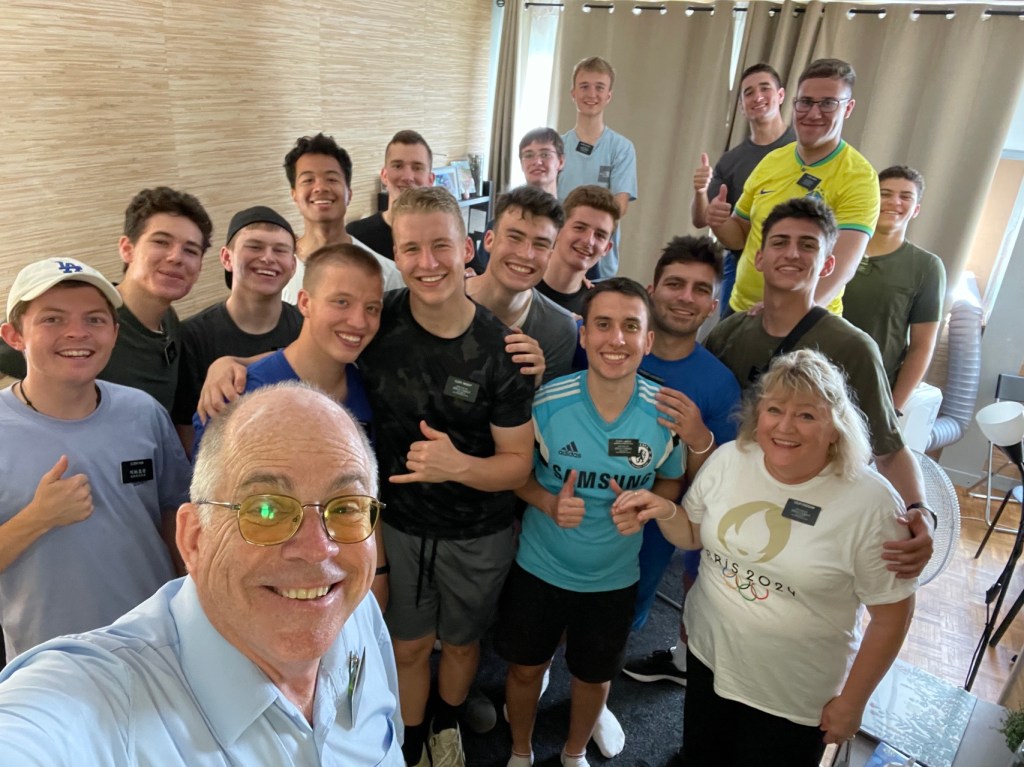
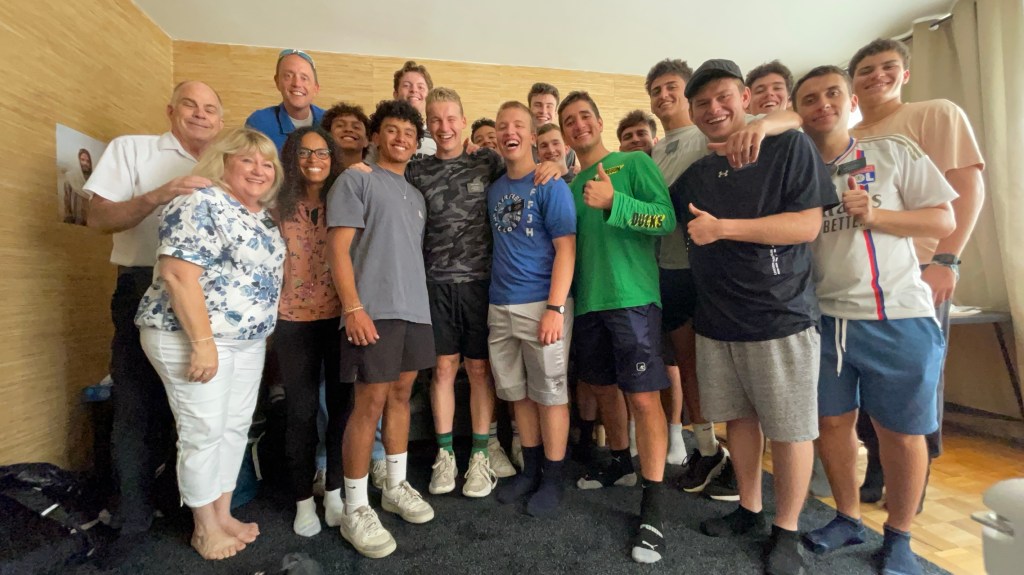
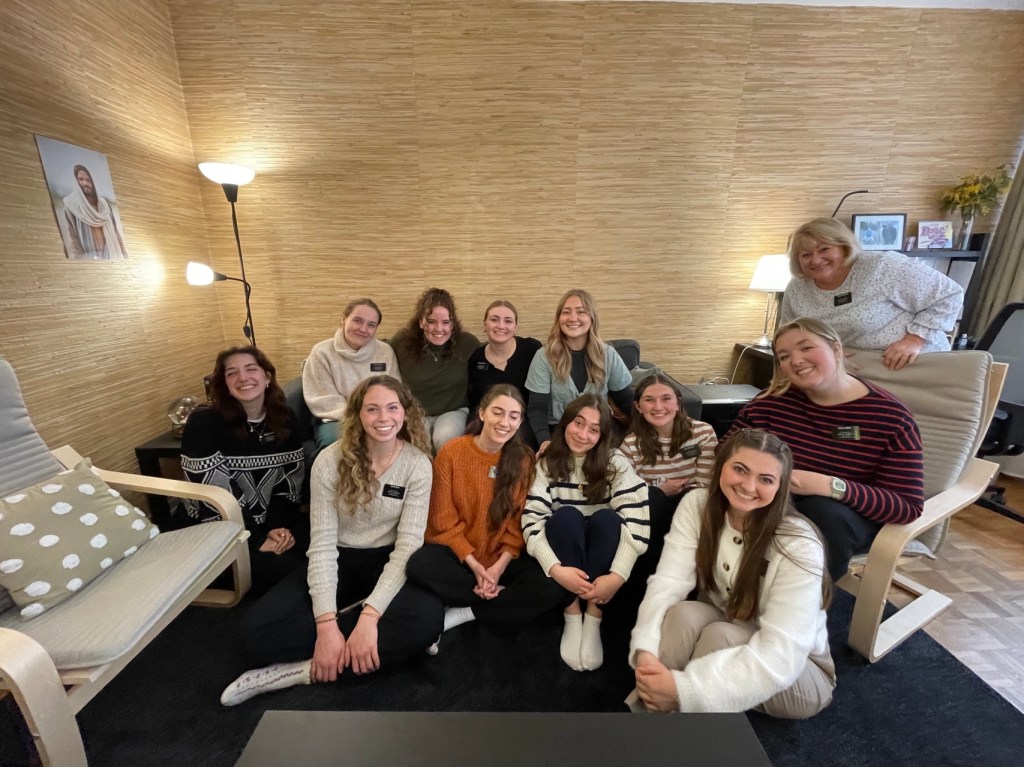
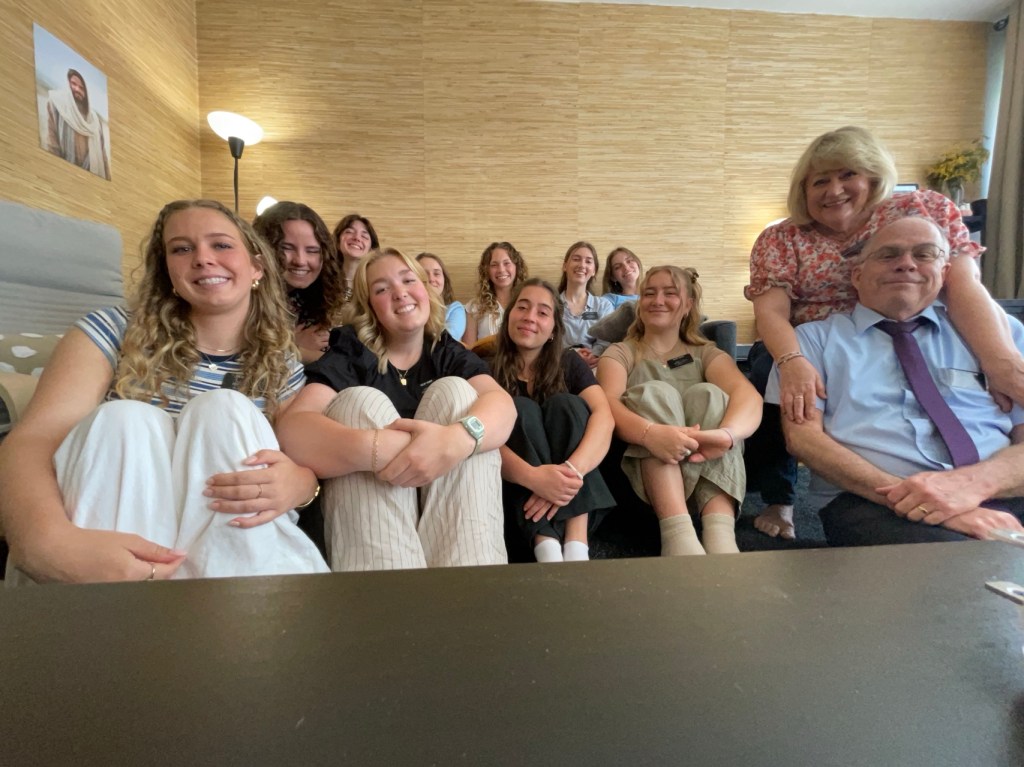
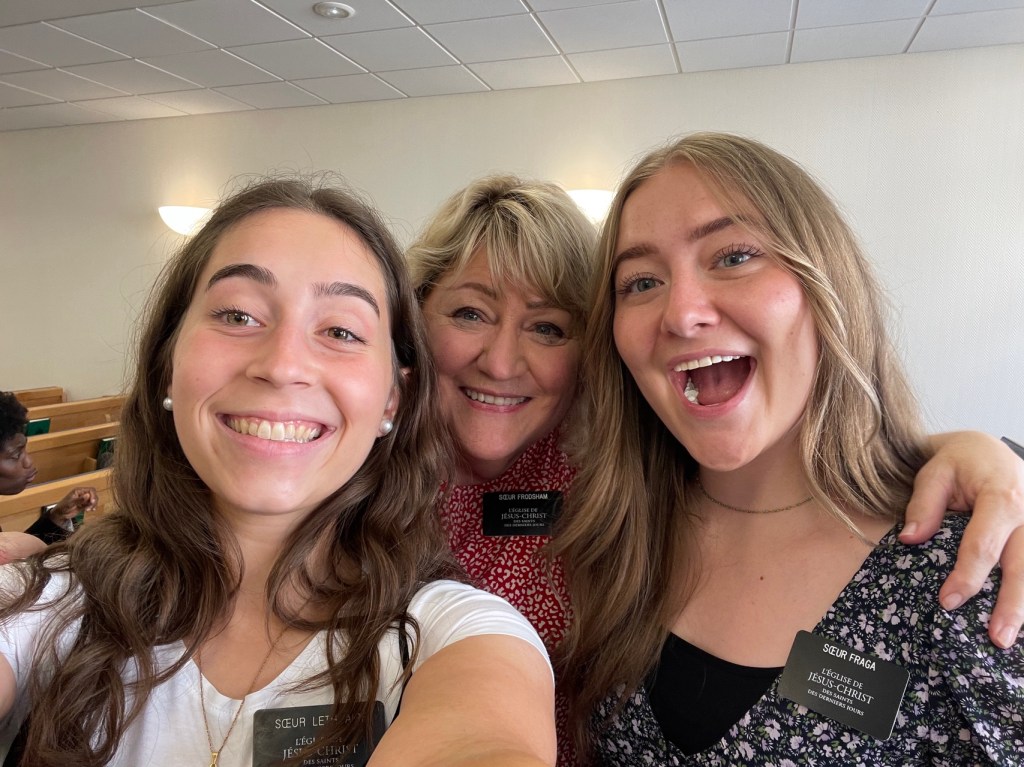
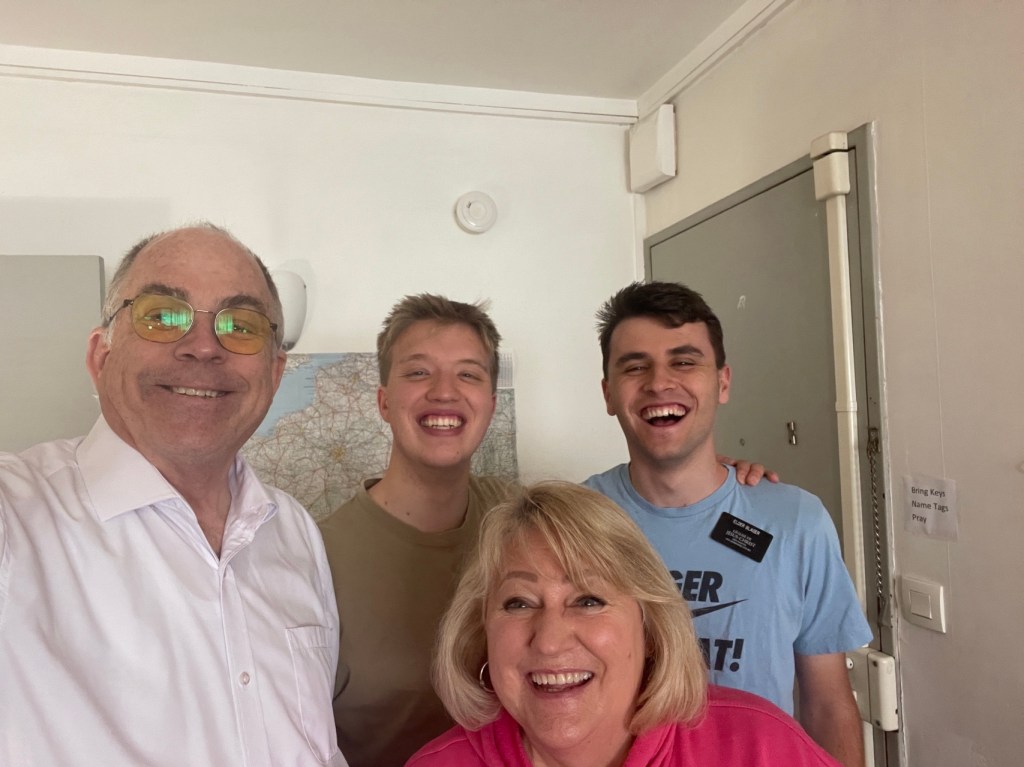
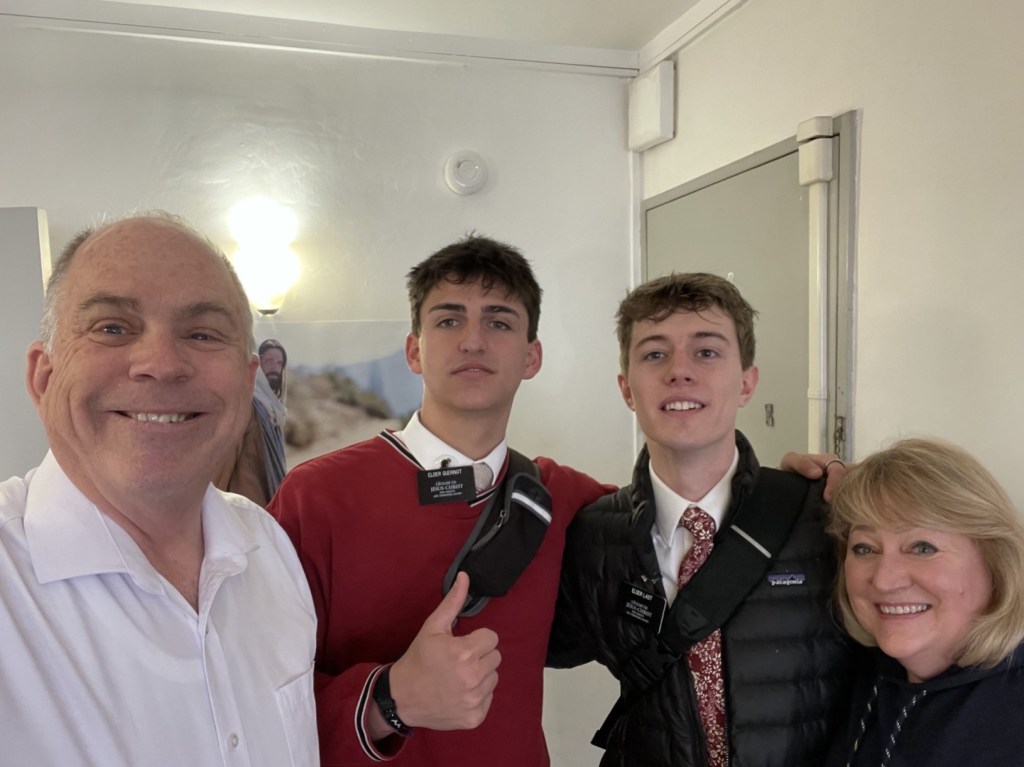
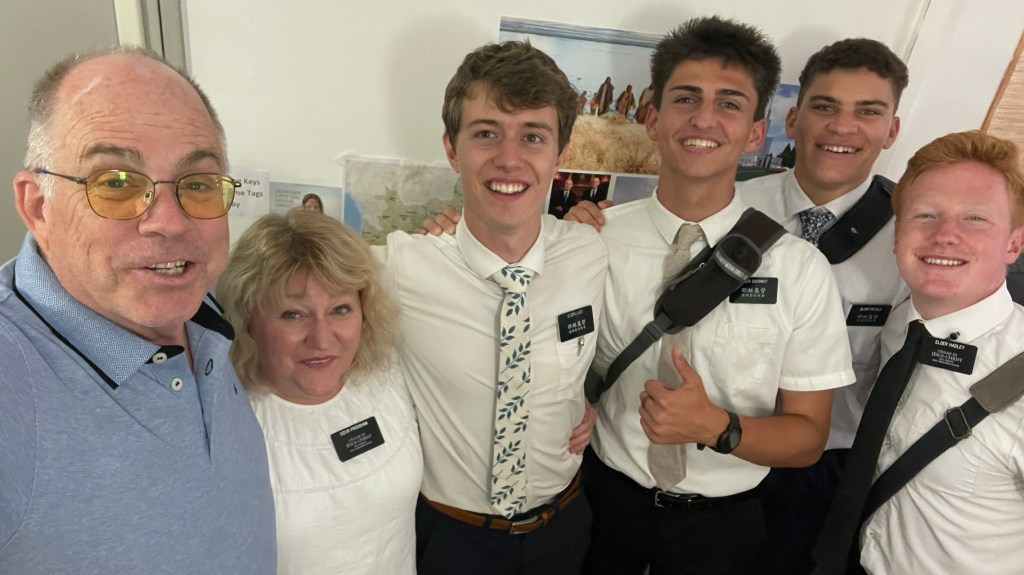
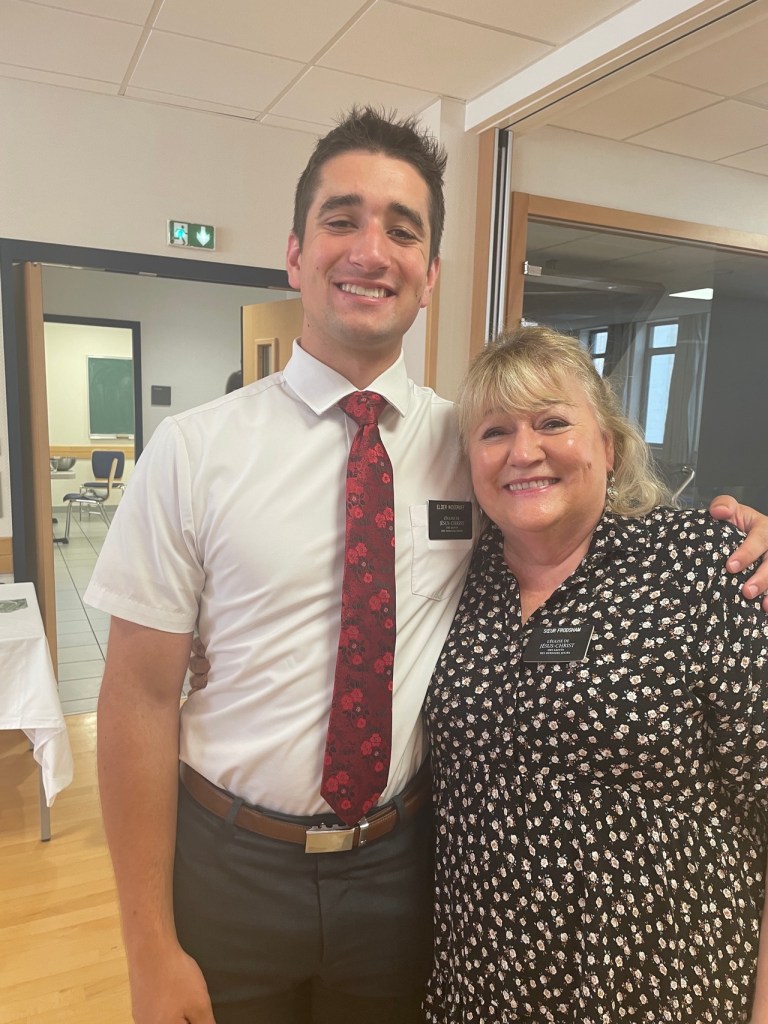
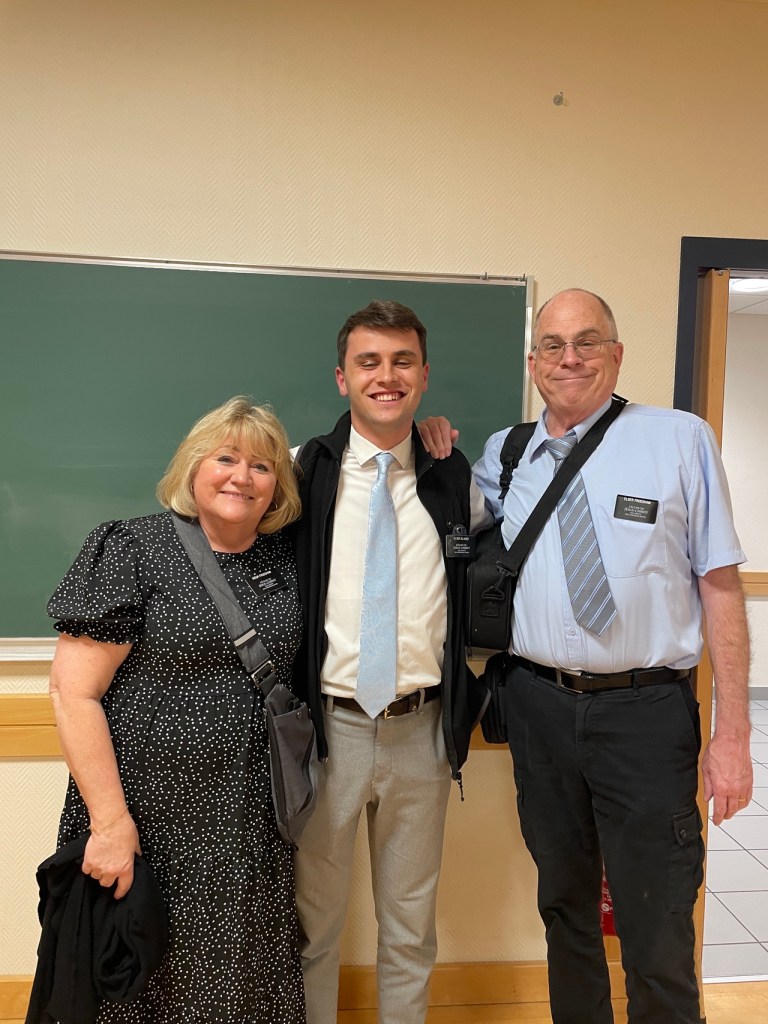
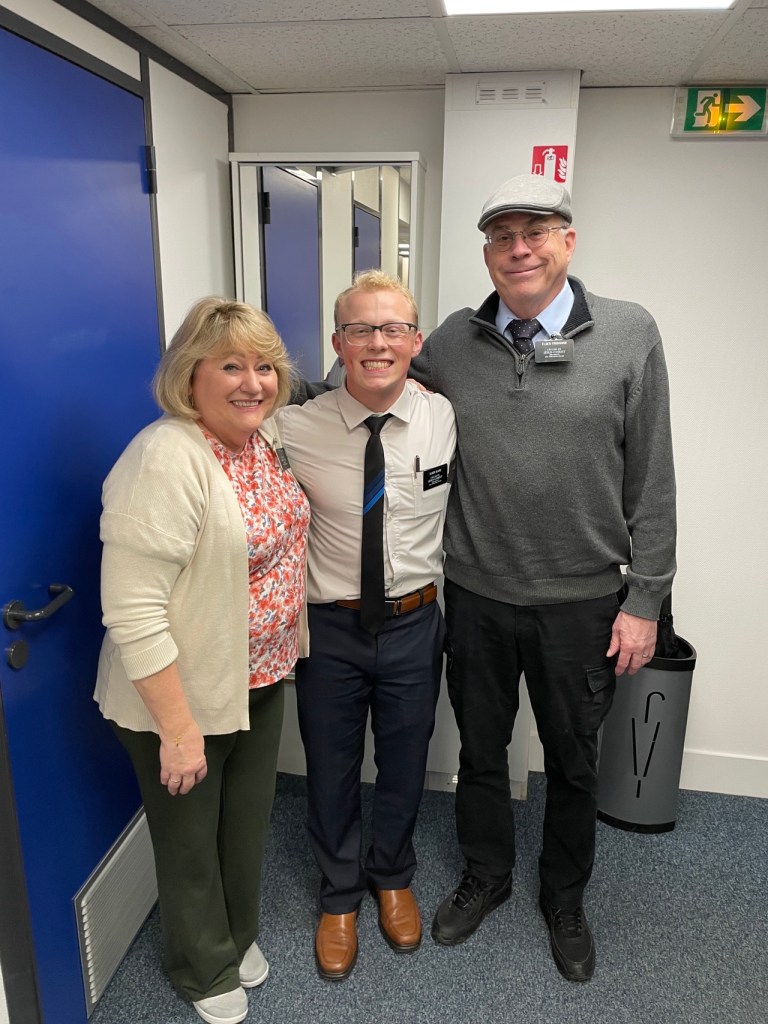
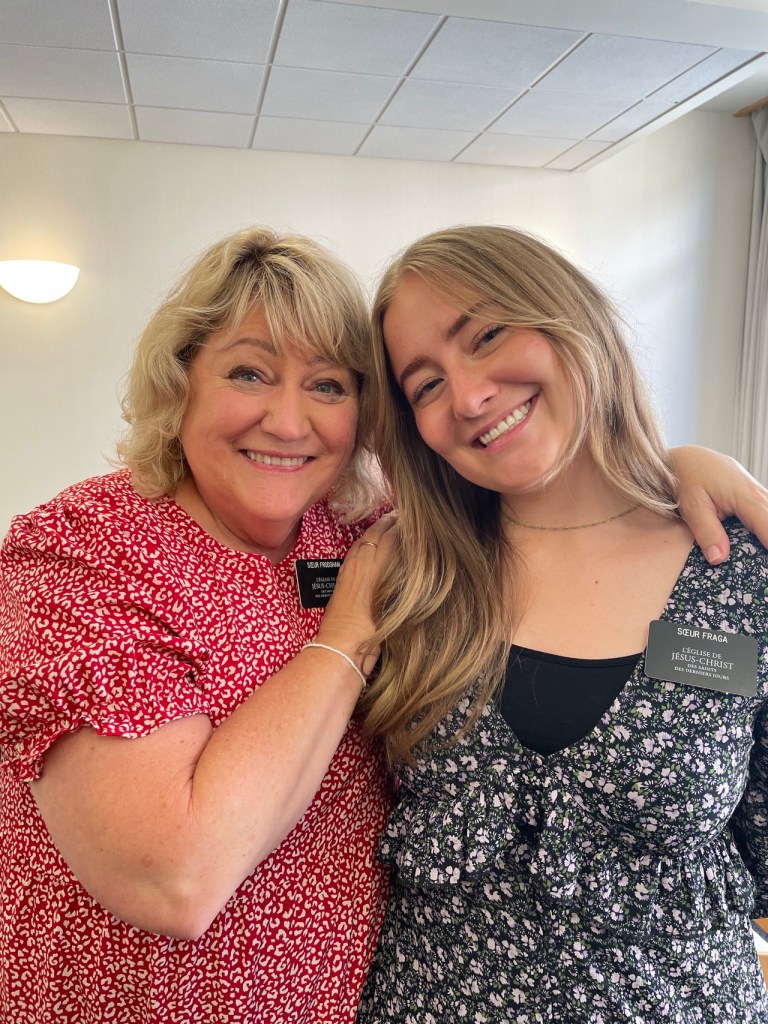
Here are some of our missionary grandchildren…oh how we love them!!
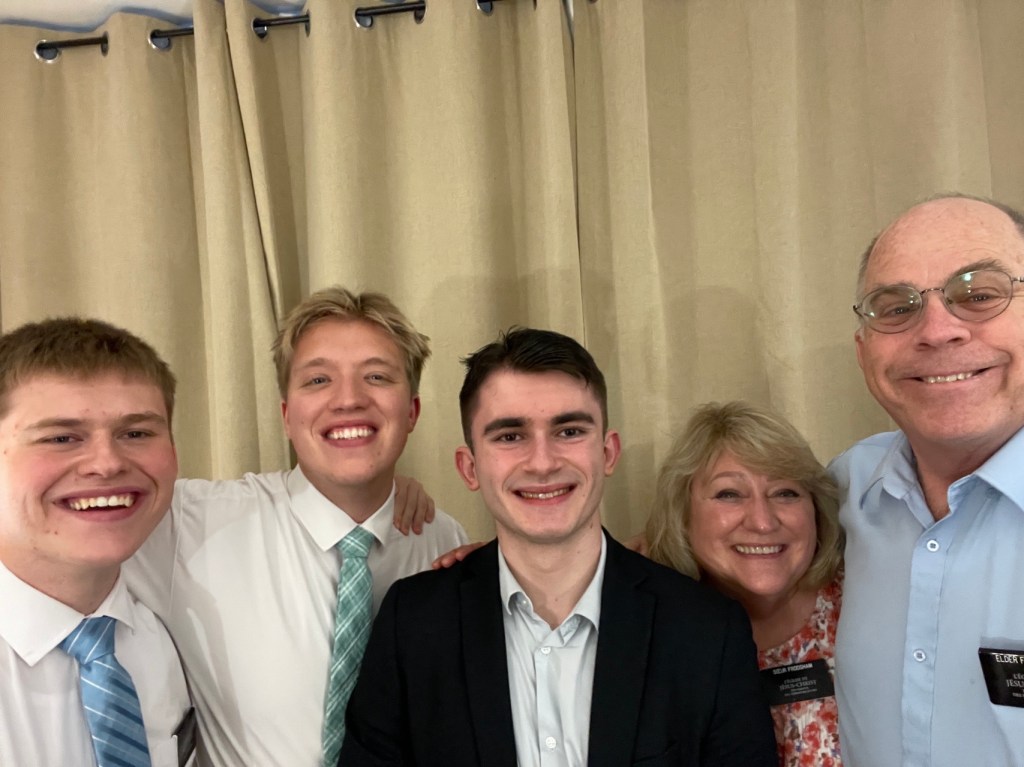
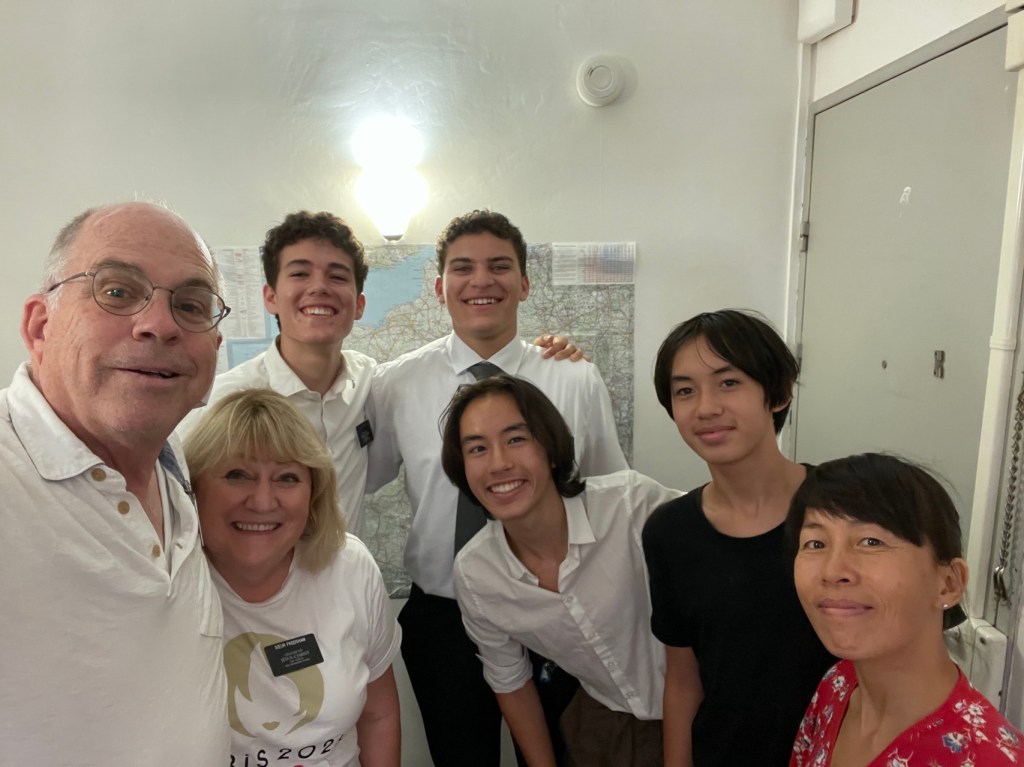
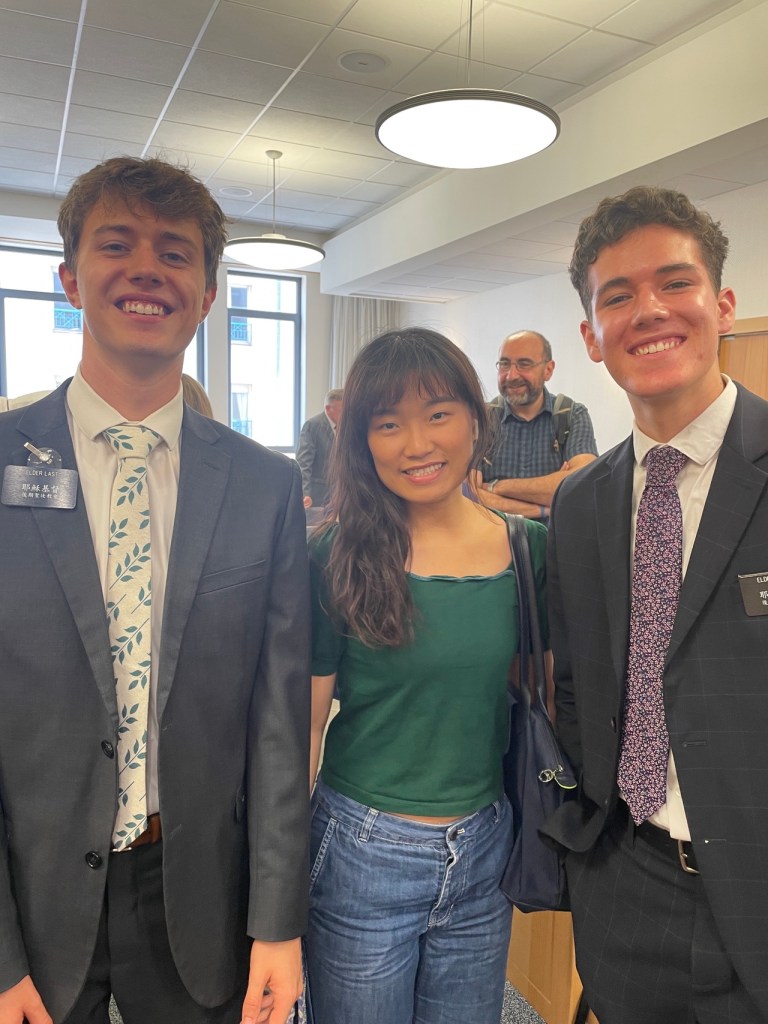
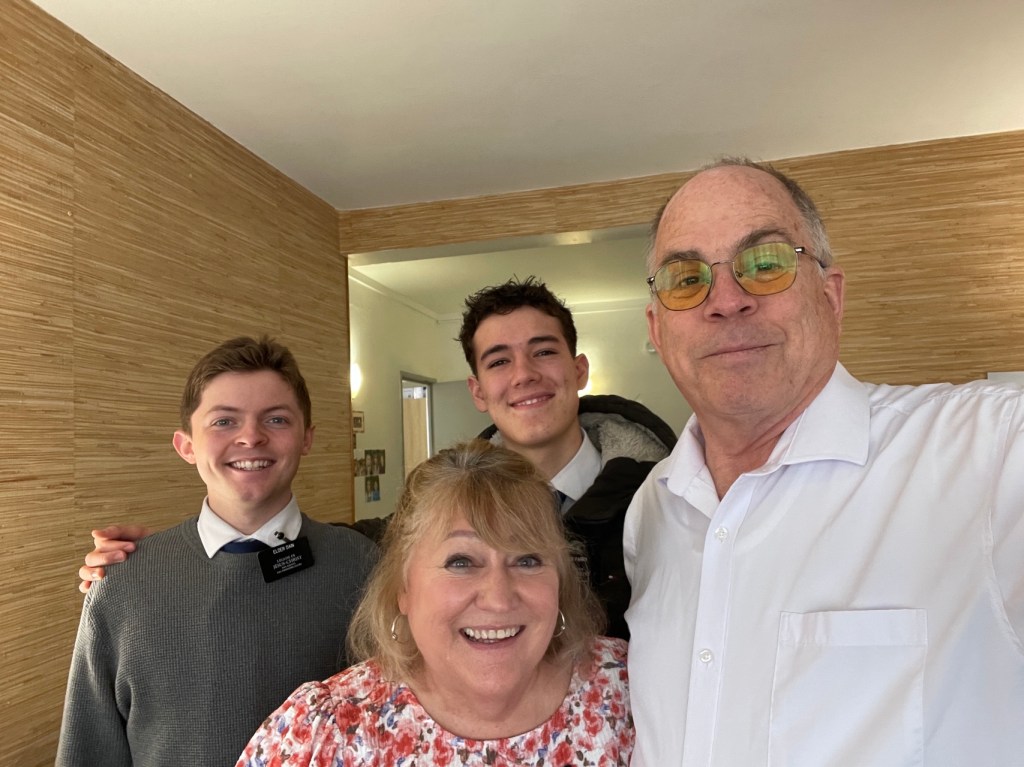
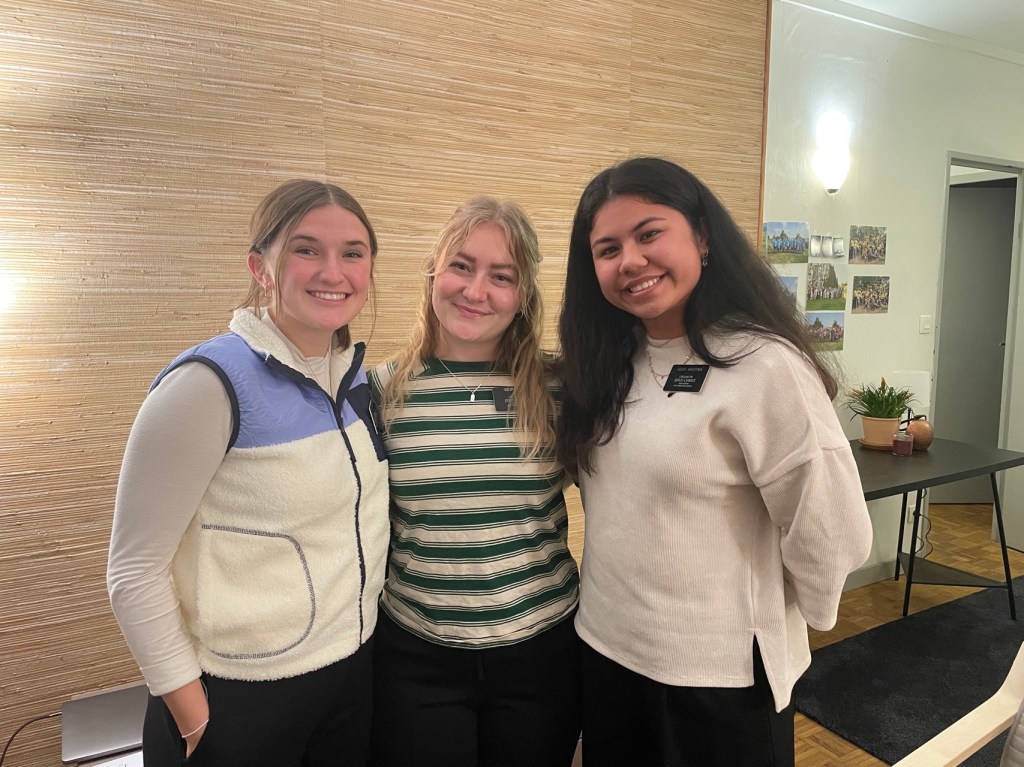
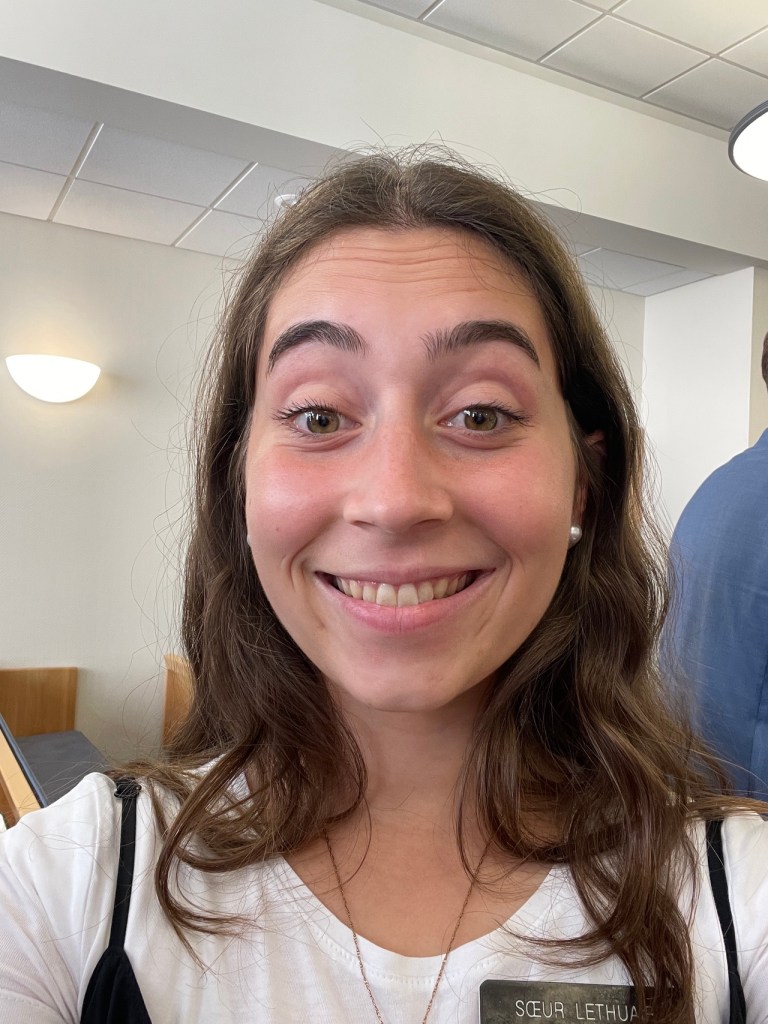
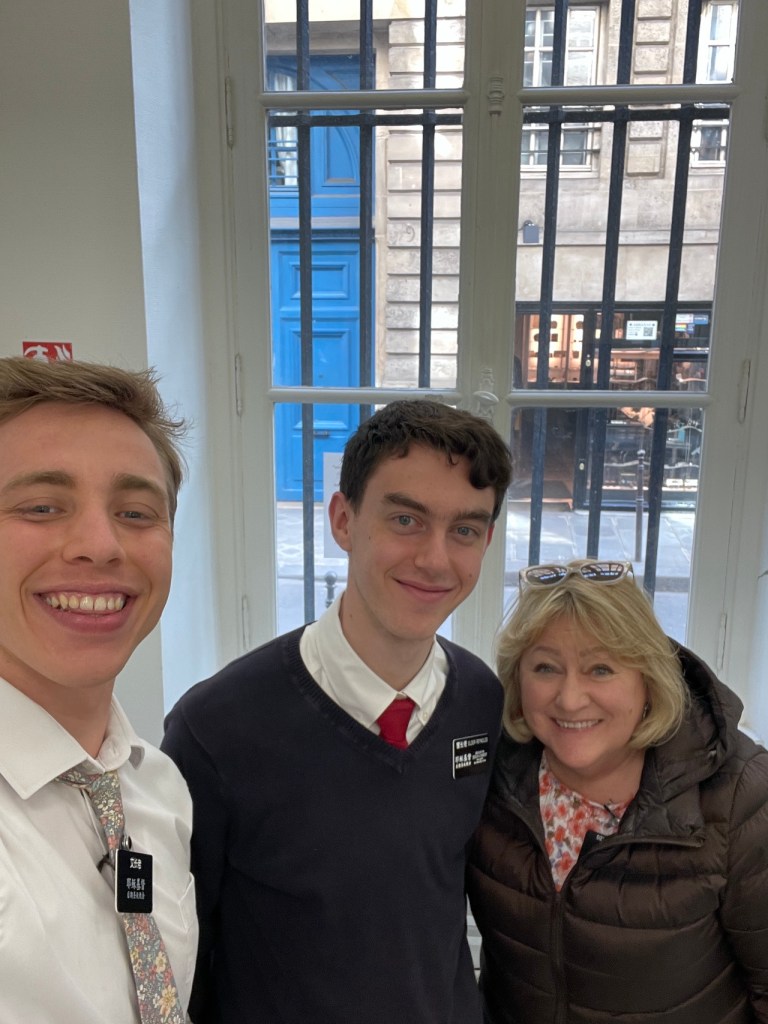
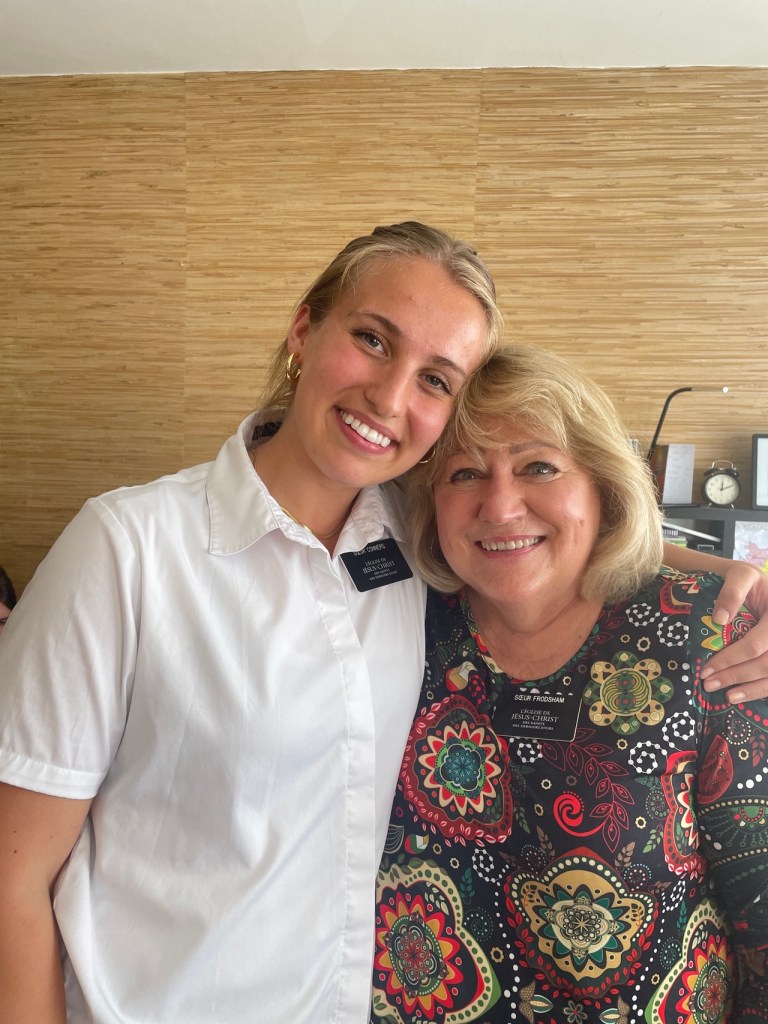
Soeur Lethuaire and FragaElders Dain and PerryMolinet, Fraga, AriiotimaSoeur LethuaireMissionaries at the Paris CenterSoeur ConnersSoeur Fortouna from Reunion IsleLetuhuaire, Clara and FragaSoeur Lethuaire and EdwardsElder Adams and BlazerElder Guerinot and LastElder Last Guernot Patello HadleySoeur AriiotimaElder WoodruffElder BlazerElder BeardSoeur FragaElder SumsionElder Sumsion and BeardElder Patelo and GuerinotPorte des Alpes missionaries
We will miss our friends in Lyon and the work we have been doing here. We also look forward to our next adventure in Athens, Greece,
The beginning of August, we got a call from the Central Europe manager, Christian Ottiker. He explained to us that the husband of a senior couple, the Hoffmans, had a stroke. He was healing and the damage done would be minimal, but he would have to return home to recover. They were serving in Athens, Greece and were managing a number of humanitarian projects for refugees and disaster victims in the country. Their position was critical, and it would take too much time to call and train a new couple. Brother Ottiker decided to ask us to transfer to Greece to fill the position instead.
There is very little humanitarian work to do in Southern France. We have been inventing our mission as we go along, supporting the local ward, visiting members, working with missionaries and inviting their investigators into our home. We have also been teaching EnglishConnect and assisting with self-reliance classes. When Brother Ottiker called, we asked him for a day to consider. We will go wherever the Lord wants us to serve, and with careful prayer, we accepted the transfer. We are flying to Athens on the 27th of August.
It is hard to be a member in France. The saints are spread so thin, distances are long and there are so many who need ministering. We love France, we love the people whom we were called to serve. We love the members of the church here, serving them has been an honor and a labor of love. We will miss them terribly.
Emily and President David Nelson
We have already talked to the mission president, several couples serving in the mission and an angelic pair of senior sisters serving in Athens. They have already gone through our apartment, cleaning and re-arranging furniture, and have called and messaged Catherine daily. They are already fast friends.
We will be serving in the Bulgaria Greece mission. The mission office and home are in Bulgaria. The mission covers Bulgaria, Greece and Cyprus, with about 40 young missionaries and ten or so couples. https://www.ldsliving.com/missionaries-on-mars-hill-church-near-the-acropolis-what-its-like-to-be-lds-in-greece/s/82104 Transfers like this are rare, and though we will miss our friends and fellow missionaries in France, we will have served in two separate missions when we return.
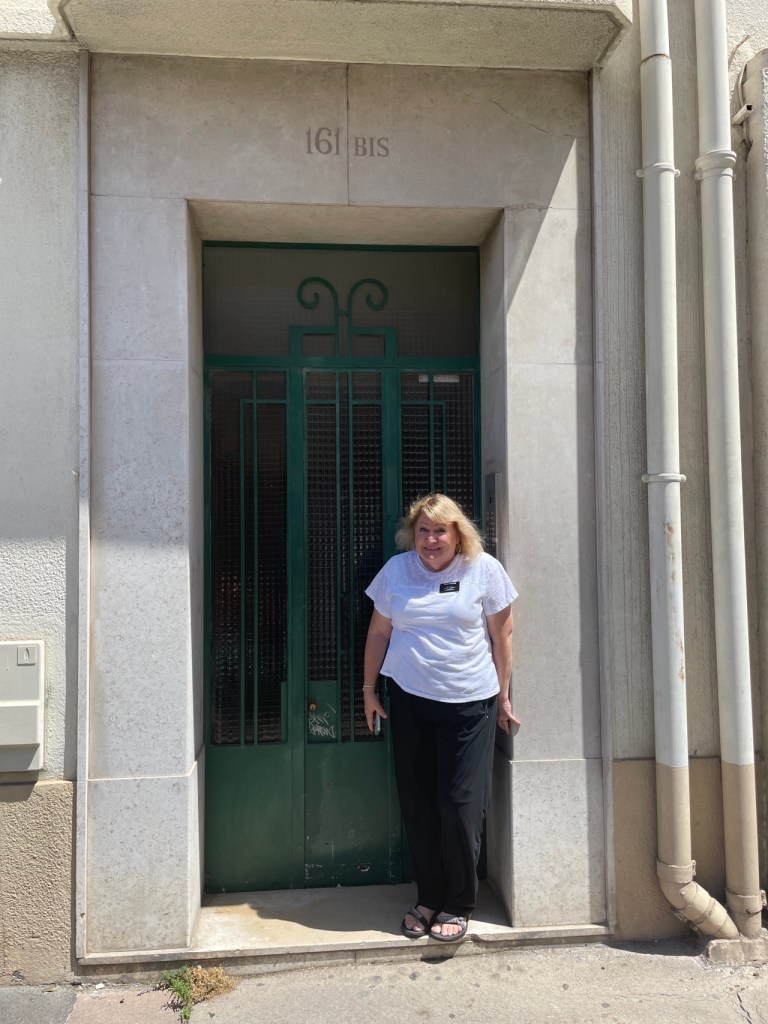
This might sound strange to some of you who know me so well. But when I was 15 years old, I was a rebellious, rotten teenager. I had some bad friends and an older brother, Mike, who had some bad friends. We hung out together. My Aunt Donna and Uncle Wes Peterson decided to go on a sabbatical from their teaching jobs for 7 months. They had a son named Jon Peterson who I loved as a brother. We were pretty close. So, they took both of us on this sabbatical to Europe. We lived in Marseille, France. a rather large port city on the Mediterranean Sea. It was beautiful. We lived at 161 Bis Boulevard Boisson, Marseille France. I still remember that address.
I am not sure if that was a punishment for me to send me to Europe?? I wish I could have offered that punishment to all my kids when they were in their teens. It saved me. I grew close to my sweet Aunt and Uncle and my cousin Jon. Jon and I read the Book of Mormon together and we learned to love that book, and our testimonies grew at that time in our lives. The missionaries would come over and teach Jon and I missionary door approaches. “Bonjour Madame est Monsieur, Mais ami et moi nous sommes American. Nous sommes des missionaires des l’Eglise de Jesus Christ des Dernier Jour. Est qu’on vous en parler pour quelque minute? Jon could go out proselyting with them, but I couldn’t. We had a 6-month Eurail pass to go anywhere in Europe. We visited, France, Spain, Italy, Germany, Switzerland, Luxembourg, Netherlands, Sweden, Brussels, Austria. What a blast! We went to many museums and Jon, and I needed to write reports and take pictures of what we saw to turn in for school credit when we got home. It was an amazing experience. I saw beggars, gypsies, all types of people and learned to see them through different eyes than I had before. I had never seen homeless people in the US but there were many homeless people wherever we would go.
Here is what I learned 50 years ago. God loves all His children. It matters what we do in our life. I am grateful for my family. Lessons learned so long ago still apply.
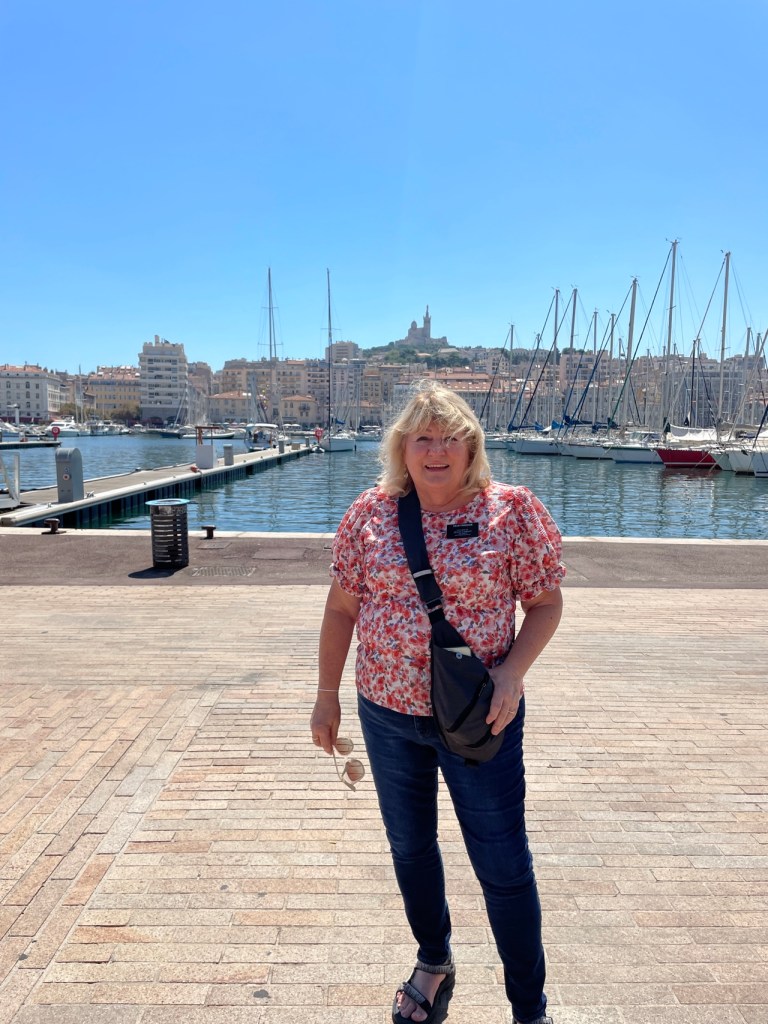
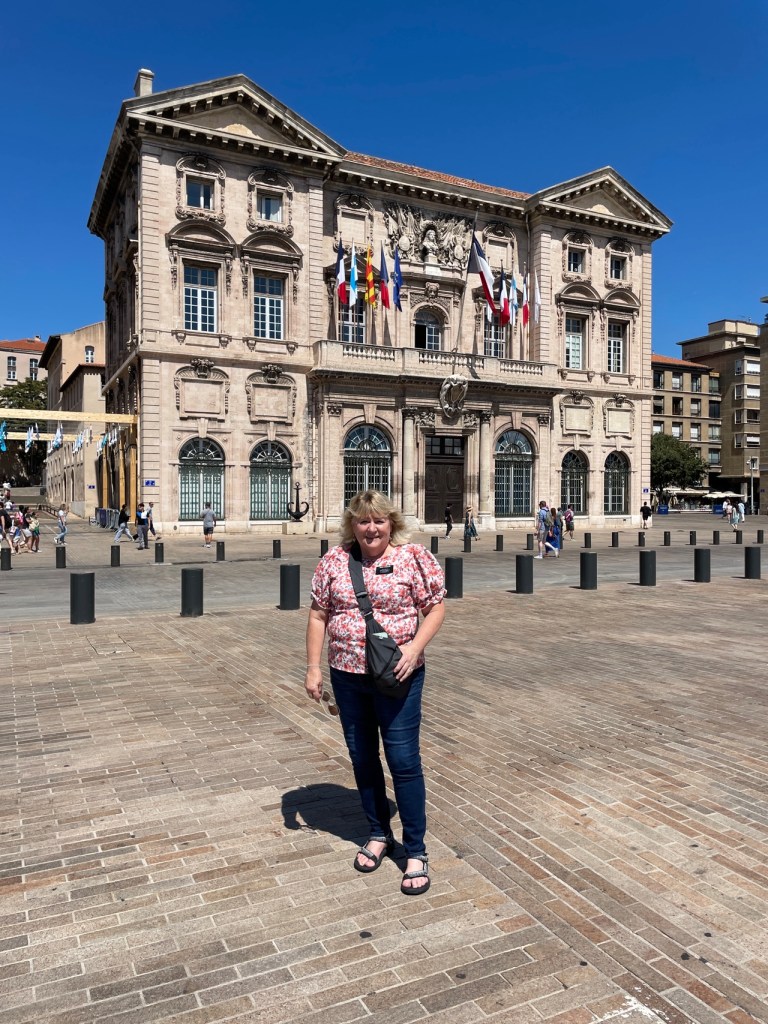
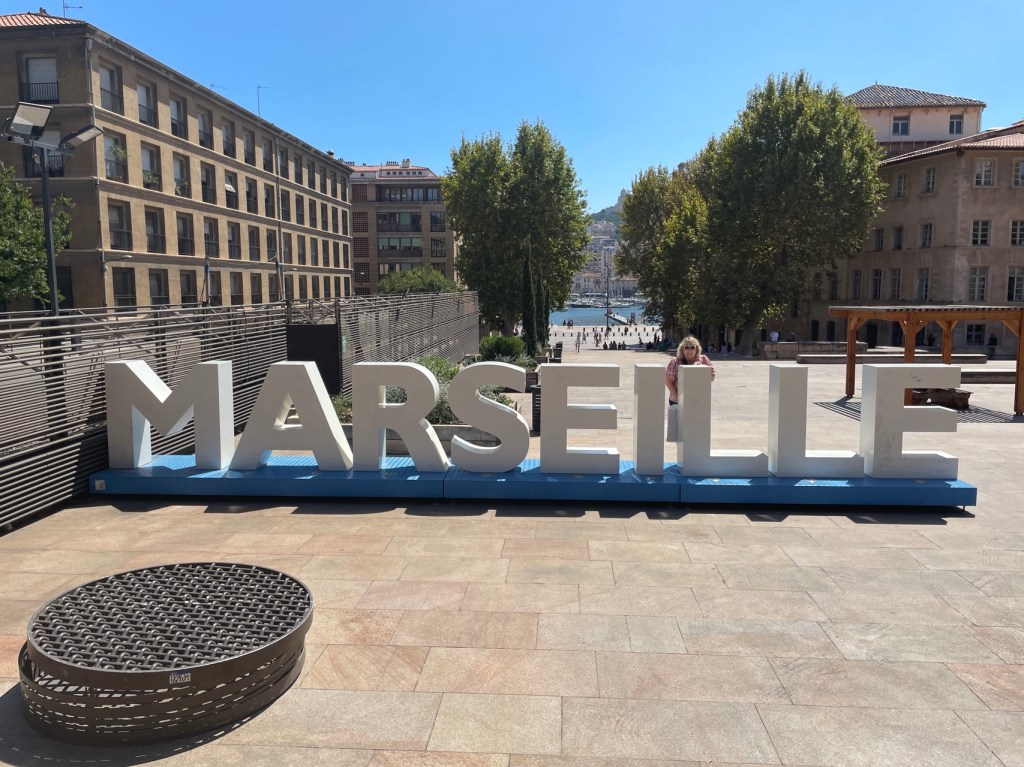
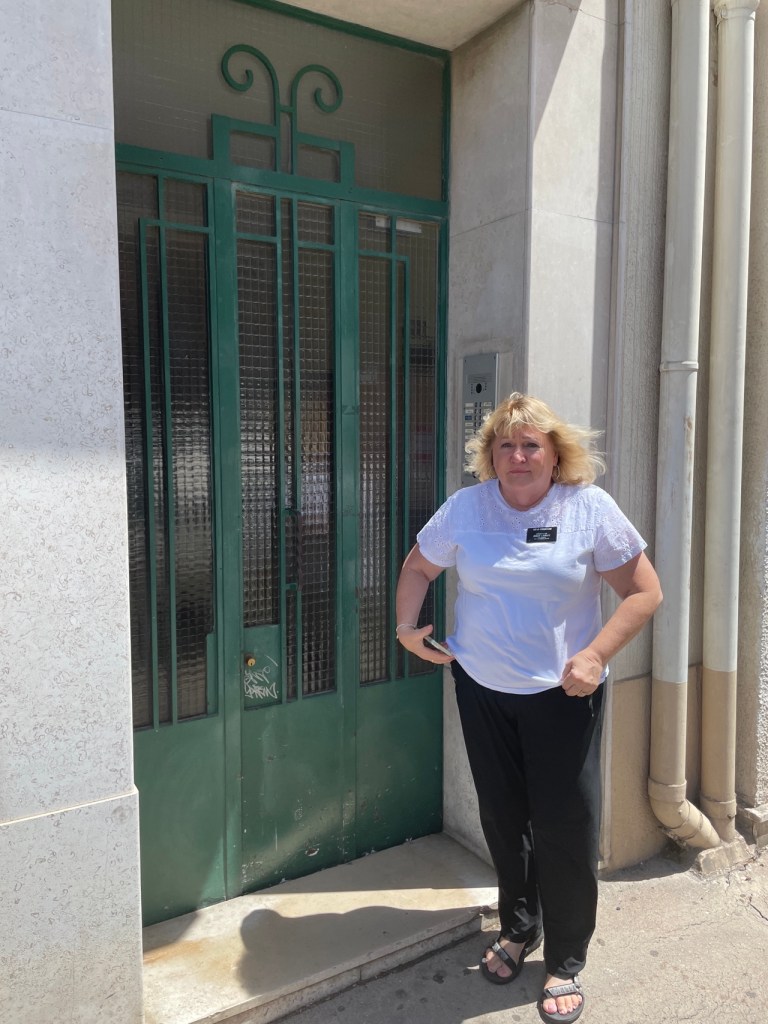
When Tim and I were called to Lyon France Mission it was like Heavenly Father knew what this country meant to a girl who turned 16 years old the day we landed in Europe. I remember the night my aunt and uncle and cousin and I were on the train leaving to go back to the states, Jon and I leaned out the train window and yelled, “We love you Marseille!! We will be back!!” I never thought it would only be me to go back to Marseille, 50 years later. My cousin, Jon died last year so this trip was bittersweet. I felt Jon with me on my visit to 161 Bis Boulevard Boisson. I even smiled because He and I were happy there.
It is hard to believe this apartment building looks so good after 50 years. But it is still there, and I remember being on the 3rd floor.
Good memories. I miss my Aunt Donna and my sweet Uncle Wes who was more of a dad to me. I also miss my bro – Jon.
Lessons learned as a missionary for the Church of Jesus Christ of Latter-Day Saints in the Lyon France Mission:
God loves all of His children. He knows us each by our name. If we trust Him and let Him, He will bring us home to live with Him and His son Jesus Christ. Repentance is for all. What a blessing that is to know we can be forgiven. The temples bind families together forever. We can receive revelation in the temple. I am grateful to be wearing the name of Jesus Christ on my missionary tag every day. We must all endure to the end which is so hard sometimes when things seem unjust or bad decisions from others cause us or our loved one’s pain and sorrow. We must still turn the other cheek. That is hard for me at times, especially when it comes to my children or grandchildren. I am still being refined. I am still “BECOMING”.
Our mission president asked all the missionaries to read and consider the story of the prodigal son before our last zone conference. My wife and I pondered the parable of these lost sons throughout the week. A focal point in considering this parable was Elder Hollands “The Other Prodigal” in a conference address some years ago.
He points out that we are all prodigals, and as such all need to be guided carefully back to the fold. I would like to ponder with you the faithful son, and his circumstance. I have heard many sermons that laud the return of the prodigal son, then proceed to lambast the faithful son for his jealousy and small mindedness. I believe that every word uttered by the Savior, especially when recounting His parables, means something, and how the faithful son fits into the Savior’s narrative is worth careful consideration. Let’s take a look at the “Other Prodigal”. First, we have all read the response of the father recorded in Luke 15, as he welcomed his son home:
22 But the father said to his servants, Bring forth the best robe, and put it on him; and put a ring on his hand, and shoes on his feet:
23 And bring hither the fatted calf, and kill it; and let us eat, and be merry:
24 For this my son was dead, and is alive again; he was lost, and is found. And they began to be merry.
We tend to gloss over the father’s interaction with the faithful son. Emphasis is mine:
25 Now his elder son was in the field: and as he came and drew nigh to the house, he heard musick and dancing.
26 And he called one of the servants, and asked what these things meant.
27 And he said unto him, Thy brother is come; and thy father hath killed the fatted calf, because he hath received him safe and sound.
At home, there was a party going on. The family was there, the servants knew all about it, the friends of the prodigal were in attendance, based on the narrative, and were celebrating in the house. The party had been going on for some time. After all, it takes time to “kill the fatted calf”, send invitations and prepare a feast. The only person not invited to the party was the faithful son. He spent the day in the fields, doing as his father asked, and only learned of the party as he returned from his labors for the day and heard the noise coming from the house.
The father sent invitations to sundry and all to celebrate the return of his prodigal son, but he sent no one to invite the faithful son. I do not think that was an omission in the parable. I believe the Savior chooses every word, and though His words, as recorded in the New Testament have been handed down and translated over two millennia, there is nothing to indicate that the parable of the prodigal son was changed in any substantial way over the centuries. The fatted calf was killed, family and friends invited, and a party was in full swing, all while the faithful son was doing the will of his father in the fields. There is another lesson to be learned here, a lesson for the 99 who remain in the fold.
I was assisting with a youth conference one year and noted with interest the lineup of speakers at the conference. All were prodigals who had a profound story to tell of wandering from the covenant path, and as the prodigal son, when ‘they came to themselves’, started their journey home. There was no one among the speakers at that conference who had quietly remained faithful throughout their lives. It is rare, even in the church, that the quiet faithful are celebrated.
I think of the mothers who chose to remain home, doing their most important work with their children, and then their grandchildren. They are certainly not celebrated by the culture of today. Consider the mockery of “Trad Wives” from “the great and spacious building”, or in modern terms, social media. There is a quote that pops up from time to time: “Well behaved women seldom make history”. Those “well behaved mothers” who go about quietly nurturing their family and serving the Lord are making the most important kind of history.
Remaining faithful is not a popular thing. At times, not even in the Church. That was another lesson the Savior was teaching as he recounted the experience of the faithful son. His blessings and recognition, the only ones that matter, are with the father. “Son, thou art ever with me, and all that I have is thine.”
The night before that zone conference, we had, over for dinner, the sister missionaries, and a family whose father had been converted and baptized just a few months before. As we discussed this parable, we pointed out that there was much celebration when he was baptized, but as time wears on and he settles into faithful service in the ward, the party ends. Much of what he will do, as with all faithful members of the church, will not be immediately recognized. What is important is that the Savior knows, cherishes his ever-faithful servants, and the reward will come in His good time and at His good pleasure.
In his October 2023 discourse “In the Path of Their Duty” Elder Bednar quoted President Hunter:
“If you feel that much of what you do this year or in the years to come does not make you very famous, take heart. Most of the best people who ever lived weren’t very famous either. Serve and grow, faithfully and quietly.”
He continues, italics are his: “A statement in the Book of Mormon by Samuel the Lamanite best summarizes my feelings for you.
‘Behold that the more part of them are in the path of their duty, and they do walk circumspectly before God, and they do observe to keep his commandments and his statutes. …
Yea, I say unto you, that the more part of them are doing this, and they are striving with unwearied diligence that they may bring the remainder of their brethren to the knowledge of the truth.’”
The faithful son may never be celebrated with a “fatted Calf Party” but he is no less precious in the Father’s eyes. “In the path of his duty” he will be blessed as only God can bless: “All that I have is yours”
In this same discourse, Elder Bednar quoted extensively J Ruben Clark from a 1947 address, the centennial of the Saints arriving in the Salt Lake Valley. He was speaking of those in the last wagon: “To these humble souls, great in faith, great in work, great in righteous living, great in fashioning our priceless heritage, I humbly render my love, my respect, my reverent homage.”
Elder Bednar also celebrated those faithful who continue steadfast in the work “They of the last wagon, all who are no less serviceable, and you who today are pressing forward in the path of your duty are the strength of the Savior’s restored Church. And as the Lord has promised, ‘all thrones and dominions, principalities and powers, shall be revealed and set forth upon all who have endured valiantly for the gospel of Jesus Christ.’”
The message of the other prodigal in the Lord’s parable is powerful. We all stumble, we all have doubts that what we are doing makes any difference. It does, the Lord celebrates the quiet faithful. “Thou art ever with me, and all that I have is thine.”





























 Latter-Day Saints